Sister Cities and Twin Towns: Building Global Bridges Through Local Diplomacy
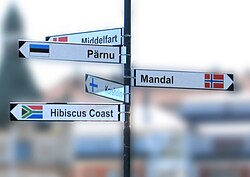
In an increasingly interconnected world, the bonds between nations are often forged not just in high-level government summits, but in the quiet agreements between local municipalities. Whether referred to as sister cities, twin towns, or partner cities, these relationships represent legal or social agreements between two geographically and politically distinct localities. The primary goal of these partnerships is to promote cultural and commercial ties, fostering a sense of global community at the grassroots level.
While early examples of international municipal links can be traced as far back as the 9th century, the modern framework of town twinning was established and adopted worldwide during World War II, serving as a tool for peace and reconciliation.
Key Facts
- Modern Origin: The contemporary concept of twinning gained global momentum during World War II.
- Purpose: To strengthen cultural, social, and commercial connections between distinct cities.
- Scope: Partnerships exist across every inhabited continent, including Europe, North America, South America, Asia, Africa, and Oceania.
- Nature: Agreements can range from formal legal contracts to informal social pacts.
- Diplomacy: This practice is a form of paradiplomacy, where sub-national governments engage in international relations.
The Evolution of City Diplomacy
Origins of the Modern Concept
The modern era of town twinning is deeply rooted in the aftermath of global conflict. One of the most significant early examples occurred in 1944 when Coventry, UK, began a trend of twinning that spread across Europe and the rest of the world. This movement was designed to heal wartime wounds and prevent future conflicts by humanizing "the other" through direct municipal contact.

Terminology and Variations
Depending on the region and the nature of the agreement, different terms are used. "Twin town" is common in Europe, while "sister city" is the preferred term in North America. Some cities use "partner city" or "brother city" to describe these bonds. While most agreements focus on cities and towns, the concept has expanded to include other entities, such as sister castles.

The Role of Paradiplomacy
These relationships are a key component of city diplomacy (or paradiplomacy), where cities act as global players. By bypassing national governments, cities can collaborate on specific issues such as urban planning, economic development, and environmental sustainability. This allows local leaders to seek solutions to common urban challenges through direct peer-to-peer exchange.
Global Reach and Diverse Motivations
Twinning occurs for a variety of reasons, ranging from the strategic to the whimsical. Some cities twin based on shared industries or linguistic ties, while others seek partners based on similar geographic features or historical parallels.
Cultural and Linguistic Ties
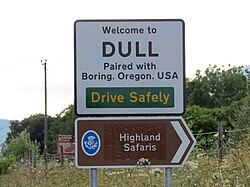
Many cities choose partners that share a common language or cultural heritage to facilitate easier communication and exchange. However, some of the most famous pairings are based on irony or humor. For example, the town of Dull in Scotland is twinned with Boring, Oregon, in the United States, turning their unassuming names into a point of international interest.
Political Significance and Termination
Because these relationships are often symbols of friendship, they can also become political tools. Twinning agreements are sometimes suspended or terminated when political tensions rise between the parent nations or when one city's policies conflict with the values of its partner. Examples include the severance of ties over human rights issues, legislative changes regarding LGBTQ+ rights, or geopolitical conflicts such as the war in Ukraine.
Visualizing the Bond
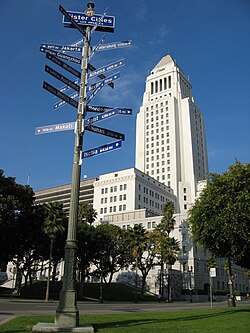
The physical manifestation of these bonds is often found in city landscapes. Many cities install fingerposts, monuments, or name streets after their twin partners to remind residents of their international connection.
![Thessaloniki stele, in sister city Melbourne[65]](/images/f2/e8/f2e84e8289b7f51e5373ea50d213c5af0be82b69bca4e66da5a7bc0c231773f3.jpg)
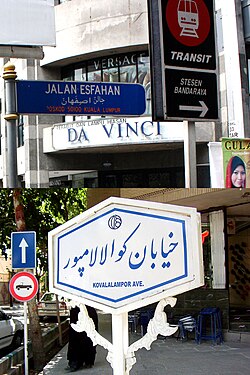
From the naming of Esfahan Street in Kuala Lumpur to the presence of a Thessaloniki stele in Melbourne, these markers serve as permanent reminders of the commitment to international friendship.
Summary of Twinning Concepts
| Feature | Description |
|---|---|
| Primary Goal | Promotion of cultural and commercial ties. |
| Modern Era | Post-World War II (est. 1944). |
| Common Terms | Sister City, Twin Town, Partner City, Brother City. |
| Key Driver | Paradiplomacy (sub-national international relations). |
| Outcome | Student exchanges, trade deals, and cultural monuments. |
Frequently Asked Questions
What is the difference between a sister city and a twin town?
There is generally no functional difference; the terms are used interchangeably. "Sister city" is more prevalent in North America, while "twin town" is more common in Europe.
Why do cities decide to twin with each other?
Cities twin to promote cultural exchange, boost tourism, encourage commercial trade, or find shared solutions to urban management problems. Some twin for linguistic reasons, while others do so for symbolic or humorous reasons.
Can a sister city relationship be ended?
Yes. Relationships can be suspended or terminated due to political disagreements, changes in government, or conflicts between the respective countries.
Who manages these relationships?
They are typically managed by local municipal governments, often supported by dedicated twinning committees or non-profit associations.
Is town twinning a form of official diplomacy?
It is a form of paradiplomacy, meaning it is conducted by sub-national entities (cities) rather than the central national government, though it often complements national diplomatic goals.