Discovering the World of Korean Cultural Centers
As interest in South Korean lifestyle, entertainment, and traditions continues to grow globally, the Korean Cultural Centers (Korean: 한국문화원; Hanja: 韓國文化院) serve as vital bridges between Korea and the rest of the world. These non-profit institutions are dedicated to promoting Korean culture and facilitating meaningful cultural exchanges across the globe.
Whether you are interested in the rhythmic beats of traditional music, the intricate flavors of Korean cuisine, or the latest cinematic releases, these centers provide a gateway to experiencing the "Korean Wave" firsthand.
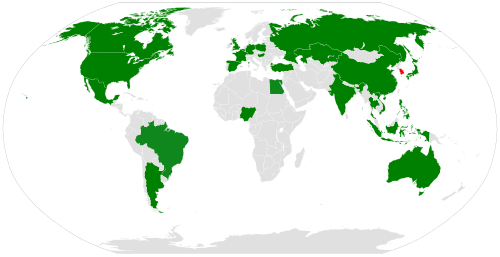
Key Facts
- Founded: 2009
- Founder: Korean Culture and Information Service (KOCIS)
- Governing Body: Ministry of Culture, Sports and Tourism of South Korea
- Global Presence: 37 centers located in 30 countries (as of 2024)
- Primary Mission: To promote Korean culture and facilitate international cultural exchange
The Mission and History of the Centers
The initiative to establish a global network of cultural hubs began in 2009. The Korean Culture and Information Service (KOCIS), a subdivision of South Korea's Ministry of Culture, Sports and Tourism, began setting up these centers to ensure that the diverse aspects of Korean heritage are accessible to an international audience.
As a non-profit institution, the primary focus of these centers is to act as a cultural ambassador. By providing organized programming, they help demystify Korean traditions and foster a deeper understanding between South Korea and the local communities they serve.
Cultural Initiatives and Programs
To spark interest and spread knowledge, the centers host a wide variety of programs. These initiatives are designed to cover the full spectrum of Korean heritage and modern lifestyle, including:
- Arts and Literature: Exploring traditional and contemporary Korean creative works.
- Music: Showcasing the diverse sounds of the peninsula.
- Film: Providing access to Korean cinema.
- Cuisine: Introducing the flavors and culinary techniques of Korean cooking.
Global Presence: Where to Find a Center
As of 2024, the network has expanded significantly, with 37 centers operating across 30 different countries. The centers are strategically located across several major regions to ensure a worldwide reach.
Asia-Pacific
The Asia-Pacific region hosts a robust network, including centers in major hubs such as Tokyo and Osaka in Japan, Beijing, Shanghai, and Hong Kong in China, as well as locations in Australia (Sydney), India (New Delhi), Indonesia (Jakarta), Kazakhstan (Astana), the Philippines (Taguig), Thailand (Bangkok), and Vietnam (Hanoi).
Europe
In Europe, the centers provide a strong cultural presence in cities like London (UK), Paris (France), Berlin (Germany), and Rome (Italy). Other locations include Vienna (Austria), Brussels (Belgium), Budapest (Hungary), Warsaw (Poland), Madrid (Spain), Stockholm (Sweden), and several sites in Russia, including Moscow, Ussuriysk, and Sakhalin.
The Americas
The Americas are served by centers in Canada (Ottawa), Mexico (Mexico City), Argentina (Buenos Aires), and Brazil (São Paulo). In the United States, the network is represented in Washington D.C., Los Angeles, and New York City.
Middle East and Africa
Cultural exchange extends into the Middle East and Africa through centers in Cairo (Egypt), Abuja (Nigeria), Pretoria (South Africa), Ankara (Turkey), and Abu Dhabi (United Arab Emirates).
Summary of Global Distribution
| Region | Key Countries/Locations | Focus Areas |
|---|---|---|
| Asia-Pacific | China, Japan, Australia, India, Indonesia, etc. | Arts, Music, Cuisine, Film, Literature |
| Europe | UK, France, Germany, Italy, Russia, etc. | Arts, Music, Cuisine, Film, Literature |
| Americas | USA, Canada, Mexico, Brazil, Argentina | Arts, Music, Cuisine, Film, Literature |
| Middle East & Africa | Egypt, Turkey, UAE, Nigeria, South Africa | Arts, Music, Cuisine, Film, Literature |
Frequently Asked Questions
What is the main purpose of a Korean Cultural Center?
The main purpose is to promote Korean culture and facilitate cultural exchanges between South Korea and other nations through various organized programs.
Who manages these cultural centers?
The centers are run by the Korean Culture and Information Service (KOCIS), which is a subdivision of South Korea's Ministry of Culture, Sports and Tourism.
Are the Korean Cultural Centers for-profit organizations?
No, they are non-profit institutions aligned with the government of South Korea.
What kind of activities can I expect at these centers?
You can participate in or observe programs related to Korean arts, music, literature, film, and cuisine.
How many centers are there worldwide?
As of 2024, there are 37 Korean Cultural Centers located in 30 different countries.