Bibimbap: The Art and History of Korea's Mixed Rice Dish
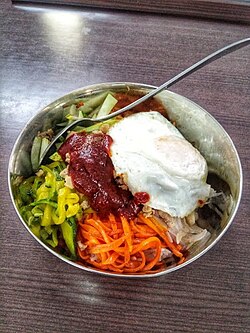
Bibimbap (Korean: 비빔밥) is one of Korea's most iconic culinary exports. Literally translating to "mixed rice"—where bibim means mixing and bap means cooked rice—this vibrant dish is a harmonious blend of warm white rice, namul (sautéed or blanched seasoned vegetables), and gochujang (a savory, spicy chili pepper paste). Often topped with a fried egg and sliced beef, the ingredients are stirred together thoroughly just before eating to create a unified flavor profile.
Beyond its taste, bibimbap is celebrated for its visual appeal, as ingredients are typically arranged so that complementary colors sit side-by-side, reflecting a balance of nutrition and aesthetics.
Key Facts
- Origin: Korea, East Asia.
- Core Ingredients: White rice, namul (seasoned vegetables), and gochujang (chili paste).
- Common Proteins: Beef, egg, tofu, or seafood.
- Regional Hubs: Jeonju, Jinju, and Tongyeong are renowned for their specific styles.
- Signature Variation: Dolsot bibimbap is served in a sizzling hot stone pot.
The Evolution and History of Bibimbap
The exact origins of bibimbap remain unknown, but several historical theories exist. Some scholars believe the dish stems from the practice of mixing food offerings after a jesa (ancestral rite), particularly during outdoor ceremonies like sansinje (rites for mountain gods) where limited cookware necessitated mixing ingredients in a single bowl.
Historical records suggest different social origins. The "People's Unofficial Story of Jeonju" describes it as a dish served at parties for government officials. Conversely, the "Lannokgi" text suggests it was created by farmers' wives who combined available crops into one bowl to save time during the busy harvest season. For ordinary citizens, bibimbap was also a practical way to clear out leftover side dishes on the eve of the lunar new year.
The dish's name has evolved over centuries. Early hanja (Chinese characters) texts referred to it as hondon-ban around 1590, and later as goldong-ban. By the late 19th century, various Hangul transcriptions emerged, eventually settling into the modern bibimbap.
Preparation and Ingredients
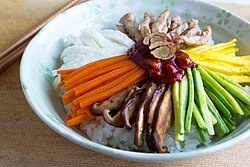
A traditional bowl of bibimbap is a tapestry of textures and flavors. Common vegetables include julienned oi (cucumber), aehobak (zucchini), mu (radish), mushrooms, doraji (bellflower root), spinach, soybean sprouts, and gosari (bracken fern stems). To enhance the flavor, sesame oil and sesame seeds are frequently added alongside the essential gochujang.
While beef is the most common meat, chicken or seafood are often used as substitutes. For those seeking a plant-based version, dubu (tofu) or fresh lettuce leaves are popular additions.
Regional and Modern Variations
Jeonju Bibimbap
As a signature dish of Jeonju, this version is distinguished by rice cooked in beef shank broth for added depth. It is typically topped with soybean sprouts, hwangpo-muk (yellow mung bean jelly), and seasoned raw beef, and is traditionally served with kongnamul-gukbap (bean sprout soup).
Jinju Bibimbap
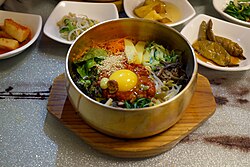
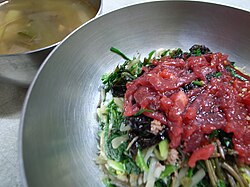
Hailing from South Gyeongsang Province, Jinju bibimbap is often called hwaban ("flower bowl") due to its colorful presentation. It features yukhoe (beef tartare), a special red-pepper paste called yeot-gojang, and is served with a broth known as potangguk or botangguk.
Dolsot Bibimbap (Hot Stone Pot)
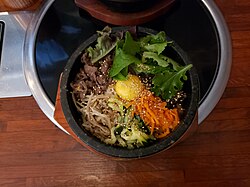
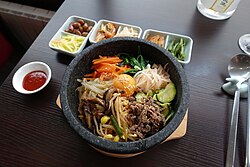
Dolsot bibimbap is served in a scorching hot stone pot, often made of gopdol (soapstone). The pot is coated with sesame oil, which creates a crisp, golden-brown layer of scorched rice at the bottom called nurungji. A raw egg is often added, cooking against the sides of the pot as it is served.
This modern variation is attributed to Namgung Seong of the Jungang Hoegwan restaurant in Jeonju, who developed the stone bowl in 1969 to keep the meal warm. The style later spread to Seoul and eventually to Japan, where it is known as Ishiyaki bibimbap.
Specialty Variations
- Hoedeopbap: A coastal variation featuring raw seafood such as salmon, tuna, or octopus.
- Yakcho-bibimbap: A medicinal herb version from Jecheon, utilizing the region's abundance of healing plants.
- Other Toppings: Variations may include albap (roe), jeyuk (spicy pork), or ureong-doenjang (freshwater snail soybean paste).
| Variation | Key Distinguishing Feature | Typical Toppings/Sides |
|---|---|---|
| Jeonju | Rice cooked in beef shank broth | Hwangpo-muk, bean sprout soup |
| Jinju | Yukhoe (beef tartare) and Yeot-gojang | Botangguk (broth) |
| Dolsot | Sizzling stone pot with Nurungji | Fried egg, sesame oil coating |
| Hoedeopbap | Raw seafood base | Sashimi (Tuna, Salmon, etc.) |
| Yakcho | Medicinal herbs | Local Jecheon herbs |
Frequently Asked Questions
What does the word "bibimbap" actually mean?
The word is derived from the Korean words "bibim," which means mixing, and "bap," which means cooked rice. Together, they translate to "mixed rice."
What is the crispy rice at the bottom of a stone pot called?
The golden-brown, crisp layer of rice created by the heat of the dolsot (stone pot) is called nurungji.
Is bibimbap always spicy?
While the traditional flavor comes from gochujang (chili pepper paste), the level of spiciness depends on how much paste is added and mixed into the bowl by the diner.
What is the difference between Jeonju and Jinju bibimbap?
Jeonju bibimbap is known for rice cooked in beef broth and its association with bean sprout soup, while Jinju bibimbap is characterized by the use of beef yukhoe (tartare) and a specific paste called yeot-gojang.
Can bibimbap be made without meat?
Yes. While beef is common, bibimbap can be made with tofu, seafood, or exclusively with seasoned vegetables (namul), making it a versatile dish for various dietary preferences.