Sister Cities and Twin Towns: Building Global Connections Through Local Diplomacy
Across the globe, municipalities often form deep-rooted bonds with distant counterparts through formal agreements known as sister cities, twin towns, or partner cities. These relationships serve as a bridge between geographically and politically distinct localities, aiming to foster cultural exchange and strengthen commercial ties. While the concept of international municipal links dates back as far as the 9th century, the modern framework we recognize today was largely established and adopted worldwide during the aftermath of World War II.
These connections represent a unique form of paradiplomacy—a term used to describe international relations conducted by subnational entities like cities or states rather than national governments. By engaging in city diplomacy, local leaders can influence global trends and build grassroots peace through community-level cooperation.

Key Facts
- Modern Origins: The contemporary sister city movement gained global momentum following World War II.
- Primary Goals: To promote cultural, social, and commercial ties between different regions.
- Terminology: Common terms include sister cities, twin towns, and partner cities.
- Diplomatic Role: These agreements are a form of paradiplomacy, allowing cities to engage in international relations.
- Varied Motivations: Relationships can be driven by shared history, similar economic profiles, or even humorous coincidences.
The Evolution of Municipal Twinning
The modern era of town twinning was significantly shaped by the need for reconciliation following global conflict. A notable historical milestone occurred in 1944 when Coventry, England, began a trend of twinning that would eventually spread across Europe and the rest of the world. One of the most significant early examples involved the relationship between Coventry and Stalingrad (now Volgograd), which served as a symbol of wartime connection.

Over the decades, these relationships have expanded beyond simple friendship. They now encompass a wide range of activities, from student exchanges and artistic collaborations to economic development partnerships. In some cases, the names of the cities themselves lead to unique pairings, such as the relationship between Dull, Perth and Kinross, Scotland, and Boring, Oregon, in the United States.

Global Reach and Regional Variations
Sister city relationships are found on every continent, though the nature of these bonds can vary based on regional political and linguistic contexts. In Europe, twinning is a deeply established tradition, often used to promote European integration and cross-border cooperation.

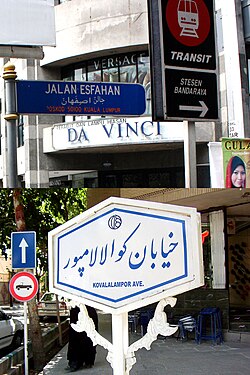
In North America, the movement has been heavily influenced by organizations like Sister Cities International. Meanwhile, in Asia and Oceania, these partnerships often focus on economic growth and cultural visibility. Regardless of the continent, the presence of these ties is often visible to residents through local monuments, street signs, or dedicated gardens.
![Thessaloniki stele, in sister city Melbourne[65]](/images/f2/e8/f2e84e8289b7f51e5373ea50d213c5af0be82b69bca4e66da5a7bc0c231773f3.jpg)
Summary of Twinning Concepts
| Concept | Primary Focus | Common Implementation |
|---|---|---|
| Cultural Twinning | Social and community exchange | Student exchanges, festivals, and art |
| Commercial Twinning | Economic and trade ties | Business forums and trade missions |
| Diplomatic Twinning | Political and peace-building | Official municipal agreements and summits |
Challenges and the Termination of Ties
While many sister city relationships endure for decades, they are not immune to political shifts. Because these agreements are often tied to the political climate of the participating nations, they can be suspended or terminated due to international conflicts, human rights concerns, or changes in domestic law. For example, some cities have severed ties with Russian counterparts following geopolitical tensions, or with cities in response to specific social or political controversies.

In recent years, some jurisdictions have implemented legislation to restrict or ban sister-city agreements with certain foreign entities deemed "foreign adversaries." This highlights the complex intersection between local municipal cooperation and high-level national security interests.
Frequently Asked Questions
What is the difference between a sister city and a twin town?
The terms are often used interchangeably. "Twin town" is more common in British English, while "sister city" is frequently used in American English. Both refer to the same concept of a formal agreement between two localities.
Why do cities choose to twin with one another?
Cities may choose partners based on shared history, similar economic challenges, cultural similarities, or a desire to promote peace and international understanding.
Can a sister city relationship be ended?
Yes. Relationships can be terminated or suspended due to political disagreements, changes in government policy, or significant shifts in the international relations between the two countries involved.
What is paradiplomacy?
Paradiplomacy refers to the international activities and diplomatic efforts conducted by subnational governments, such as cities, states, or provinces, rather than the central national government.
Are there organizations that manage these relationships?
Yes, organizations like Sister Cities International play a role in facilitating and supporting these global connections.