Sir Edward Quinan: The Meticulous Commander of the Tenth Army
General Sir Edward Pellew Quinan was a distinguished British Army commander whose career spanned the height of the British Raj and the critical theaters of the Second World War. Known for his rigorous attention to detail—which earned him the nickname "Quinan the Terror"—he played a pivotal role in securing British interests in the Middle East during a period of global instability.
From his early days on the North West Frontier to leading large-scale invasions in Iraq and Persia, Quinan's trajectory reflects the complex military administration of the British and Indian Armies in the early 20th century.
Key Facts
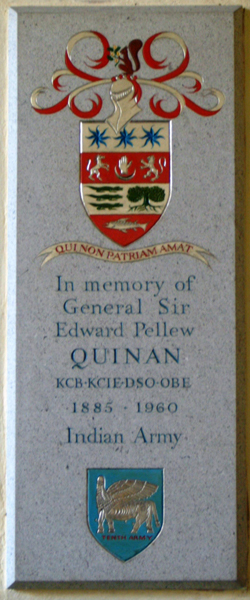
- Full Name: General Sir Edward Pellew Quinan, KCB, KCIE, DSO, OBE.
- Primary Commands: Iraqforce, Tenth Army, and the North Western Army.
- Major Conflicts: First World War, Anglo-Iraqi War, and the Anglo-Soviet invasion of Iran.
- Reputation: Renowned for meticulous attention to detail and strict discipline.
- Service Period: 1905 to 1943.
Early Life and Rise Through the Indian Army
Born in Calcutta on 9 January 1885, Quinan was of Anglo-Irish descent. After the early loss of his father, he was educated in Dublin before attending the Royal Military College, Sandhurst, in 1903. He was commissioned as a second lieutenant in 1904 and joined the 27th Punjabis of the Indian Army in 1905.
Quinan's early career was defined by active service on the North West Frontier of the British Indian Empire. During the First World War, he served in France and Mesopotamia, where he was wounded at Beit Aisa. His versatility was evident as he transitioned from combat roles to staff positions, eventually becoming a brevetted major by 1918.
Following the war, Quinan served as a staff officer during the 1919 Afghan War and the Waziristan campaign. He gained professional acclaim for writing the official history of the Waziristan campaign, a work still regarded by military experts as a model for campaign histories.
Command and Education
Quinan's ascent continued through the 1930s. He commanded the 3rd Battalion 8th Punjab Regiment and attended the prestigious Imperial Defence College. While stationed at Jhansi in 1930, he notably assisted the famous aviator Amy Johnson in repairing her Gypsy Moth aircraft after a heavy landing on the parade ground.
By 1933, he served as an instructor at the Staff College in Quetta, placing him in the company of other future military leaders like Auchinleck and Montgomery. He later served as Aide-de-camp Brigadier to King Edward VIII and led operations against the Faqir of Ipi in Waziristan, for which he received the Distinguished Service Order.
World War II: Securing the Middle East
In March 1941, promoted to lieutenant-general, Quinan was tasked with a critical mission: commanding the Indian Army Corps during the landing at Basra, Iraq. As the General Officer Commanding (GOC) of Iraqforce, he led the invasion from the south to overthrow the pro-German government of Rashid Ali al-Kaylani during the Anglo-Iraqi War.
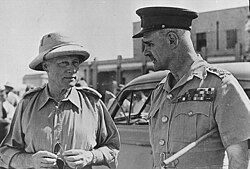
Following the stabilization of Iraq, Quinan's responsibilities expanded. He supported the invasion of Syria and Lebanon to replace the Vichy French government with Free French forces. Later in 1941, he planned and executed the Anglo-Soviet invasion of Iran (Persia). This strategic move was essential to protect British oil installations in Abadan and secure vital supply lines to the Soviet Union, resulting in the deposition of Shah Reza Pahlavi in favor of his son, Mohammad Reza Pahlavi.
The Tenth Army and Final Commands
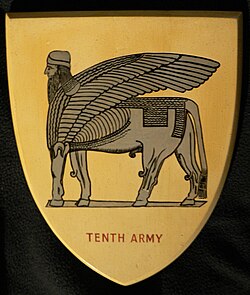
By February 1942, Quinan's command was designated as the Tenth Army. At its peak, he commanded eight divisions and two independent brigades, including a newly formed Polish Corps. He was promoted to full general in August 1942 and received a knighthood that same year.
As the German threat receded after the Battle of Stalingrad, the need for a massive army headquarters in the region diminished. Despite his successes, General Sir Alan Brooke noted in his diaries that Quinan was unsuitable for the continued leadership of the Tenth Army. In April 1943, Quinan returned to India to lead the North Western Army.
His active career came to an end on 16 November 1943, when he retired due to recurring high blood pressure. He spent his final years in Barrington, Somerset, where he passed away on 13 November 1960.
Summary of Service and Honors
| Category | Details |
|---|---|
| Highest Rank | General |
| Key Commands | Iraqforce, Tenth Army, North Western Army |
| Major Awards | KCB, KCIE, DSO, OBE |
| Key Operations | Anglo-Iraqi War, Invasion of Iran, Syria-Lebanon Campaign |
| Retirement Year | 1943 |
Frequently Asked Questions
Why was Sir Edward Quinan called "Quinan the Terror"?
He earned this nickname due to his meticulous and sometimes appalling attention to detail, often scrutinizing the duties of the smallest units under his command.
What was Quinan's role in the Anglo-Iraqi War?
He served as the GOC of Iraqforce, leading the invasion from the south to overthrow the pro-Axis government of Rashid Ali al-Kaylani and restore a pro-British administration.
Why did the British invade Iran under Quinan's planning?
The primary objectives were to secure supply lines to the Soviet Union and protect critical British oil installations located in Abadan.
What led to Sir Edward Quinan's retirement in 1943?
Quinan retired for medical reasons, specifically a recurrence of high blood pressure that had previously forced him to take sick leave in 1938.
Which military history did Quinan write?
He wrote the official history of the Waziristan campaign, which is highly regarded by military experts as a model for campaign documentation.