Sir Charles Kavanagh: Commander of the Cavalry Corps
Lieutenant-General Sir Charles Toler MacMorrough Kavanagh was a distinguished British Army officer whose leadership spanned some of the most pivotal conflicts of the late 19th and early 20th centuries. Best known for commanding the Cavalry Corps during the First World War, Kavanagh's career was marked by a relentless drive and a commitment to the welfare of his soldiers.
Key Facts
- Full Name: Sir Charles Toler MacMorrough Kavanagh
- Service Period: 1884–1920
- Highest Rank: Lieutenant-General
- Major Commands: 10th Royal Hussars, 2nd Cavalry Division, and the Cavalry Corps
- Key Conflicts: Second Boer War and First World War
- Notable Achievement: Led the Cavalry Corps during the Battle of Amiens in 1918
Early Life and Rise Through the Ranks
Born on March 25, 1864, in Borris, County Carlow, Ireland, Charles Kavanagh was the son of Arthur MacMorrough Kavanagh and Mary Frances Forde-Leathley. He was educated at Harrow School before attending the Royal Military College at Sandhurst. In February 1884, he was commissioned as a second lieutenant into the 3rd Dragoon Guards, though he transferred to the 10th Hussars only two weeks later.
Kavanagh's early career included a period of diplomatic and military service in Jamaica starting in 1889, where he served as aide-de-camp to Governor Henry Arthur Blake. By 1895, he had returned to the UK to serve as adjutant to the 6th Yeomanry Brigade.
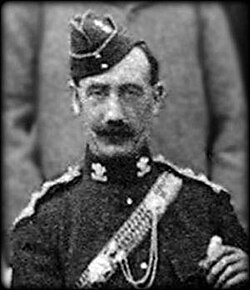
The Second Boer War
During the Second Boer War (1899–1902), Kavanagh served as the commanding officer of the 10th Hussars. He earned a reputation for tenacity while leading a mobile column in pursuit of Jan Smuts; Smuts later acknowledged that Kavanagh had come closer to capturing him than any other pursuer. Due to his vigor, his men gave him the nickname "Major Push-Along."
For his exemplary service, Kavanagh was mentioned in despatches by Lord Kitchener and awarded the Distinguished Service Order (DSO). Following the war, he served in India, where he commanded the 10th Hussars from 1904 to 1908 and engaged in regimental polo.
Leadership in the First World War
At the outbreak of World War I in 1914, Kavanagh took command of the 7th Cavalry Brigade. He deployed to France with the British Expeditionary Force (BEF), where he played a critical role during the First Battle of Ypres. His leadership of a counterattack in early November 1914 is widely credited with helping to save both Ypres and the BEF.
His success in the field led to a rapid ascent in rank. He was promoted to major general in February 1915 and subsequently commanded the 2nd Cavalry Division and the 5th Division. By April 1916, he reached the temporary rank of lieutenant general and took command of I Corps.
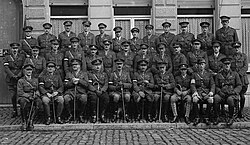
Command of the Cavalry Corps
In August 1916, Kavanagh was tasked with reforming the Cavalry Corps. He remained the General Officer Commanding (GOC) of the corps until the Armistice on November 11, 1918. His most notable contribution in this role was leading the corps during the Battle of Amiens as part of the Hundred Days Offensive, a series of Allied victories that ended the war.
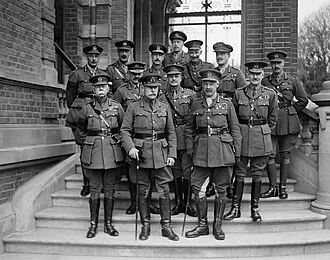
Throughout the conflict, Kavanagh was recognized for his bravery and strategic capabilities, receiving the Knight Commander of the Order of the Bath (KCB) in 1917 and the French Legion of Honour in 1919.
Final Years and Legacy
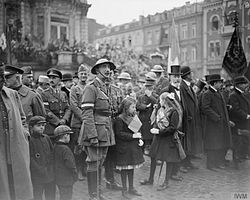
Sir Charles Kavanagh retired from active military service in March 1920 with the honorary rank of lieutenant general, concluding over 35 years of continuous service. In his retirement, he served as the Governor of the Military Knights of Windsor. He passed away on October 11, 1950, at the age of 86.
| Category | Details |
|---|---|
| Education | Harrow School, Royal Military College Sandhurst |
| Primary Units | 3rd Dragoon Guards, 10th Royal Hussars |
| Key Commands | 7th Cavalry Brigade, 2nd Cavalry Division, 5th Infantry Division, Cavalry Corps |
| Major Awards | KCB, KCMG, CVO, DSO, Legion of Honour |
| Retirement Role | Governor of the Military Knights of Windsor |
Frequently Asked Questions
What was Sir Charles Kavanagh's role in the First World War?
He served in several high-level commands, most notably as the General Officer Commanding (GOC) of the Cavalry Corps, which he led during the Battle of Amiens in 1918.
Why was he nicknamed "Major Push-Along"?
The nickname was given to him by the men under his command during the Second Boer War, reflecting his vigorous and determined leadership style while pursuing enemy forces.
Which battle is he most credited with influencing early in WWI?
Kavanagh is highly regarded for his leadership during the First Battle of Ypres, where he led a counterattack in November 1914 that is believed to have saved the British Expeditionary Force.
What honors did Sir Charles Kavanagh receive?
He was appointed a Knight Commander of the Order of the Bath (KCB) and a Knight Commander of the Order of St Michael and St George (KCMG), and he was awarded the Distinguished Service Order (DSO) and the French Legion of Honour.
When did he retire from the British Army?
He retired in March 1920 after more than 35 years of service, holding the honorary rank of lieutenant general.