Sir Arthur Eddington: The Astrophysicist Who Confirmed Einstein
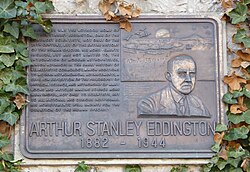
Sir Arthur Stanley Eddington (1882–1944) was a towering figure in 20th-century science, blending the precision of a mathematician with the vision of an astrophysicist. He is perhaps most famous for providing the first empirical evidence for Albert Einstein's general theory of relativity, but his contributions extended far beyond a single expedition. From defining the limits of stellar luminosity to exploring the philosophical nature of the physical world, Eddington shaped our modern understanding of the cosmos.
Eddington's journey began in Kendal, England, where his early aptitude for mathematics and English literature led him to Owens College, Manchester. After graduating with First Class Honours in physics in 1902, he moved to Trinity College, Cambridge. In 1904, he achieved the prestigious rank of Senior Wrangler—the top mathematics student in his year—becoming the first second-year student ever to do so.
Key Facts
- General Relativity: Led the 1919 solar eclipse expedition that confirmed light bends around massive objects.
- The Eddington Limit: Defined the maximum luminosity a star can achieve before its radiation pressure overcomes its gravity.
- Academic Legacy: Served as the Plumian Professor of Astronomy and Director of the Cambridge Observatory.
- Cosmological Impact: Developed early models of stellar interior temperatures and the mass-luminosity relation.
- Philosophical View: Advocated for philosophical idealism, suggesting the universe is fundamentally composed of "mind-stuff."
The Path to Astronomical Fame
Eddington's professional career took flight at the Royal Observatory, Greenwich, where he served as chief assistant to the Astronomer Royal. His early work on the parallax of the asteroid 433 Eros earned him the Smith's Prize in 1907, securing his fellowship at Trinity College. By 1913, he had ascended to the Plumian Professor of Astronomy and Experimental Philosophy, and shortly after, he became the director of the Cambridge Observatory.
Stellar Interiors and Evolution
Eddington was a pioneer in theoretical astrophysics. He demonstrated that the interior temperatures of stars must reach millions of degrees and discovered the mass-luminosity relation, which describes the relationship between a star's mass and its total energy output. His 1926 work, The Internal Constitution of the Stars, became a foundational text for future generations of scientists.
Confirming General Relativity
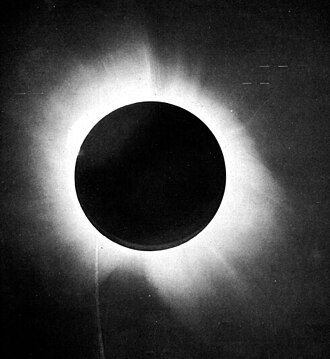
The most defining moment of Eddington's career occurred during the solar eclipse of May 29, 1919. According to Einstein's theory of general relativity, gravity should warp spacetime, causing light from distant stars to bend as it passes near a massive object like the Sun.
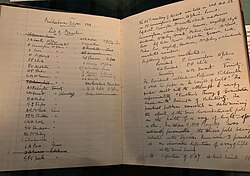
Eddington led an expedition to Príncipe to photograph stars near the eclipsed Sun. His observations confirmed the curvature of light, providing the evidence needed to validate Einstein's theories. This discovery was presented to the Cambridge ∇2V Club, where the meeting was described as "historic."
Cosmology and the "Eddington Number"
Eddington's later career was marked by an ambitious attempt to find an algebraic basis for all physics. He introduced "E-numbers" (based on Clifford algebra) to incorporate spacetime into a higher-dimensional structure. He also focused on the fine-structure constant (α), a dimensionless physical constant. His insistence that this value should be exactly 1/137 led some critics to nickname him "Arthur Adding-one" when he adjusted his theories to match new measurements.
Interestingly, Eddington's name is also associated with a unique measure in cycling. The Eddington number for cycling is the maximum number E such that a cyclist has ridden at least E miles on at least E different days. Eddington himself achieved a lifetime E-number of 84.
Philosophy and the Nature of Reality
Beyond the equations, Eddington was a deep thinker. In The Nature of the Physical World, he explored the paradox of the "two tables": the substantial table we touch and see, and the scientific table consisting of particles in empty space. He leaned toward philosophical idealism, the belief that reality is fundamentally mental, arguing that the universe's inherent intelligibility suggests it is made of the same "stuff" as the human mind.
Summary of Achievements
| Category | Key Contribution / Honor | Significance |
|---|---|---|
| Astrophysics | Eddington Limit | Natural limit to stellar luminosity |
| Relativity | 1919 Eclipse Expedition | Empirical proof of light bending (General Relativity) |
| Stellar Physics | Mass-Luminosity Relation | Linked a star's mass to its brightness |
| Honors | Knighthood (1930) & Order of Merit (1938) | Recognition of scientific excellence |
| Philosophy | Mind-stuff Theory | Explored the intersection of physics and idealism |
Frequently Asked Questions
What is the Eddington limit?
The Eddington limit is the maximum luminosity a star or compact object can achieve. At this point, the outward pressure of the radiation generated by the object exactly balances the inward pull of its own gravity.
How did Eddington prove Einstein's theory?
Eddington observed a total solar eclipse in 1919. By photographing stars near the Sun, he proved that the Sun's gravity bent the light from those stars, exactly as predicted by Einstein's general theory of relativity.
What is the Eddington number in cycling?
In cycling, the Eddington number is a measure of long-distance achievement. It is the highest number E where a rider has completed at least E miles on at least E separate days.
What did Eddington mean by "mind-stuff"?
Eddington used the term "mind-stuff" to suggest that the physical world and the human mind are made of the same fundamental essence, arguing that the universe is inherently intelligible because it is fundamentally mental in nature.
Who were some of Eddington's notable students?
Eddington mentored several influential scientists, including the Nobel laureate Subrahmanyan Chandrasekhar, as well as Hermann Bondi, Leslie Comrie, and Georges Lemaître.