SIPRI: Advancing Global Security Through Independent Research and Data
The Stockholm International Peace Research Institute (SIPRI) serves as a critical pillar of global security analysis, providing unbiased facts and rigorous research to policymakers, diplomats, and the public. With an international staff of approximately 46 researchers and research assistants, the institute focuses on the complex intersections of military capability, diplomatic efforts, and sustainable peace.
Key Facts
- Core Mission: Providing independent, unbiased data on armaments, arms control, and international security.
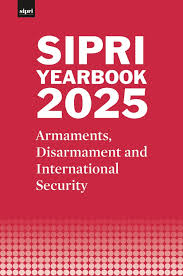
- Flagship Publication: The SIPRI Yearbook, an authoritative annual record published since November 12, 1969.
- Key Metric: Uses Trend-Indicator Value (TIV) to measure weapons volume by military capability rather than price.
- Global Reach: Research covers major regions including Africa, Asia, Europe, and the Middle East and North Africa.
- Recent Findings: A 2026 report identified Europe as the world's largest arms-importing region due to military expansion following the Russian invasion of Ukraine.
Research Themes and Areas of Focus
SIPRI organizes its intellectual efforts around three primary themes: Armament and Disarmament, Conflict, Peace and Security, and Peace and Development. These themes are supported by a diverse array of specialized research areas.
Security and Armaments
The institute monitors the proliferation of weaponry and the efforts to curb it. This includes research into chemical and biological weapons, weapons of mass destruction, and nuclear disarmament. Additionally, SIPRI tracks emerging military and security technologies and manages the EU Non-Proliferation and Disarmament Consortium.
Regional and Global Stability
SIPRI conducts deep-dive analyses into regional security dynamics across Africa, Asia, Europe, and the Middle East and North Africa. Their work extends to the mechanics of peace, including peace operations, conflict management, and the role of governance and society in building resilience.
Environmental and Human Security
Recognizing that security is not solely about weaponry, the institute explores the "Environment of Peace." This includes studying the impact of climate change and risk, as well as the critical link between food, peace, and security.

Publications and Information Dissemination
To ensure research reaches those who can implement change, SIPRI distributes its findings through books, reports, symposia, and seminars. The institute's output ranges from high-level policy briefs and research papers to detailed fact sheets and background papers, including collaborations with Oxford University Press.
The SIPRI Yearbook
First published in 1969, the SIPRI Yearbook is the institute's most prominent publication. It provides a comprehensive annual account of armaments, arms control, security arrangements, and conflict resolution. To ensure global accessibility, the Yearbook is translated into Arabic, Chinese, Russian, and Ukrainian, with summaries available in several other languages, including Spanish, French, and Korean.
Data-Driven Insights: The SIPRI Databases
A cornerstone of SIPRI's influence is its commitment to maintaining massive, transparent databases. These tools allow researchers and governments to quantify military trends with precision.
| Database Name | Primary Focus | Key Data Points |
|---|---|---|
| Arms Transfers Database | International conventional arms transfers | Transfers since 1950 |
| Military Expenditure Database | Global defense spending | Annual spending by country |
| Arms Industry Database | Defense corporate landscape | Top 100 arms-producing companies |
| Multilateral Peace Operations | Peacekeeping missions | Personnel, budgets, and fatalities since 2000 |
| Mapping ATT-Relevant Activities | Arms transfer and SALW controls | Cooperation since 2012 (UN and ATT treaties) |
Quantifying Military Capability
To avoid the distortions caused by fluctuating market prices, SIPRI developed the Trend-Indicator Value (TIV). TIV allows the institute to quantify the volume of weapons deliveries based on their actual military capability, providing a more accurate reflection of military power shifts than monetary value alone.
Recent Trends in Global Armaments
In a report published in March 2026, SIPRI highlighted a significant shift in global arms procurement. Europe has emerged as the world's largest arms-importing region, driven by military expansion following the Russian invasion of Ukraine. Poland, in particular, has become one of the continent's largest importers as it accelerates its military modernization.
This shift has also altered the landscape of global exporters. South Korea has seen a growing role as a major arms supplier, securing large-scale defense contracts with European nations, most notably Poland.
Frequently Asked Questions
What is the purpose of the SIPRI Yearbook?
The SIPRI Yearbook serves as an authoritative, independent source for politicians, diplomats, and journalists, providing a yearly account of armaments, arms control, armed conflicts, and disarmament efforts.
How does SIPRI measure the volume of weapons transfers?
SIPRI uses the Trend-Indicator Value (TIV), which measures the volume of major conventional weapons deliveries based on their military capability rather than their financial cost.
Which region is currently the largest importer of arms?
According to a March 2026 report, Europe is the world's largest arms-importing region, with Poland emerging as a primary importer due to military modernization efforts.
What are SALW controls?
SALW refers to Small Arms and Light Weapons. SIPRI tracks cooperation and assistance activities related to the control of these weapons to support the 2001 UN Programme of Action and the 2013 Arms Trade Treaty (ATT).
Who uses SIPRI's research and data?
SIPRI's materials are used by a wide range of stakeholders, including policy makers, academic researchers, journalists, and international organizations.