Siblings: The Science and Dynamics of Brother and Sister Relationships
A sibling is a relative who shares at least one parent with another person. While we commonly refer to male siblings as brothers and female siblings as sisters, the term "sibling" serves as a gender-neutral descriptor for these foundational family bonds. For those who grow up without such relatives, they are known as only children.
In most societies, siblings are raised together, fostering strong emotional bonds that create a unique type of relationship. However, these connections are often complex, shaped by a combination of personality, birth order, personal experiences, and the way parents treat each child.
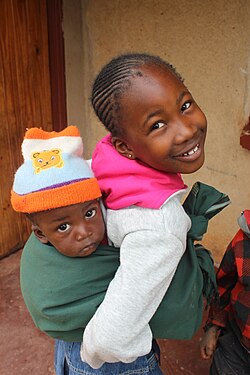
Key Facts
- Full siblings are first-degree relatives, sharing approximately 50% of their DNA.
- Half-siblings are second-degree relatives, sharing approximately 25% of their DNA.
- Identical twins are 100% consanguineous because they originate from the same zygote.
- Sibling rivalry often peaks between the ages of 10 and 15.
- The term "sibling" was reintroduced to the English language in 1903 as a translation for the German word Geschwister.
The Genetics of Siblinghood
The biological relationship between siblings is measured by consanguinity, or the degree of shared blood relation. While it is a general rule that full siblings share 50% of their DNA, the actual distribution varies due to chromosomal crossover. On average, full siblings share 50.28% of their DNA, with a standard deviation of 3.68%.

Twins and Genetic Studies
Fraternal twins are genetically no more similar than regular siblings, sharing 50% consanguinity. In contrast, identical twins are genetically identical. Scientists use twin studies to distinguish between the roles of genetics and environment in developing behavioral traits. These studies have shown that for heritable personality traits, genetics play a substantial role throughout life, particularly during the early years.
Complex Genetic Relations
Beyond full and half-siblings, there are rarer genetic classifications. Three-quarter siblings occur when parents are themselves related (for example, born to one father and two full-sibling mothers). There are also cross siblings and other variations of relatedness that result in different percentages of shared genetic material.

The Impact of Birth Order
The study of how a child's position in the family affects their development began with the theories of Francis Galton, who looked at eminence, and Alfred Adler, who focused on personality characteristics. These early theories laid the groundwork for contemporary research into how birth order influences intelligence and behavior.

Some researchers have noted that older siblings may score higher on IQ tests. Several models attempt to explain this, including the resource dilution model (how parental resources are divided) and the confluence model. Other theories suggest that the social dynamics of being the eldest encourage different cognitive developments.
Sibling Rivalry and Emotional Bonds
Sibling rivalry—characterized by bickering or malicious behavior—often begins before or immediately after the arrival of a second child. Children as young as one year old are sensitive to differences in parental treatment, and by age three, they can evaluate themselves in relation to their siblings.

While rivalry can be stressful for parents, it can also lead to behavioral spillover. This occurs when siblings intentionally or unintentionally influence each other to excel or differentiate themselves to gain parental praise, potentially pushing each other toward positive life trajectories.

Factors Influencing the Relationship
- Parental Effect: How parents manage conflict and distribute attention.
- Gender Roles: The expectations placed on children based on their gender.
- Age Gaps: The developmental difference between siblings.
- The Westermarck Effect: A psychological hypothesis regarding the lack of sexual attraction between people raised together in early childhood.


Summary of Sibling Genetic Relations
| Sibling Type | Degree of Relation | Average DNA Shared |
|---|---|---|
| Identical Twins | First-degree (Same Zygote) | 100% |
| Full Siblings | First-degree | ~50% (Mean 50.28%) |
| Fraternal Twins | First-degree | ~50% |
| Half-Siblings | Second-degree | ~25% |
Frequently Asked Questions
Do all full siblings share exactly 50% of their DNA?
No. Due to the way chromosomes crossover during reproduction, the actual amount varies. The mean is 50.28%, but about one-quarter of sibling pairs share more than 52.76%, and another quarter share less than 47.8%.
What is the difference between a fraternal and an identical twin?
Identical twins come from a single zygote and are 100% genetically identical. Fraternal twins come from separate eggs and sperm, making them genetically no more similar than regular siblings (sharing roughly 50% of their DNA).
At what age does sibling rivalry typically peak?
While rivalry begins early in childhood, research indicates that the age group between 10 and 15 years old typically reports the highest levels of competition between siblings.
How did the word "sibling" return to the English language?
The word was used in Middle English until around 1425 but then disappeared. It was reintroduced in 1903 in a scientific article in Biometrika as a translation for the German term Geschwister to provide a gender-neutral term for brothers and sisters.
Can sibling rivalry have positive effects?
Yes. Through a process called behavioral spillover, siblings may challenge each other to excel or differentiate themselves, which can lead to positive growth and achievement as they vie for parental praise.