Inbreeding: Genetic Mechanisms, Risks, and Biological Impacts
Inbreeding is the process of producing offspring through the mating of individuals or organisms that are closely related genetically. While the term is applied across various species, in human contexts, it often refers to the genetic disorders and health consequences resulting from consanguinity—the relationship between individuals who are descended from a common ancestor—and incestuous relationships.
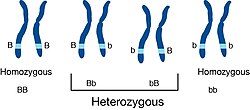
At its core, inbreeding increases homozygosity, a genetic state where an individual inherits identical alleles (versions of a gene) from both parents. This increase in homozygosity raises the probability that deleterious recessive traits—harmful mutations that are usually masked by a dominant healthy gene—will be expressed in the offspring.
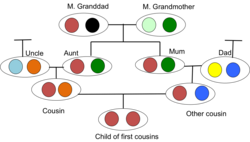
Key Facts
- Inbreeding increases the likelihood of offspring inheriting harmful recessive traits due to higher homozygosity.
- Inbreeding depression refers to the temporary decrease in a population's biological fitness, affecting its ability to survive and reproduce.
- Outcrossing is the practice of breeding unrelated individuals to avoid the expression of deleterious recessive alleles.
- Purifying selection can sometimes result in the "purging" of harmful alleles from a population through inbreeding.
- Consanguinity in humans is linked to higher rates of infant mortality, physical deformities, and specific genetic disorders.
The Biological Consequences of Inbreeding
The primary risk associated with inbreeding is the reduction of biological fitness. When harmful recessive alleles are paired, the resulting offspring may suffer from various physiological and cognitive impairments. This phenomenon is known as inbreeding depression.
Genetic and Physical Disorders
Inbred populations often exhibit a range of negative health outcomes, including:
- Cognitive Impact: Lower intelligence quotient (IQ) levels and a higher incidence of intellectual disabilities.
- Reproductive Issues: Reduced fertility, smaller litter sizes, and decreased sperm viability.
- Developmental Problems: Higher infant and child mortality rates, lower birth rates, and smaller adult body size.
- Systemic Health: Loss of immune system function, increased cardiovascular risks, and fluctuating facial asymmetry.
The Role of Purging and Outbreeding
While often harmful, increased homozygosity can occasionally fix beneficial alleles within a population. Furthermore, inbreeding can lead to the purging of deleterious alleles; as these harmful traits are expressed, affected individuals are less likely to survive and reproduce, effectively removing the bad genes from the gene pool via purifying selection.
To counter the risks of inbreeding, many species employ inbreeding avoidance mechanisms. This leads to outcrossing, which generally improves fitness. However, mating between very distantly related populations can sometimes result in outbreeding depression, where the offspring exhibit reduced fitness compared to the parents.
Measuring Genetic Relatedness
Geneticists use coancestry coefficients to determine the probability that two individuals share the same allele from a common ancestor. The degree of relatedness directly impacts the risk of genetic disorders.
| Relationship | Coancestry Percentage | Fraction |
|---|---|---|
| Father/Daughter or Mother/Son | 25% | 1/4 |
| Brother/Sister | 25% | 1/4 |
| Grandparent/Grandchild | 12.5% | 1/8 |
| Uncle-Aunt/Niece-Nephew | 12.5% | 1/8 |
| Half-siblings or Double Cousins | 12.5% | 1/8 |
| First Cousins | 6.25% | 1/16 |
| Great-grandparent/Great-grandchild | 6.25% | 1/16 |
| Half-uncle-aunt/Niece-nephew | 6.25% | 1/16 |
Inbreeding Across Species
Animals and Selective Breeding
In the animal kingdom, inbreeding occurs both naturally and through human intervention. Some wild species, such as the banded mongoose, regularly mate with close relatives.
![Banded mongoose females regularly mate with their fathers and brothers.[48]](/images/1e/95/1e95aba42ff523d24e20d4cdccf322612f5bbcedfcb9acc028d957eb160c021d.jpg)
In domestic animals, linebreeding is an intensive form of inbreeding used to maximize the genes of a specific ancestor. For example, mating a sire to his daughter and then granddaughter can concentrate desired traits, though it increases the risk of hereditary diseases.
![An intensive form of linebreeding where an individual S is mated to his daughter D1, granddaughter D2 and so on, in order to maximize the percentage of S's genes in the offspring. 87.5% of D3's genes would come from S, while D4 would receive 93.75% of their genes from S.[56]](/images/c8/17/c817df24ad64e152ba239e108d53dfe8d0266c53091c45cfefbe5d3b5996abb5.webp)
The consequences are evident in specific breeds; for instance, hereditary polycystic kidney disease is prevalent in Persian cats, affecting nearly half the population in some regions. Similarly, the white tiger is a result of extreme inbreeding to maintain color traits.

![Hereditary polycystic kidney disease is prevalent in the Persian cat breed, affecting almost half the population in some countries.[54][55]](/images/4f/04/4f048eb305f331da8ce6f3aa1ae49b2e19c9b3c3e8fa623c52560c4afce94fd4.jpg)
Human Impacts and History
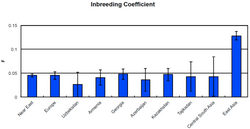
In humans, the effects of consanguineous mating have been studied since Charles Darwin's observations in 1839. Research indicates that inbreeding increases the risk of spontaneous abortions, premature births, and underweight infants. Viable offspring may suffer from blindness, hearing loss, neonatal diabetes, limb malformations, and congenital heart disease—particularly when the inbreeding coefficient (F) is 0.125 or higher.
Historically, this has been observed in royalty and nobility, such as the House of Habsburg, where extreme inbreeding led to distinct physical traits like the "Habsburg jaw" and significant health decline.

The prevalence of consanguineous marriages varies globally, with higher percentages found in specific regions of Europe and Asia.
![Consanguineous marriages (second-degree cousins or closer) in the world, in percentage (%).[68]](/images/83/ab/83ab8f062c29fc7760f67ec5344e41e06443fb7b916749c145e8f47b310870db.webp)
Frequently Asked Questions
What is the difference between inbreeding and linebreeding?
Inbreeding is a general term for mating closely related individuals. Linebreeding is a specific, intentional form of inbreeding designed to concentrate the genes of a particular ancestor in a lineage to maintain desired traits.
Why does inbreeding cause genetic disorders?
Inbreeding increases homozygosity, meaning offspring are more likely to inherit the same recessive allele from both parents. If that allele is deleterious (harmful), the trait will be expressed, whereas in unrelated parents, a dominant healthy gene would typically mask it.
Can inbreeding ever be beneficial?
Yes, in some cases. It can increase the probability of fixing beneficial alleles in a population and can lead to the "purging" of harmful alleles through purifying selection, as individuals with those traits are less likely to survive.
What is inbreeding depression?
Inbreeding depression is the reduction in biological fitness—such as decreased fertility, higher infant mortality, and weakened immune systems—that occurs when a population becomes too genetically similar.
What is outbreeding depression?
Outbreeding depression occurs when offspring from very distantly related populations show lower fitness than their parents, often because the combined genes from two highly adapted but different populations are incompatible.