Inbreeding Depression: Genetic Diversity and Biological Fitness
In the natural world, the survival of a species depends heavily on its genetic toolkit. When a population loses its variety of genes, it often faces a phenomenon known as inbreeding depression. This is the reduction in biological fitness—the ability of an organism to survive and pass its genes to the next generation—resulting from mating between closely related individuals.
Inbreeding depression typically occurs when genetic similarity increases, which can amplify harmful genes and decrease the overall diversity of the population. This is frequently seen in small populations that have undergone a population bottleneck, a sharp reduction in population size that restricts the species' ability to adapt to changing environments.
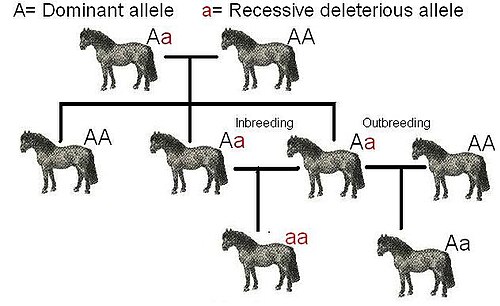
Key Facts
- Biological Fitness: The capacity of an organism to survive and transmit genetic material to offspring.
- Cause: Increased homozygosity (having two identical alleles) allows recessive deleterious traits to manifest.
- Population Bottlenecks: Small population sizes increase the risk of genetic drift and the fixation of harmful alleles.
- Genetic Rescue: Introducing unrelated individuals (hybridization) can restore fitness in severely inbred populations.
- Purging: A natural process where harmful recessive alleles are exposed and removed by natural selection.
Mechanisms of Genetic Decline
The primary driver of inbreeding depression is the manifestation of recessive traits. In a genetically diverse population, harmful recessive alleles are often masked by a dominant, healthy allele—a process called complementation. However, when closely related individuals mate, the offspring are more likely to inherit the same recessive allele from both parents.
Homozygosity and Deleterious Genes
When an offspring becomes homozygous for a deleterious (harmful) gene, the trait is expressed. In some cases, this can lead to zero fitness, meaning the offspring is sterile or unviable. In small populations, genetic drift—the random change in allele frequencies—can cause these harmful alleles to become "fixed," meaning every individual in the population carries them. This resulting decline in fitness is known as drift load.
The Role of Overdominance
Beyond harmful mutations, some species benefit from overdominance, where the heterozygous state (having two different alleles) provides a fitness advantage. In these cases, even if the alleles aren't inherently harmful, a population with too many homozygous genotypes will suffer reduced fitness.
Natural Selection and Management
While inbreeding can be damaging, animals vary in how they avoid it. Inbreeding avoidance typically evolves only when there is a significant risk of depression and frequent encounters between related potential mates.
Conservation Strategies
To combat severe inbreeding, conservationists may use outbreeding enhancement. This involves hybridization—crossing a depleted population with a similar but genetically distinct population of the same species. This increases genetic variation and reduces the likelihood of homozygosity at most loci.
However, managers must be cautious of outbreeding depression. This occurs when intermixing two different populations results in offspring that lack the specific genetic adaptations required for their local environment, making them less fit than the original pure-bred individuals.
Case Study: The Florida Panther
The Florida panther provides a stark example of inbreeding depression and subsequent rescue. By the 20th century, habitat loss and hunting reduced the population to approximately 30 individuals. This isolation led to severe genetic defects, including heart problems, kinked tails, and low sperm quality.
In 1995, eight female Texas cougars were introduced to the population to initiate a genetic rescue. This intervention increased the population to 100 individuals and enhanced allelic diversity. A 2025 study by Aguilar-Gomez et al. revealed that the health improvements were driven by increased genetic diversity rather than the simple removal of harmful variants, and that the original Florida panther lineage was preserved despite the introduction of Texas cougar ancestry.
Inbreeding in Humans
In humans, the effects of inbreeding are complex and often intertwined with socioeconomic factors. While close inbreeding generally reduces fitness—with mating between individuals related as closely as third cousins often resulting in reduced fitness for children—some moderate inbreeding can actually accelerate the selection of beneficial recessive alleles that protect against certain diseases.
Studies in isolated populations have noted small increases in mortality and longer intervals between births. However, research on the Icelandic population suggests that lifespan is not significantly affected beyond the second-cousin level.
Factors That Mitigate Inbreeding Depression
Not all species suffer equally from inbreeding. Some, particularly certain flowering plants (angiosperms), show lower fitness costs due to three main mechanisms:
- Purging Selection: When inbreeding exposes recessive deleterious alleles, natural selection can remove them from the population. This is most effective for lethal alleles.
- Ploidy Differences: Variations in the number of sets of chromosomes can influence how inbreeding affects a species.
- Selection for Heterozygosity: In some wild populations, such as Scandinavian wolves, individuals with higher genetic variation are in better condition and more likely to breed, slowing the predicted decline of the population.
![Inbreeding depression in Delphinium nelsonii. A. Overall fitness of progeny cohorts and the B. progeny lifespan were all lower when progeny were the result of crosses with pollen taken close to a receptor plant.[1]](/images/75/ed/75ed3f7886154c8ba9dbe65fcde8a53208623d1266fbc2eab2fbcbdba2df9d59.png)
| Term | Primary Cause | Effect on Fitness | Outcome |
|---|---|---|---|
| Inbreeding Depression | Mating between close relatives | Decreased | Expression of harmful recessive traits |
| Outbreeding Enhancement | Crossing distinct populations | Increased | Restored genetic diversity (Genetic Rescue) |
| Outbreeding Depression | Crossing too-distant populations | Decreased | Loss of local environmental adaptations |
| Purging | Exposure of recessive alleles | Variable | Removal of lethal mutations from gene pool |
Frequently Asked Questions
What is the difference between inbreeding and inbreeding depression?
Inbreeding is the act of mating between closely related individuals. Inbreeding depression is the actual reduction in biological fitness (such as lower survival or fertility rates) that results from that mating due to the loss of genetic diversity.
How does a population bottleneck lead to inbreeding depression?
A bottleneck occurs when a population's size is drastically reduced. This limits the available genetic variation, forcing the remaining individuals to mate with relatives, which increases the likelihood of harmful recessive genes appearing in offspring.
Can inbreeding ever be beneficial?
In some cases, yes. Inbreeding can increase the speed at which beneficial recessive or co-dominant alleles—such as those providing disease resistance—are selected and fixed within a population.
What is purging selection?
Purging selection is a process where inbreeding exposes harmful recessive traits to the environment. Because these traits reduce fitness, the individuals carrying them are less likely to survive and reproduce, effectively "purging" the harmful mutations from the population's gene pool.
What is the risk of outbreeding enhancement?
The primary risk is outbreeding depression, where the offspring of two very different populations lose the specific genetic adaptations that allowed their parents to survive in their unique local environments.