Shipibo-Conibo People: Art, Tradition, and Life in the Peruvian Amazon
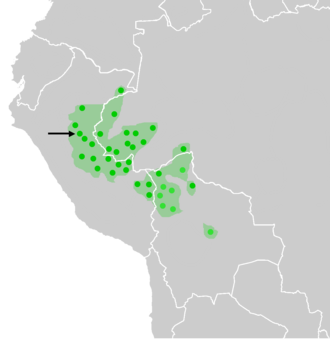
The Shipibo-Conibo are an indigenous people residing along the Ucayali River within the vast Amazon rainforest of Peru. Originally consisting of two distinct groups, they merged into a single tribe through communal rituals and intermarriage. Today, they are recognized for their profound spiritual connection to the rainforest and a visual artistic language that is world-renowned.
While many Shipibo-Conibo continue to live in scattered villages across a jungle expanse stretching from Brazil to Ecuador, a significant number have migrated to urban centers. Many now reside around Pucallpa in the Ucayali region, seeking better access to healthcare, education, and diverse economic opportunities.
Key Facts
- Population: Estimated between 11,000 and 25,000 individuals.
- Location: Primarily the Ucayali River region of Peru.
- Languages: Shipibo and Spanish.
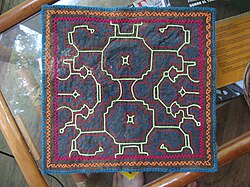
- Artistic Style: Famous for maze-like geometric patterns known as kené.
- Linguistic Group: Part of the Panoan language family.
- Religion: A blend of Animism (the belief that objects, places, and creatures all possess a distinct spiritual essence) and Christianity.
Cultural Traditions and Artistic Expression
The Shipibo-Conibo culture is deeply intertwined with the natural world. One of their most enduring traditions is ayahuasca medicine work. The visions and medicine songs associated with these practices serve as the primary inspiration for their complex decorative designs.
These designs are manifested in various forms of art, including clothing, tools, textiles, and pottery. Shipibo-Conibo women are particularly skilled in beadwork and ceramics. Their pottery is characterized by intricate red and black geometric patterns. While these items were traditionally created for domestic use, a growing tourist market has allowed many households to generate additional income by selling these crafts.
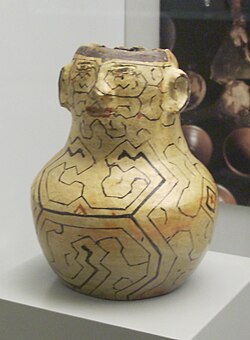
The visual language of the Shipibo-Conibo is not merely decorative but is tied to a rich and complex cosmology—a philosophical system explaining the origin and structure of the universe.
Lifestyle, Diet, and Environmental Challenges
Historically, the diet of the Shipibo-Conibo, such as those in the village of Paoyhan, relied heavily on fish, fruits, and yuca (cassava). They also prepare chapo, a traditional sweet beverage made from plantains.
However, this traditional way of life is under severe pressure. Global weather changes have led to a cycle of drought and flooding, which has killed many mature fruit trees and threatened banana and plantain crops. Furthermore, deforestation and erosion along the Ucayali River have contributed to rising food and energy prices.
Beyond environmental shifts, the community faces external pressures from logging, oil speculation, narco-trafficking, and conservation efforts. These factors, combined with the influence of Christian missionaries—specifically the Franciscans who have been active since the late 17th century—continue to shape the social landscape of the tribe.
Population and Demographics
Accurate census data for the Shipibo-Conibo is difficult to maintain due to the transitory nature of their movements. Estimates vary, with historical data ranging from 11,000 in 1978 to 25,000 by 1994. They represent approximately 8% of the registered indigenous population in their region.
| Category | Details |
|---|---|
| Estimated Population | 11,000 – 25,000 |
| Primary Region | Ucayali River, Peru |
| Related Groups | Kaxinawá, Yaminawá, Amahuaca, Chácobo, Cashibo |
| Urban Hubs | Pucallpa, Yarinacocha District |
| Key Figures | Guillermo Arévalo, Olivia Arévalo, Rocilda Nunta Guimaraes |
Frequently Asked Questions
What is the significance of the geometric patterns in Shipibo art?
The maze-like red and black patterns are inspired by medicine songs and the tribe's complex cosmology, reflecting their spiritual connection to the Amazonian environment.
Where do the Shipibo-Conibo people live?
They primarily live along the Ucayali River in Peru, with populations spread across scattered jungle villages and urban areas like Pucallpa and the Yarinacocha District.
What languages are spoken by the Shipibo-Conibo?
The people speak the Shipibo language, which belongs to the Panoan linguistic family, as well as Spanish.
How has the Shipibo-Conibo diet changed?
Traditionally based on fish, yuca, and fruits, their food security has declined due to global weather changes, flooding, and deforestation along the Ucayali River.
Who are some notable members of the Shipibo-Conibo community?
Notable figures include plant medicine healers Guillermo Arévalo and Olivia Arévalo, as well as indigenous leader and politician Rocilda Nunta Guimaraes.