Seventh-day Adventist Military Service and Conscientious Objection
The intersection of faith and national duty has long been a complex challenge for the Seventh-day Adventist movement. From its formal organization in 1863 through the global conflicts of the 20th century, the denomination has navigated the tension between government mandates and religious convictions, specifically regarding the use of weapons and the observance of the Sabbath.
Foundations During the American Civil War
When the Seventh-day Adventist movement was formally organized in 1863, the United States was in the midst of the Civil War. Military conscription—the compulsory enlistment of people in a national service—presented an immediate crisis for the fledgling church. At the time, Adventist beliefs regarding combatancy were split into three primary perspectives:
- Pacifists: Those who believed any form of military service violated the divine command against murder.
- Militant Abolitionists: Those who viewed military service as a way to honor God by helping end slavery.
- Noncombatants: Those who believed it was their Christian duty to support the government in roles that did not violate the fourth commandment (Sabbath keeping) or the sixth commandment (prohibition of murder).
The noncombatant position eventually became the official denominational policy, establishing a precedent for all future periods of conscription. When the conscription law of March 1863 took effect, many Adventists opted to purchase exemptions for $300 per person. Because this was a significant financial burden, church leaders encouraged members to pool their resources to help those who had been drafted.
By February 1864, the law was amended to allow conscientious objectors—individuals who refuse to fight based on religious or moral grounds—to serve in noncombatant roles. Church leaders worked diligently to secure official recognition for this status from the Federal government and the governors of Illinois, Michigan, Pennsylvania, and Wisconsin.
Challenges of World War I
Following the Civil War, the U.S. military operated as a volunteer force, and the church remained largely silent during the Indian Wars and the Spanish-American War. However, the outbreak of World War I in Europe created new complications. In 1916, the General Conference Committee's Autumn Council sought a way for young men to fulfill their national obligations without violating their noncombatant beliefs, leading the church to promote medical military service.
The global nature of the war created a divide. In Europe, members were often isolated by political battle lines, making it difficult for the church to implement a cohesive policy. In the United States, the process was more orderly, though friction remained. Some draftees adopted extreme positions that led to misunderstandings with company officers who did not respect the status of conscientious objectors.
The human cost of these tensions was significant. Charles Longacre, who managed church military relations in the U.S., reported that 186 American Seventh-day Adventists were court-martialed, and 35 were imprisoned in disciplinary barracks at Fort Leavenworth by the war's end.
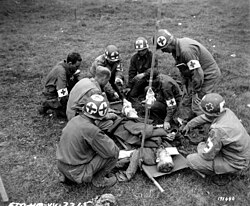
To support its members, the denomination launched a multifaceted initiative. This included calling for pre-induction medical training, providing camp pastors, encouraging participation in government conservation programs, and planning the establishment of Servicemen's Rest Homes in Europe, though the war ended before some of these plans could be fully realized.
Lessons for Future Conflicts
The experiences of World War I provided a blueprint for how the church handled the draft during World War II, the Korean War, and the Vietnam War. Three primary lessons emerged:
- Medical Specialization: Serving in the Medical Corps of the United States Army resulted in the fewest conflicts regarding the bearing of arms and Sabbath observance.
- Preparation: Pre-induction medical training made Adventist soldiers more effective and reduced the friction they encountered in service.
- Education: Teaching members how to balance their obligations to both God and society reduced the extremism that had previously led to courts-martial.
Summary of Adventist Military Policy Evolution
| Era | Primary Challenge | Adopted Strategy/Outcome |
|---|---|---|
| American Civil War | Initial Conscription | Established noncombatant policy; purchased exemptions. |
| World War I | Global Conflict & Draft | Promoted Medical Corps; faced court-martials due to extremism. |
| WWII, Korea, Vietnam | Recurring Conscription | Applied lessons of medical training and member education. |
Key Facts
- The noncombatant position became the official church policy during the American Civil War.
- In 1863, the cost to purchase a military exemption was $300.
- During World War I, 186 American Adventists were court-martialed.
- The U.S. Army Medical Corps was identified as the most compatible service branch for Adventist beliefs.
- Pre-induction medical training was key to reducing conflict between faith and military duty.
Frequently Asked Questions
What is a noncombatant in the context of Adventist belief?
A noncombatant is a person who fulfills their military obligation by serving in roles that do not involve fighting or bearing arms, allowing them to support the government without violating religious commands against killing.
How did the church handle the $300 exemption fee during the Civil War?
Because $300 was a significant sum, church leaders encouraged the congregation to contribute financially to help drafted members purchase their exemptions.
Why were some Adventists court-martialed during World War I?
Courts-martial often resulted from misunderstandings between company officers and draftees who took extreme positions regarding their conscientious objection.
Which military branch was most suitable for Seventh-day Adventists?
The Medical Corps of the United States Army was found to be the most suitable, as it offered the fewest conflicts regarding the Sabbath and the prohibition of bearing arms.
How did the church prepare members for the draft in later wars?
The church emphasized pre-induction medical training and educated members on how to balance their religious obligations with their societal duties to avoid extremism.