Sessility in Animals: Life Without Locomotion
In the animal kingdom, movement is often seen as a primary means of survival. However, many species thrive through sessility, a biological property characterized by a lack of self-locomotion. Sessile animals are immobile and cannot move themselves unless acted upon by external forces, such as ocean currents. To maintain their position, these organisms typically attach themselves permanently to solid substrates, including rocks, dead tree trunks, or man-made structures like ship hulls and buoys. Some, such as corals, go a step further by creating their own substrate as they grow.
It is important to distinguish biological sessility in animals from the botanical definition. In botany and anatomy, sessility refers to a structure, such as a leaf or flower, that is attached directly by its base without a stalk or peduncle.
Key Facts
- Definition: Sessility is the inability of an organism to move independently.
- Attachment: Most sessile animals attach to solid objects or create their own skeletal foundations.
- Life Cycles: Many sessile species have a motile (mobile) larval stage to ensure dispersal.
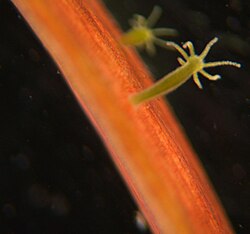
- Reproduction: Asexual reproduction via budding is common among species like hydra and sponges.
- Ecology: Sessile organisms are dominant in coastal circalittoral zones and are responsible for building carbonate platforms.
The Balance of Mobility and Development
While an adult sessile animal is immobile, most species incorporate a motile phase—a period of active movement—into their development. This allows the species to colonize new areas before settling permanently.
For example, sponges begin as motile larvae before becoming sessile upon reaching maturity. In contrast, some jellyfish start their lives as sessile polyps before transitioning to a mobile form. The cochineal insect demonstrates a unique dispersal method during its nymph (or crawler) stage; juveniles move to feeding spots and produce wax filaments. When they move to the edge of a cactus pad, the wind catches these filaments, carrying the larvae to a new host plant.
Reproduction and Dispersal Strategies
Sessile animals have evolved specialized methods to reproduce and expand their populations without the ability to walk or swim as adults. Many, including corals, sponges, and hydra, utilize budding, a form of asexual reproduction that occurs in situ (in the original place).
For organisms like tunicates and barnacles, the evolution of a larval stage is considered essential for long-distance dispersal. This movement prevents overcrowding and allows the species to find new territories. Research by biologist Wayne Sousa in 1979 regarding intertidal disturbance suggests that the availability of open space is critical for maintaining species diversity within sessile communities, supporting the theory of nonequilibrium community structure.
The Role of Clumping and Environmental Impact
Clumping is a behavioral strategy where individuals of the same species group closely together. This is frequently observed in cochineal populations and coral reefs. By clustering, these organisms can achieve faster reproduction rates and gain better protection from predators.
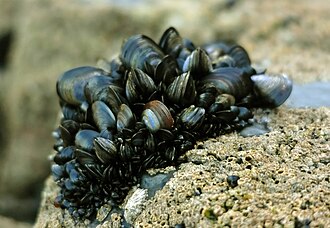
Sessile organisms play a massive role in shaping coastal environments. They dominate the circalittoral zone (the area of the sea floor just below the low-tide mark), with oysters being a primary example. Furthermore, the creation of carbonate platforms is driven by the buildup of skeletal remains from sessile microorganisms, which trigger carbonate precipitation through their metabolic processes.
| Context | Definition of Sessility | Key Characteristic |
|---|---|---|
| Zoology (Animals) | Lack of self-locomotion | Permanently attached to a substrate |
| Botany/Anatomy | Lack of a stalk or peduncle | Attached directly by the base |
Frequently Asked Questions
What is the difference between a sessile animal and a motile animal?
A sessile animal lacks the ability to move independently and is usually attached to a surface, whereas a motile animal has the natural ability to move itself from one location to another.
How do sessile animals spread to new locations?
Most sessile animals utilize a motile larval stage. This allows the young to be carried by water currents or wind to new territories before they settle and become immobile adults.
What is budding in sessile organisms?
Budding is a form of asexual reproduction where a new organism grows out of the body of the parent, allowing species like hydra and sponges to reproduce without moving.
Why do some sessile animals exhibit clumping?
Clumping allows individuals of the same species to group together, which provides advantages such as increased protection from predators and more efficient reproduction.
How do sessile organisms contribute to the ocean floor?
Sessile microorganisms and animals create carbonate platforms through the accumulation of their skeletal remains and metabolic precipitation of carbonates.