Sensation and the Biological Systems of Perception
A sense is a complex biological system that allows an organism to engage in sensation—the process of gathering information about the surrounding environment by detecting specific stimuli. This fundamental process is the bedrock of cognition, behavior, and thought, enabling living beings to interact with and survive in their world.
During sensation, specialized sense organs collect stimuli, such as sound waves or chemical scents. These stimuli then undergo transduction, which is the transformation of physical energy into a form (electrical signals) that the brain can interpret. While many cultures traditionally recognize five human senses, modern science identifies significantly more, and the variety of senses found in non-human organisms is even more vast.

Key Facts
- Transduction is the critical process of converting external stimuli into brain-readable signals.
- Human sensory nerves transmit information at speeds ranging from 165 ft/s (181 km/h) to 330 ft/s (362 km/h).
- Visible light consists of electromagnetic radiation with wavelengths between 380 nm (blue) and 720 nm (dark red).
- Absolute threshold refers to the minimum intensity of a stimulus required for it to be detected.
- Non-human animals possess unique senses such as magnetoception (magnetic field detection) and electroreception (electric field detection).
The Mechanics of Sensory Processing
When receptors receive a stimulus, it is transduced into an action potential. This electrical impulse travels along afferent neurons toward a specific area of the brain known as the cortex. The brain is organized such that different cortices are dedicated to different sensory and perceptual tasks.
Signal transmission speeds vary by species and nerve type. For instance, while human sensory nerves are quite fast, nerves in a frog's legs transmit signals at approximately 90 ft/s (99 km/h). More complex processing occurs as information moves beyond the primary cortical regions into integrated networks.
Human Sensory Modalities
Human perception is divided into several primary systems, each utilizing specific organs and cranial nerves to relay information to the cerebral cortex.
| Sense | Physical Stimulus | Sensory Organ | Cranial Nerve(s) | Cerebral Cortex |
|---|---|---|---|---|
| Sight (Vision) | Light | Eyes | Optic (II) | Visual cortex |
| Hearing (Audition) | Sound | Ears | Vestibulocochlear (VIII) | Auditory cortex |
| Balance (Equilibrioception) | Gravity/Acceleration | Inner ear | Vestibulocochlear (VIII) | Vestibular cortex |
| Smell (Olfaction) | Chemical substance | Nose | Olfactory (I) | Olfactory cortex |
| Taste (Gustation) | Chemical substance | Mouth | Facial (VII), Glossopharyngeal (IX) | Gustatory cortex |
| Touch (Tactition) | Position, Motion, Temp | Skin | Trigeminal (V), Glossopharyngeal (IX), Spinal | Somatosensory cortex |
The Visual System
Vision occurs at the molecular level when photons—packets of energy with both particle and wave properties—cause changes in photopigment molecules. This alters the membrane potential of photoreceptor cells. The color we perceive depends on the wavelength: 380 nm is perceived as blue, while 720 nm is dark red. Wavelengths beyond these limits fall into the ultraviolet or infrared ranges.
Chemical and Balance Senses
Olfaction (smell) and gustation (taste) both rely on the detection of chemical substances. These systems are closely linked in how we perceive flavor. Meanwhile, the vestibular system in the inner ear manages our sense of balance and spatial orientation by detecting gravity and acceleration.


Sensory Thresholds and Detection
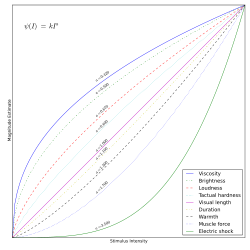
The absolute threshold is the smallest amount of stimulus energy that can be detected. These thresholds vary wildly across the different senses:
- Hearing: A watch ticking 6 meters (20 ft) away in silence.
- Vision: Candlelight seen from 48 km (30 mi) away on a clear, dark night.
- Smell: A single drop of perfume diffused in a volume of three rooms.
- Taste: One teaspoon of sugar dissolved in 7.5 liters (2 gallons) of water.
- Touch: A fly's wing falling on the cheek from a height of 7.6 cm (3 inches).
- Vestibular: A tilt of 3 degrees.
Sensation Beyond Humans
Many animals possess sensory capabilities that humans lack. These include echolocation (used by bats and dolphins), hygroreception (detecting humidity, found in cockroaches), and infrared sensing (used by snakes to detect heat). Some organisms can even sense the Earth's magnetic fields through magnetoception, a trait found in certain bacteria and birds.
Frequently Asked Questions
What is the difference between sensation and perception?
Sensation is the biological process of detecting a stimulus through sense organs and transducing it into a neural signal. Perception is the subsequent cognitive process where the brain organizes and interprets that signal to create a meaningful experience.
How fast do sensory signals travel in humans?
Sensory information in humans is transmitted through nerves at speeds between 165 ft/s (181 km/h) and 330 ft/s (362 km/h).
What is an absolute threshold?
An absolute threshold is the minimum intensity of a physical stimulus required for a biological system to detect it, such as the minimum amount of sugar in water required for a person to taste it.
Can animals see light that humans cannot?
Yes. While humans see wavelengths between 380 and 720 nm, some animals can detect infrared radiation (like snakes) or ultraviolet light, extending their visual range beyond human capabilities.
What is transduction in the context of the senses?
Transduction is the process by which a sensory receptor converts a physical or chemical stimulus (like light or a scent) into an electrical action potential that the brain can understand.