Horizontal Gene Transfer: How Genetic Exchange Drives Evolution
In the traditional view of biology, genetic information is passed down through vertical transmission—the direct movement of DNA from parent to offspring during reproduction. However, nature has a much more dynamic method of sharing biological blueprints. Horizontal gene transfer (HGT), also known as lateral gene transfer (LGT), is the movement of genetic material between organisms that are not in a parent-offspring relationship.
This process is a fundamental driver of evolution. While it significantly shifts our understanding of bacterial evolution, it also influences scientific perspectives on higher-order evolution across various domains of life. By allowing organisms to acquire new traits almost instantly, HGT bypasses the slow pace of traditional mutation and selection.
Key Facts
- HGT allows for the movement of DNA between organisms through means other than reproduction.
- It is the primary mechanism responsible for the rapid spread of antibiotic resistance in bacteria.
- Commonly involved agents in HGT include plasmids (small, circular DNA molecules) and bacteriophages (viruses that infect bacteria).
- HGT occurs across diverse groups, including bacteria, archaea, plants, fungi, and animals.
- The process can enable bacteria to evolve the ability to degrade human-made pesticides.
Mechanisms of Genetic Exchange
Bacteria utilize several distinct methods to acquire new genetic material. These mechanisms allow them to adapt rapidly to environmental pressures, such as the presence of antibiotics or new food sources.
Bacterial Transformation
Transformation occurs when a bacterium takes up free DNA fragments from its surrounding environment. This often happens when a cell is under stress or when DNA is released by a nearby dead bacterium.
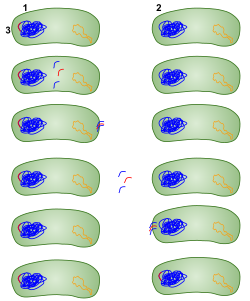
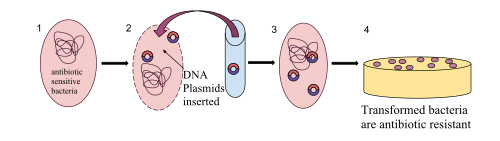
In laboratory settings, scientists can facilitate this process by making the bacterial cell membrane semi-permeable. This can be achieved through temperature extremes, chemical treatments, or electrophoresis, where electric currents create temporary pores in the membrane to allow plasmids to enter.
Bacterial Conjugation
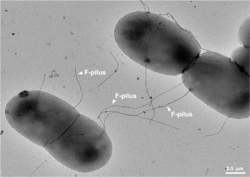
Conjugation is often described as a form of bacterial "mating." It involves direct cell-to-cell contact, typically facilitated by a structure called a pilus. During this process, a donor cell (often referred to as an F+ cell) transfers a plasmid to a recipient cell (an F- cell).
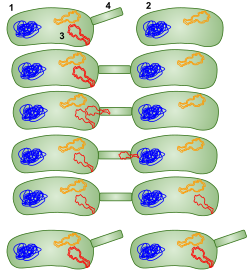
Once the recipient receives the plasmid, it can often act as a donor itself, spreading the genetic information to other bacteria in the colony. This rapid sharing is a major factor in the transmission of virulence and resistance.
Transduction
Transduction is the process by which genetic material is moved from one bacterium to another by a virus, specifically a temperate bacteriophage. The virus accidentally packages bacterial DNA into its capsid and delivers it to a new host during the infection cycle.
HGT Across the Tree of Life
While HGT is most prominent and well-studied in prokaryotes (bacteria and archaea), it is not limited to them. Genetic exchange has been observed across a vast array of biological kingdoms.
| Source Organism | Recipient Organism | Common Context |
|---|---|---|
| Bacteria | Bacteria | Antibiotic resistance and metabolic innovation |
| Bacteria | Eukaryotes (Plants/Animals) | Symbiosis and detoxification |
| Organelles | Nucleus | Evolution of eukaryotic genomes |
| Fungi | Insects | Metabolic trait acquisition |
| Viruses | Bacteria | Transduction of genetic material |
Evolutionary Impact and Challenges
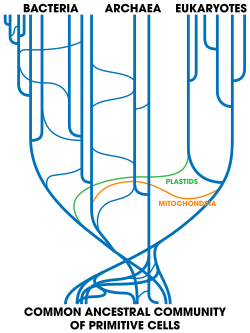
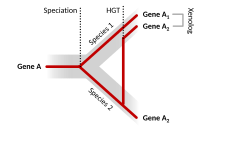
The ability of organisms to swap genes creates a complex web of life that challenges the traditional, branching phylogenetic tree model. Instead of a simple tree, HGT suggests a more interconnected phylogenetic network. This complexity makes it difficult to trace the exact lineage of certain genes, as they may be xenologs—genes acquired via HGT rather than through speciation.
In modern medicine, the rapid spread of antibiotic resistance genes through HGT presents a significant global health challenge. As bacteria share resistance traits through conjugation, transformation, and transduction, existing treatments become less effective, necessitating constant innovation in antimicrobial strategies.
Frequently Asked Questions
What is the difference between vertical and horizontal gene transfer?
Vertical gene transfer is the inheritance of DNA from parent to offspring during reproduction. Horizontal gene transfer is the movement of genetic material between organisms that are not related by descent.
How does HGT contribute to antibiotic resistance?
HGT allows bacteria to share plasmids that contain genes for antibiotic resistance. Through processes like conjugation, a single resistant bacterium can quickly spread this resistance to an entire population of different bacterial species.
Can HGT happen between plants and animals?
Yes, evidence suggests that HGT can occur between various domains of life, including transfers between bacteria and plants, fungi and insects, and even between humans and protozoans.
What are plasmids in the context of HGT?
Plasmids are small, circular pieces of DNA that exist separately from a bacterium's chromosomal DNA. They often carry specialized genes, such as those for antibiotic resistance, and are frequently transferred between cells during conjugation.
Why is HGT important for bacterial evolution?
HGT provides a mechanism for rapid adaptation. It allows bacteria to acquire entirely new functional capabilities—such as the ability to degrade pesticides or survive in toxic environments—much faster than they could through random mutations alone.