Semi-Arid Climates: Characteristics, Types, and Global Distribution
A semi-arid climate, also known as a steppe or semi-desert climate, serves as a transitional environmental zone. These regions are characterized by being dry, receiving precipitation that is lower than the potential evapotranspiration (the combined process of water evaporating from the soil and transpiring from plants), yet they remain wetter than true desert climates.
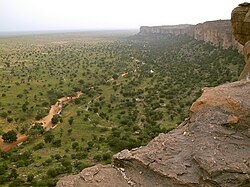
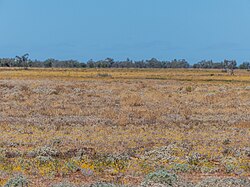
Because of these specific moisture levels, semi-arid regions typically cannot support dense forests. Instead, they are dominated by biomes consisting of short grasses, shrubs, or thorny, scrubby vegetation.
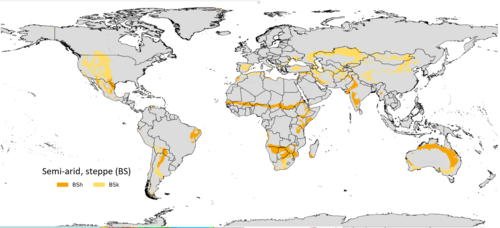
Key Facts
- Classification: Defined by the Köppen climate classification as an intermediate between desert (BW) and humid (A, C, D) climates.
- Vegetation: Primarily composed of grasses and shrubs; forests are generally absent.
- Two Main Types: Divided into Hot Semi-Arid (BSh) and Cold Semi-Arid (BSk).
- Temperature Threshold: The dividing line between hot and cold semi-arid climates is a mean annual temperature of 18 °C (64.4 °F).
- Precipitation: Annual rainfall must be less than a calculated threshold but more than 50% of that threshold to qualify as a BS climate.
Defining the Semi-Arid Threshold
To scientifically determine if a location is semi-arid, climatologists use a specific precipitation threshold based on temperature and the seasonality of rainfall. The threshold in millimeters is calculated as follows:
- Multiply the average annual temperature (in degrees Celsius) by 20.
- Adjust based on summer precipitation (April–September in the Northern Hemisphere; October–March in the Southern Hemisphere):
- Add 280 mm if ≥70% of precipitation falls in summer.
- Add 140 mm if 30–70% of precipitation falls in summer.
- Add nothing if <30% of precipitation falls in summer.
A region is classified as a BS (steppe) climate if its actual annual precipitation is less than this threshold but greater than 50% of it.
Hot Semi-Arid Climates (BSh)
Hot semi-arid climates (BSh) are typically found in the tropics and subtropics, generally between the high tens and mid-30s latitudes. These regions often border tropical savanna or humid subtropical climates and are frequently found on the fringes of subtropical deserts.
These areas experience hot to extremely hot summers and warm to cool winters. Geographically, they are prominent in Africa, Australia (specifically the Outback surrounding central deserts), the Indian subcontinent, and the Iranian plateau. In South Asia, these regions may experience monsoon-driven wet seasons, though they remain too dry overall to be classified as humid.
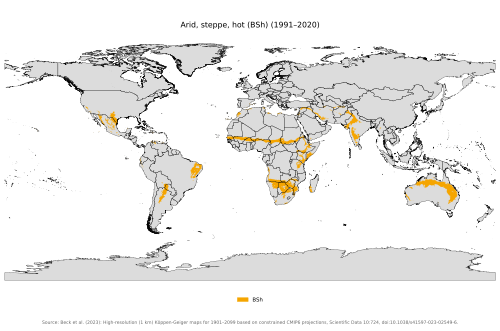
Other notable BSh regions include northern Mexico, the Central Valley of California, the sertão and Gran Chaco in South America, and parts of the Mediterranean Basin, such as southeastern Spain, southern Greece, Sicily, and Sardinia.
Cold Semi-Arid Climates (BSk)
Cold semi-arid climates (BSk) are generally located in the temperate zones, from the mid-30s to low 50s latitudes. They are often found in continental interiors far from large bodies of water or in elevated portions of these zones, bordering Mediterranean or humid continental climates.
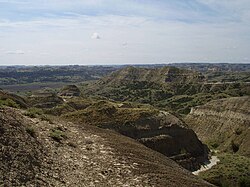
While BSk regions have warm to hot dry summers, they are distinguished by cold, and sometimes freezing, winters. Snowfall occurs, though in lower quantities than in more humid regions at similar latitudes. A defining characteristic of BSk climates is the significant diurnal temperature variation, where day and night temperatures can swing by 20 °C (36 °F) or more.
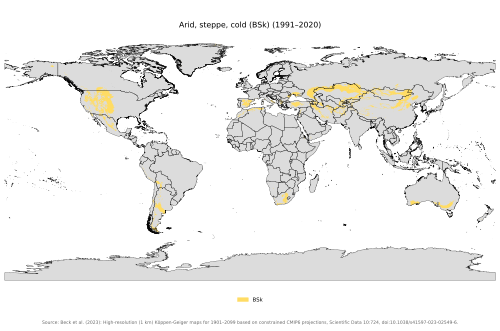
These climates are most common in Central Asia, the western United States, the Middle East, and parts of Eastern Europe, including southern Ukraine and Russia. They also appear in Northern and South Africa, interior southern Australia (such as Mildura), and parts of Spain, Italy, and Portugal.
Climate Comparison Summary
| Feature | Hot Semi-Arid (BSh) | Cold Semi-Arid (BSk) |
|---|---|---|
| Mean Annual Temp | Above 18 °C (64.4 °F) | Below 18 °C (64.4 °F) |
| Typical Latitudes | High tens to mid-30s | Mid-30s to low 50s |
| Winter Conditions | Warm to cool | Cold to freezing (with snow) |
| Temperature Swings | Moderate | High diurnal variation (≥20 °C) |
| Primary Locations | Africa, Australia, India, Mexico | Central Asia, Western US, Russia |
Frequently Asked Questions
What is the difference between a semi-arid climate and a desert climate?
A semi-arid climate is a transitional zone that receives more precipitation than a desert but not enough to support forests. It is defined as having annual precipitation that is between 50% and 100% of a specific calculated threshold based on temperature and rainfall seasonality.
What kind of plants grow in semi-arid regions?
These regions are typically dominated by grasses and shrubs. Because of the limited moisture, vegetation is often short, scrubby, or thorny.
How is a "hot" semi-arid climate distinguished from a "cold" one?
The distinction is based on the mean annual temperature. If the average annual temperature is above 18 °C (64.4 °F), it is classified as hot (BSh); if it is below that temperature, it is classified as cold (BSk).
Why do cold semi-arid regions have such large temperature swings between day and night?
These regions are often located in continental interiors or at higher elevations, far from the moderating influence of large bodies of water, which allows for rapid heating during the day and rapid cooling at night.
Where are hot semi-arid climates most commonly found?
They are most common around the fringes of subtropical deserts in Africa, Australia, the Indian subcontinent, and parts of the Americas and the Mediterranean Basin.