Semelparity vs. Iteroparity: How Organisms Choose to Reproduce
In the natural world, every living organism faces a fundamental biological dilemma: how should it allocate its limited energy between staying alive and producing offspring? This question lies at the heart of life history theory, a framework used by biologists to study how organisms manage their resources over time. To solve this dilemma, species have evolved two primary reproductive strategies: semelparity and iteroparity.
While some creatures choose to invest everything into a single, massive reproductive event, others spread their efforts across multiple cycles throughout their lives. Understanding these strategies provides deep insight into the evolutionary pressures that shape the behavior and survival of everything from tiny insects to large mammals.
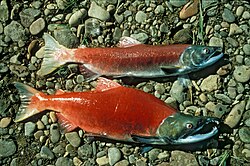
Pacific salmon are examples of semelparous organisms.
Key Facts
- Semelparity refers to organisms that undergo a single reproductive episode before death.
- Iteroparity refers to organisms that undergo multiple reproductive cycles over their lifetime.
- Iteroparity can be continuous (e.g., humans) or seasonal (e.g., birds).
- In plants, these strategies are often referred to as monocarpy and polycarpy.
- Semelparity is often a "big bang" strategy where all resources are committed to one event.
Semelparity: The "Big Bang" Strategy
A species is considered semelparous if it is characterized by a single reproductive episode followed by death. This is not merely a coincidence of early death; in truly semelparous species, death after reproduction is a deliberate evolutionary strategy. By putting every available resource into maximizing a single reproductive event, the organism maximizes its immediate genetic contribution at the expense of its own future survival.
This strategy is common in many insects, certain fish, and annual plants (plants that complete their life cycle in a single season). In insects, semelparity is often defined by organisms that lay a single clutch of eggs in one location and die shortly after oviposition (the process of laying eggs).
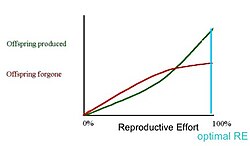
Semelparous reproductive effort
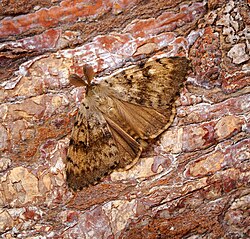
Spongy moth
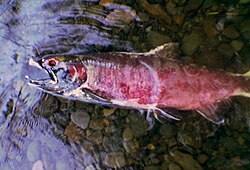
Dead salmon after spawning
Iteroparity: Spreading the Risk
Iteroparity is the opposite approach. Iteroparous organisms undergo multiple reproductive cycles throughout their lives. This strategy allows an organism to hedge its bets, ensuring that if one reproductive attempt fails due to environmental factors, there are subsequent opportunities to pass on genes.
Iteroparity is further categorized into two types:
- Continuous iteroparity: Reproduction occurs regularly throughout the organism's life, such as in primates, including humans and chimpanzees.
- Seasonal iteroparity: Reproduction occurs at specific times of the year, such as in many bird species and dogs.
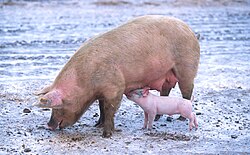
An iteroparous organism is one that can undergo many reproductive events throughout its lifetime. The pig is an example of an iteroparous organism.
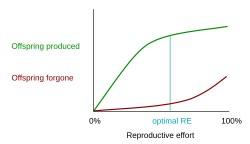
Iteroparous reproductive effort
Biological Examples Across Taxa
Mammals and the Dasyuridae Family
While most mammals are iteroparous, certain small, carnivorous marsupials in the family Dasyuridae exhibit semelparity. This includes members of the genus Antechinus and Phascogale. In these species, males often undergo drastic physiological changes during the mating season, including extreme aggression, followed by rapid death. Studies have shown that if these males are isolated from mating, they can live significantly longer, suggesting that the act of mating and the associated hormonal shifts trigger their demise.
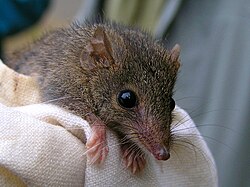
Antechinus agilis
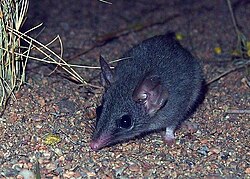
Phascogale calura
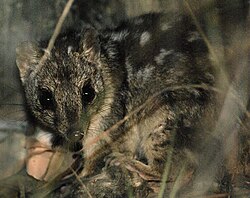
Dasyurus hallucatus
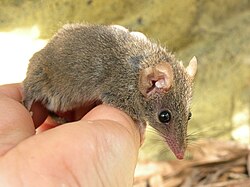
Antechinus stuartii
The Northern Quoll (Dasyurus hallucatus) is a notable exception in the Dasyuridae family. Unlike its smaller relatives, it is a large dasyurid. While males experience increased mortality after mating, it is not strictly due to endocrine (hormonal) failure. If a male Northern Quoll survives its first season, it may be able to breed again, though they often face physiological degradation such as weight loss and parasite infestations.
Opossums and Specialized Strategies
In the Didelphidae family, we see varied approaches. The Yellow-sided opossum follows an annual semelparous strategy, with most adults dying by mid-autumn. Conversely, the Grey slender mouse opossum exhibits semelparity in both males and females. Evidence suggests that once these females reproduce, they are not observed in subsequent years, marking a clear end to their life cycle.
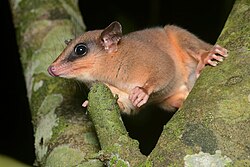
Marmosops incanus
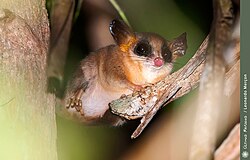
Gracilinanus microtarsus
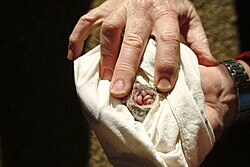
Antechinus agilis showing offspring inside pouch
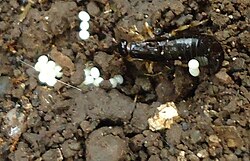
Earwig guarding eggs
Summary of Reproductive Strategies
| Feature | Semelparity | Iteroparity |
|---|---|---|
| Reproductive Events | Single episode | Multiple cycles |
| Resource Allocation | All-in on one event | Distributed over time |
| Typical Plant Type | Annuals | Perennials |
| Common Examples | Pacific salmon, many insects | Humans, birds, most mammals |
Frequently Asked Questions
What is the main difference between semelparity and iteroparity?
The primary difference is the number of reproductive events: semelparous organisms reproduce only once before dying, while iteroparous organisms can reproduce multiple times throughout their lives.
Why would an organism evolve to die after reproducing?
This is an evolutionary trade-off. By committing all energy to a single reproductive event, semelparous organisms can maximize the number of offspring they produce, which can be more advantageous in certain environments than trying to survive for future breeding seasons.
Are all fish iteroparous?
No. While many fish are iteroparous, some species, such as Pacific salmon, are famously semelparous, meaning they die shortly after their spawning event.
How does this apply to plants?
In botany, these concepts are often called monocarpy and polycarpy. Annual plants, which live for only one season, are typically semelparous, whereas perennial plants, which live for multiple years, are usually iteroparous.
Is semelparity always a programmed death?
In truly semelparous species, the death is part of a biological strategy. While some individuals in an iteroparous population might die after their first reproduction, this is not considered semelparity unless the death is part of a consistent syndrome of programmed death following reproduction.