The Biological Divide: Understanding Semelparity and Iteroparity
In the natural world, organisms face a fundamental evolutionary challenge: how to allocate limited energy between staying alive and producing offspring. This struggle has resulted in two distinct reproductive strategies known as semelparity and iteroparity. While one strategy focuses on a single, massive reproductive effort, the other favors multiple opportunities over a lifetime. Understanding these patterns provides a window into the complex trade-offs that drive evolution.
Understanding the Two Strategies
Semelparity: The "Big Bang" Approach
The term semelparity is derived from the Latin words semel ("once") and pario ("to beget"). Often referred to as "big bang" reproduction, semelparity describes a strategy where an organism undergoes a single, massive reproductive episode before death. In these species, every available resource is diverted into maximizing reproduction, often at the direct expense of the individual's future survival.
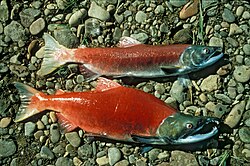
A classic example of a semelparous organism is the Pacific salmon (Oncorhynchus spp.). These fish spend years in the ocean before migrating to the freshwater streams where they were born to spawn. Once they complete this monumental task, they die.
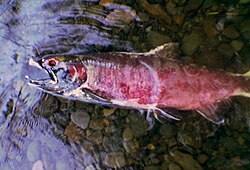
Beyond fish, semelparity is found in many insects (such as certain butterflies, cicadas, and mayflies), various arachnids, and some molluscs like certain species of squid and octopus. In semelparous mammals, the process is often driven by extreme physiological stress; for instance, males may divert all energy into mating, causing the immune system to fail and leading to death through gastrointestinal hemorrhage or systemic failure.
Iteroparity: The Repeat Strategy
In contrast, iteroparity (from the Latin itero, "to repeat") characterizes organisms that undergo multiple reproductive cycles throughout their lives. This strategy allows individuals to spread their reproductive effort over time, potentially increasing the chances that some offspring will survive to adulthood.
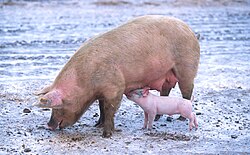
Iteroparity can be categorized into two main types: continuous iteroparity, where reproduction occurs steadily (seen in primates like humans and chimpanzees), and seasonal iteroparity, where reproduction is tied to specific times of the year (seen in birds and dogs). Most vertebrates, including birds, most reptiles, and nearly all mammals, follow this path. In the plant kingdom, most perennial plants—those that live for more than one season—are iteroparous.
Evolutionary Models: Why Choose One Over the Other?
The choice between semelparity and iteroparity is not a simple binary but rather a continuum of reproductive modes. Evolutionary biologists use several models to explain why certain species evolve one strategy over the other.
Resource Trade-offs and Non-linear Costs
At the heart of this distinction is the biological precept of trade-offs. An organism has a finite amount of energy that must be partitioned between growth, survival, and fecundity (the ability to produce offspring). Semelparous species often produce more offspring in their single event than an iteroparous species would in any single one of its cycles. However, iteroparous species offset this by having multiple chances to reproduce and potentially providing more care for their young.
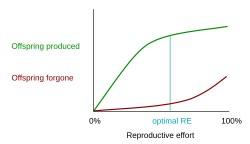
Mathematical models suggest that the decision depends on the "marginal cost" of reproduction. If the cost of producing an additional offspring increases significantly, or if the cost of forgoing future reproduction becomes too high, an organism may choose to invest everything into one event. Conversely, if an organism can reproduce more efficiently by saving some energy for survival, iteroparity becomes the favored strategy.
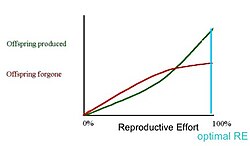
Bet-Hedging and Demographic Models
Another theory is "bet-hedging," which suggests that iteroparity is a way to guard against unpredictable environments. By not "putting all one's eggs in one basket," an organism ensures that a single bad season doesn't wipe out its entire genetic legacy. However, empirical evidence for this is limited, as many semelparous species actually thrive in highly unpredictable habitats like deserts.
The most robustly supported models are demographic. Cole's Paradox, proposed by Lamont Cole in 1954, explores the population growth rates of annual (semelparous) versus perennial (iteroparous) species. While it initially suggested that even a tiny increase in offspring could favor semelparity, later research showed that differences in adult and juvenile mortality rates provide a more nuanced explanation for why semelparity evolves.
Case Studies in Nature
Semelparity in Mammals
Semelparity is rare in mammals because they typically require high maternal survival rates to provide necessary care for offspring. However, some small, carnivorous marsupials in the families Dasyuridae and Didelphidae exhibit this trait.
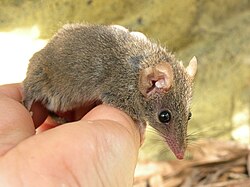
In many Dasyuridae, such as the Antechinus agilis, males undergo drastic physiological changes. They become extremely aggressive during the mating season, but once mating is complete, they experience fur degradation, testicular degeneration, and eventual death.
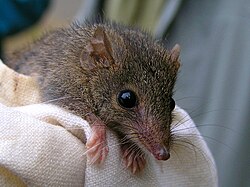
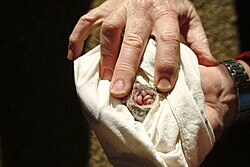
Other species in this group include Phascogale calura and Antechinus stuartii, where males typically disappear after the mating season due to the physiological toll of competition and reproduction.
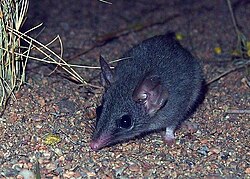
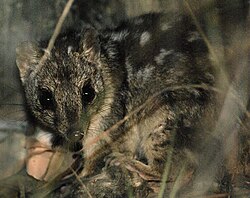
The northern quoll (Dasyurus hallucatus) is a notable exception. While it is a large dasyurid that shows increased male mortality after mating, its death is not driven by the same endocrine (hormonal) changes seen in smaller species. Instead, males may suffer from physiological degradation, such as anemia and parasite infestations.
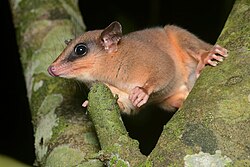
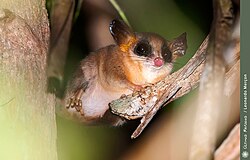
In the Didelphidae family, the Yellow-sided opossum follows an annual semelparous cycle. The grey slender mouse opossum (Marmosops incanus) shows semelparity in both sexes, with significant population drops observed after the reproductive season. Meanwhile, the Brazilian gracile opossum (Gracilinanus microtarsus) is considered partially semelparous, as some males survive to mate again.
Semelparity in Fish and Insects
In fish, the Pacific salmon's strategy is heavily influenced by its anadromous lifestyle—the process of migrating from saltwater to freshwater. The physical toll of this journey, combined with extremely high cortisol levels (a stress hormone) that suppress the immune system, leads to rapid senescence (biological aging) and death after spawning.
Interestingly, this death provides an ecological benefit. As salmon carcasses decompose, they release nitrogen and phosphorus into nutrient-poor freshwater, fueling the growth of algae and supporting the entire food web.
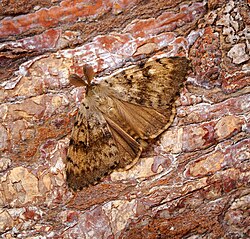
In the insect world, semelparity is often linked to specialized life cycles. For example, the spongy moth (family Erebidae) features apterous (wingless) females. These moths are univoltine, meaning they produce one generation per year. Because the adults lack a functional digestive system, they must mate and lay eggs quickly before dying of starvation.
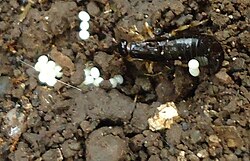
Some semelparous insects also invest heavily in maternal care, such as egg guarding, to ensure the survival of their single clutch of offspring.
Key Facts
- Semelparity is a "one-time" reproductive strategy that is often fatal to the parent.
- Iteroparity allows for multiple reproductive cycles over an organism's lifetime.
- In plants, semelparity is often called monocarpy, while iteroparity is called polycarpy.
- Semelparous salmon die due to high cortisol levels and immune system failure.
- The death of semelparous fish can actually benefit their ecosystem by providing vital nutrients.
- Semelparity is rare in mammals due to the high energy demands of maternal care.
Comparison of Reproductive Strategies
| Feature | Semelparity | Iteroparity |
|---|---|---|
| Reproductive Events | Single episode | Multiple cycles |
| Resource Allocation | All energy into one event | Balanced between reproduction and survival |
| Typical Outcome | Death after reproduction | Survival for future reproduction |
| Common Examples | Salmon, Spongy moth, Antechinus | Humans, Birds, Perennial plants |
Frequently Asked Questions
What is the main difference between semelparity and iteroparity?
The primary difference is the number of reproductive events. Semelparous organisms reproduce only once in their lifetime, whereas iteroparous organisms can reproduce multiple times.
Why do Pacific salmon die after they spawn?
Salmon die due to a combination of extreme physical exhaustion from migration and high levels of cortisol, which causes their immune systems to fail and their tissues to degenerate.
Is semelparity a "bad" strategy for an organism?
Not at all. It is a highly successful evolutionary strategy. By putting all their energy into one massive reproductive event, semelparous organisms can produce a vast number of offspring, which can be advantageous in certain environments.
Why is semelparity less common in mammals than in insects?
Mammals generally invest heavily in maternal care and internal development of offspring. This requires the mother to remain healthy and alive after fertilization to nurse and protect the young, making iteroparity a more viable strategy for most.
What is Cole's Paradox?
Cole's Paradox is a demographic concept that examines the population growth implications of choosing between annual and perennial reproductive habits, helping scientists understand why certain species evolve to reproduce only once.