Selkʼnam People: History, Genocide, and Cultural Resurgence
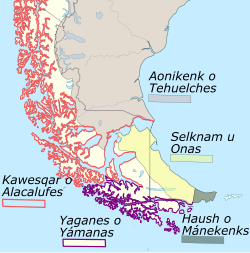
The Selkʼnam are an Indigenous people originally from the region of Tierra del Fuego, known in their own language as Karukinka. Once a thriving community of hunter-gatherers, the Selkʼnam faced a devastating period of extermination in the late 19th and early 20th centuries. Despite being declared extinct by various governments and historians for decades, the Selkʼnam descendants are currently engaged in a powerful movement of cultural reappropriation and legal recognition.
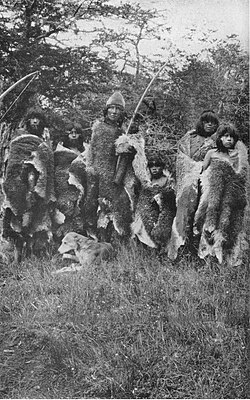
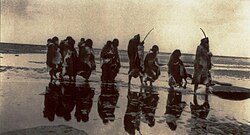
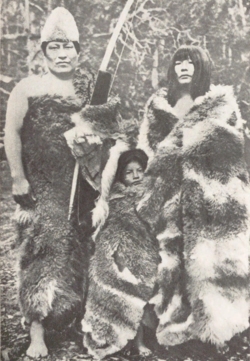
Historically, the Selkʼnam were noted by European explorers for their impressive stature. Ethnographer Frederick Cook recorded in the late 1890s that the average height was six feet, with some individuals reaching six and a half feet, leading early records to describe them as "giants."
Key Facts
- Region: Tierra del Fuego (Karukinka), spanning present-day Chile and Argentina.
- Language: Selkʼnamčan.
- Population Trend: Estimated 4,000 in the mid-19th century, dropping to roughly 100 by 1930.
- Current Status: Officially recognized as living Indigenous communities in both Argentina and Chile.
- Religion: Historically practiced animism; some later adopted Christianity.
The Selkʼnam Genocide
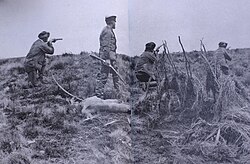
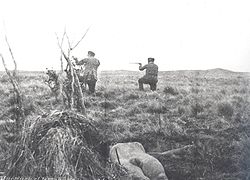
The Selkʼnam genocide occurred between the second half of the 19th century and the early 20th century, spanning a period of ten to fifteen years. The catalyst for this violence was the expansion of gold mining, farming, and sheep ranching (estancias) in Tierra del Fuego.
During this era, estancieros (ranch owners) and gold prospectors launched campaigns of extermination to clear the land. Figures such as Julius Popper were involved in these manhunts, which decimated the population. The demographic collapse was stark: from an estimated 4,000 people in the 1880s, the population plummeted to 500 by the early 1900s. By 1919, ethnologist Martín Gusinde estimated only 279 remained, and by 1945, missionary Lorenzo Massa counted only 25.
European Relations and Documentation
European interactions with the Selkʼnam varied from violent exploitation to scholarly preservation. Salesian missionaries, including Father José María Beauvoir, worked to document the culture. Between 1881 and 1924, Beauvoir compiled a vocabulary of 4,000 words and 1,400 phrases of the Selkʼnam language, noting linguistic connections to the Tehuelche people to the north.
Other scholars, such as German anthropologist Robert Lehmann-Nitsche, provided early academic studies, though his work was later criticized because he studied Selkʼnam individuals who had been abducted for exhibition in circuses.

The Path to Recognition and Survival
For much of the 20th century, the Selkʼnam were erroneously considered extinct. Anthropologist Anne Chapman considered the people extinct after the death of Ángela Loij in 1974, who was viewed as the last person of non-mixed ancestry. Similarly, the death of Virginia Choquintel in 1999 was reported by the press as the passing of "the last Selkʼnam." These narratives have since been criticized for ignoring mixed-ancestry descendants and denying their legal rights.
The tide began to turn in the 1980s with the formation of the Comunidad Rafaela Ishton in Argentina, which fought for and achieved official recognition as an Indigenous people in 1994. In 1998, Law 405 restored 35,000 hectares of land to the Selkʼnam based on a 1925 treaty.
In Chile, the Corporación Selkʼnam campaigned for legal status, leading to an amendment of Indigenous Law 19.253 in 2020. On September 5, 2023, the National Congress of Chile officially recognized the Selkʼnam as one of the 11 original peoples of Chile, with parliament expressing regret for the state's role in the historical massacres.
Cultural Heritage and Legacy
The Selkʼnam legacy persists through the descendants who are recreating their ancestral traditions. Notable figures include Ángela Loij, in whose honor a school in Río Grande is named, and her grand-niece Amalia Gudiño, who became the first Indigenous person to serve as a deputy in the Argentine Chamber of Deputies in 1995.
Artistic contributions also remain, such as the work of Enriqueta Gastelumendi (1913–2004), an artisanal carver who won awards for her depictions of life in Tierra del Fuego.
![Enriqueta Gastelumendi [es], working on a carving in her home in Ushuaia](/images/20/ac/20accfe954e7a113e1686f96a0bd86b34db150ebf37de9a58fc0097d2e297e4d.jpg)
Population and Recognition Summary
| Country | Population (Recent Census) | Legal Recognition Status |
|---|---|---|
| Chile | 1,392 (2024) | Recognized as one of 11 original peoples (2023) |
| Argentina | 1,206 (2022) | Recognized as Indigenous people (1994) |
Frequently Asked Questions
Who were the Selkʼnam people?
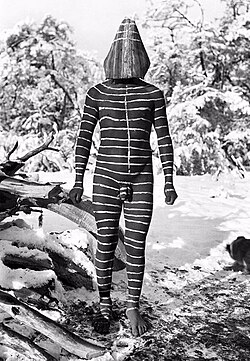
The Selkʼnam were Indigenous hunter-gatherers from Tierra del Fuego (Karukinka), known for their tall stature and distinct culture, including complex initiation rites and the Selkʼnamčan language.
What caused the Selkʼnam genocide?
The genocide was driven by the expansion of gold mining and sheep farming in the late 19th century. Estancieros and prospectors launched campaigns of extermination to seize land and eliminate the Indigenous population.
Are the Selkʼnam people extinct?
No. While they were considered extinct by some governments and historians in the 20th century, thousands of descendants have since reclaimed their identity. They are now legally recognized as living Indigenous communities in both Chile and Argentina.
What is the current legal status of the Selkʼnam in Chile?
As of September 5, 2023, the National Congress of Chile officially recognized the Selkʼnam as one of the 11 original peoples of the country.
Who was Ángela Loij?
Ángela Loij (1900–1974) was a Selkʼnam woman considered by some anthropologists to be the last person of non-mixed ancestry to have lived tribally in her childhood.