Tehuelche People: History, Culture, and Legacy of the Aónikenk
The Tehuelche, also known as the Aónikenk, are an Indigenous people historically inhabiting the vast landscapes of Argentine Patagonia. Known for their resilience and adaptation to the rugged southern terrains, they have a rich history that spans thousands of years, from the creation of ancient rock art to their complex interactions with European explorers and neighboring Indigenous groups.
Historically, the Tehuelche were nomadic hunters and gatherers, deeply connected to the environment of the southern cone. Their identity is characterized by a blend of distinct linguistic traditions and a long-standing relationship with the land, which continues to shape their communities today.
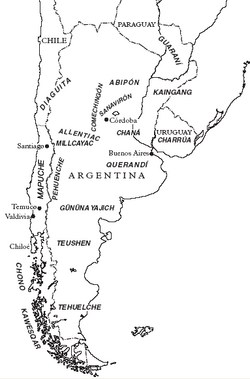
Key Facts
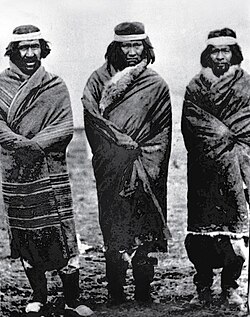
- Total Population: 40,836 (as of 2022), with 23,416 identified as Araucanized.
- Primary Region: Argentina, specifically the Patagonia region.
- Languages: Tehuelche (Aonekko 'a'ien), Mapudungun, and Spanish.
- Ancient Heritage: Associated with the Cueva de las Manos rock art, dating back as far as 13,000 years.
- Historical Name: Referred to by early Spanish explorers as "Patagones" due to their perceived large feet.
The Origin of the Name "Patagonians"
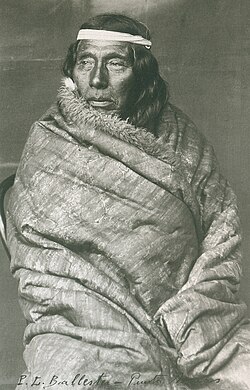
The term "Patagonia" itself is inextricably linked to the first European encounters with the Tehuelche. In 1520, Antonio Pigafetta, a chronicler for Ferdinand Magellan's expedition, referred to the people he encountered at San Julian Bay as "Patagoni." By 1535, historian Gonzalo Fernández de Oviedo y Valdés noted that the Spanish called them Patagones because of their "big feet."
This perception was partly due to the animal furs the Tehuelche used as footwear, which made their footprints appear unnaturally large. Additionally, accounts from the 16th century suggest that Tehuelche men were significantly taller than the average European of the time—some reports claiming heights over 2 meters (6 ft 7 in), while others suggested around 183 centimeters (6 ft).
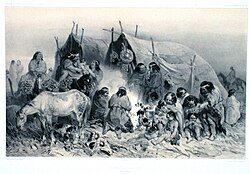
Classifications and Regional Groups
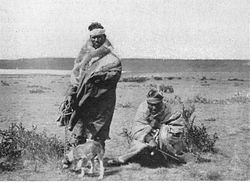
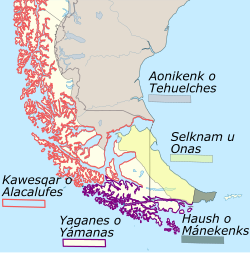
Ethnologists and historians have categorized the Tehuelche into various groups based on geography and language. Federico Escalada, utilizing Mapuche-speaking informants, identified the Guénena-kéne as the northern component of the Tehuelche complex. This group lived primarily along the rivers of North Patagonia, extending through Chubut to Río Negro and into parts of Buenos Aires and La Pampa provinces.
The Guénena-kéne spoke the Puelche language and were often referred to as "Puelches" (meaning 'Eastern') by the Mapuche people. Other classifications include the Island Tehuelche, who resided on the Isla Grande de Tierra del Fuego.
Pre-Columbian History and Archaeology
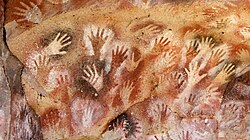
The ancestors of the Tehuelche left a profound archaeological mark on South America. They are believed to be responsible for the rock art at Cueva de las Manos (Cave of the Hands) in Santa Cruz Province, with activity dating from 13,000 to 9,000 years ago, and continuing until approximately 700 A.D.
Technological evolution is evident in two major industrial periods:
- Toldense Industry: Emerging 6,000 years ago, this period featured bifacial knives, bone tools, and sub-triangular projectile points.
- Casapedrense Industry: Occurring between 7000 and 4000 B.C., this era saw a rise in stone tools made in sheets, indicating a specialized focus on hunting the guanaco, a native camelid.
Cultural and Social Life
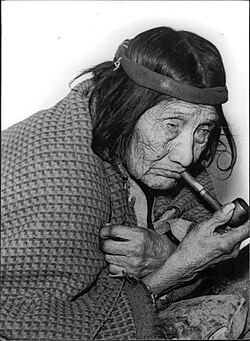
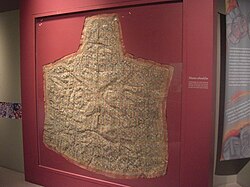
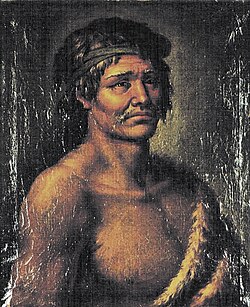
The Tehuelche culture was defined by its adaptation to the Patagonian steppe. Their clothing, such as the traditional Tehuelche cloak, was designed for protection against the harsh southern climate. Their social structure included powerful chiefs, such as Chief Junchar and Chief Inacayal, who navigated the complexities of colonial expansion.
Spiritually, the people practiced Animism—the belief that objects, places, and creatures all possess a distinct spiritual essence—though Catholicism was later introduced through Spanish influence.
Modern Status and Demographics
![Rosa Chiquichano, of Tehuelche descent. A past member of the Argentine Chamber of Deputies, representing the Chubut Province.[38][39]](/images/b1/38/b1384ca9bd96db661400d0a7192e6a2cf94cc8b39f08395a88fd44603dc2ee12.jpg)
The 20th and 21st centuries have seen a significant shift in the Tehuelche population. The 2010 National Population Census in Argentina recorded 27,813 people identifying as Tehuelche, with the highest concentrations in Chubut (7,924) and Buenos Aires Province (4,570). By 2022, the total population was recorded at 40,836.
Many contemporary communities are Mapuche-Tehuelche, reflecting a history of cultural and linguistic blending (Araucanization). Today, several recognized communities exist across Santa Cruz, Chubut, Río Negro, and Buenos Aires provinces.
| Province/Region | Population |
|---|---|
| Chubut | 7,924 |
| Buenos Aires (Interior) | 4,570 |
| Santa Cruz | 2,615 |
| Río Negro | 2,269 |
| City of Buenos Aires | 1,702 |
| Mendoza | 844 |
| Neuquén | 738 |
| La Pampa | 625 |
![The Tehuelche flag: The blue of the sea, the brown of the mountains, the black arrow pointing north and the Southern Cross.[47]](/images/2b/dd/2bdd61178b887dbd50c237a6f53c836b7c9691b2829de5dcb16485368d2c8e47.webp)
Frequently Asked Questions
Why were the Tehuelche called "Patagones"?
They were called Patagones by Spanish explorers who believed they had unusually large feet, a perception caused by the animal fur footwear they wore and their generally taller stature compared to 16th-century Europeans.
What is the significance of Cueva de las Manos?
Cueva de las Manos is a site of ancient rock art created by the ancestors of the Tehuelche. It serves as a vital archaeological record of human activity in Patagonia dating back over 10,000 years.
What languages are spoken by the Tehuelche today?
While Spanish is the primary language, some individuals speak Mapudungun. The original Tehuelche language, Aonekko 'a'ien, is critically endangered, with very few speakers remaining in specific settlements like Camusu Aike.
What is the difference between Tehuelche and Mapuche-Tehuelche?
Mapuche-Tehuelche refers to communities that have undergone "Araucanization," a process of cultural and linguistic blending with the Mapuche people, resulting in a shared identity and the use of the Mapudungun language.
Where are the current Tehuelche reservations located?
Significant reservations and communities are located in the Chubut Province (such as El Chalía and Loma Redonda) and the Santa Cruz Province (including Copolque and Camusu Aike communities).