Puelche People: History, Culture, and Legacy of the Eastern Andes
The Puelche, also known as the Gününa künä (or Guennakin), were Indigenous peoples who inhabited the regions east of the Andes Mountains, spanning across what is now Southwest Argentina and parts of Chile. Their name, "Puelche," is derived from the Mapudungun word pwelche, meaning "people of the east," a term given to them by the Mapuche rather than an autonym.
Once a thriving society of hunter-gatherers, the Puelche faced a devastating decline in the late 18th century due to plagues and epidemics. Those who survived these crises eventually merged with other ethnic groups, including the Mapuche, Het, and Tehuelche.
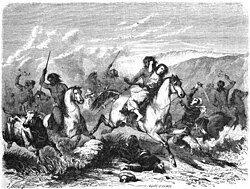
Key Facts
- Autonym: Gününa künä.
- Historical Language: Gününa Yajüch (extinct circa 1970s, though revitalization efforts exist).
- Current Population: 2,260 (as of 2022 census).
- Primary Regions: Northern Patagonia, southern Cuyo, and the Pampas of Argentina.
- Subsistence: Hunting, gathering, and fishing.
- Related Groups: Tehuelche, Selkʼnam, Teushen, and Pehuenche.
Culture and Lifeways
The Puelche lived as nomadic hunter-gatherers and fishermen. Their diet and survival depended on the local fauna and flora; they hunted guanacos, rheas, and Andean deer. Depending on their specific region, they gathered different fruits: the Puelches Algarroberos of northern Neuquén and the Andean areas collected Araucaria fruit, while those in the Cuyo region foraged for carob tree fruit.
Their material culture was adapted for mobility and the harsh Andean environment. They constructed houses and tents using branches and animal hides, typically settling near estuaries and rivers. For clothing, they wore quillangos (fur cloaks) and turbans made of rolled threads with nets covering their heads, often adorned with feathers. They were described as being tall and stout in stature.
Technologically, the Puelche were skilled with bows and arrows, later adopting spears after interacting with the Mapuche. They utilized bark containers with hot stones to cook food and heat water. One of their most notable innovations was the construction of canoes made from cooked and caulked larch boards. These canoes were designed to be easily disassembled and carried on the shoulders across Andean passes, facilitating trade and interaction with the Huilliches and the Chonos of southern Chile.
Social and Political Organization
Puelche society was organized into small bands. Each band was led by an elder who served as the Lonko, acting as the head of the family and the primary authority for the group.
The Puelches Algarroberos
The Puelches Algarroberos, also known as the Puelches de Cuyo, were a specific subgroup related to the huarpean Pehuenches. They resided in Mendoza and northern Neuquén, bordering the Pehuenches to the south and the Huarpes to the north.
Historical Conflicts and the 1833 Desert Campaign
The 19th century was marked by violent clashes between Indigenous groups and the Argentine state. During the 1833 Desert Campaign, the Rankülche chief Yanquetruz fought against Argentine forces, achieving a victory at Acollaradas and forcing a retreat from Leubucó. In response, Juan Manuel de Rosas ordered the persecution of Yanquetruz and his son, Pichún.
During this conflict, a Puelche chief named Vicente Goico, who had been adopted as a godson by the military leader José Félix Aldao, aided the Argentine forces. Goico was involved in the brutal execution of Barbón, an elderly Puelche chief subordinated to Yanquetruz, whose head was displayed on the coast of the Salado River to taunt Yanquetruz. Goico eventually died in a conflict with the Pincheiras Brothers near Mendoza.
Legacy and Commemoration
While the Puelche language went extinct around the 1970s, it remains a subject of modern revitalization efforts. The group's legacy also persists in the natural world; two species of lizards endemic to Argentina are named in their honor: Liolaemus gununakuna and Liolaemus puelche.
| Category | Details |
|---|---|
| Native Name | Gününa künä |
| Geographic Range | Argentina (Patagonia, Cuyo, Pampas) and Chile |
| Traditional Economy | Hunting (Guanaco, Rhea), Gathering (Carob, Araucaria) |
| Key Technology | Disassemblable larch canoes, fur quillangos |
| Modern Population | 2,260 (2022) |
Frequently Asked Questions
What does the name "Puelche" mean?
The name Puelche comes from the Mapudungun word "pwelche," which translates to "people of the east." It was a name given to them by the Mapuche people rather than a name they used for themselves.
What happened to the Puelche language?
The Puelche language, known as Gününa Yajüch, became extinct around the 1970s. However, there are currently ongoing efforts to revitalize the language.
How did the Puelche travel across the Andes?
They used specialized canoes made of larch boards that were cooked and caulked. These canoes were uniquely designed to be disassembled so they could be carried on the shoulders across mountain passes.
Who were the Puelches Algarroberos?
They were a subgroup of the Puelche, also called Puelches de Cuyo, who lived in Mendoza and northern Neuquén. They were closely related to the huarpean Pehuenches and relied heavily on the fruit of the carob tree.
How is the Puelche people remembered today in science?
The Puelche are commemorated through the scientific naming of two endemic Argentine lizard species: Liolaemus gununakuna and Liolaemus puelche.