Secondary Education: Global Systems, Structures, and School Design
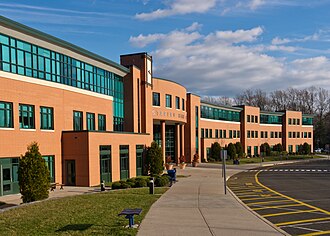
A secondary school—also commonly referred to as a high school or senior school—is an educational institution that provides secondary education, bridging the gap between primary schooling and vocational or tertiary education. While the core purpose of these institutions is consistent worldwide, the terminology, age groupings, and organizational structures vary significantly by country.
In high- and middle-income nations, attendance at secondary schools is typically compulsory until at least the age of 16. These institutions are designed to transition students from the general foundations of primary school to more specialized academic or professional paths.
Key Facts
- ISCED Scale: Secondary education corresponds to levels 2 (lower secondary) and 3 (upper secondary) of the International Standard Classification of Education (ISCED) scale.
- Age Ranges: Most systems cater to students between 11 and 18, though some countries (like Australia, Hong Kong, and Spain) begin secondary education at age 12.
- US Structure: Typically split into middle schools (grades 6–8 or 7–8) and high schools (grades 9–12).
- UK Structure: State and private schools generally accommodate pupils aged 11–16 or 11–18.
- Optimal Size: Research suggests academic achievement is highest with 150 to 250 students per grade, with a decline in community and achievement in schools exceeding 2,000 total students.
Levels of Secondary Education
According to the ISCED 2014 scale, secondary education is divided into two primary stages:
Lower Secondary Education
This is the first stage of secondary education, building upon the primary foundation. It typically introduces a more subject-oriented curriculum, and students are generally between 11 and 15 years old.
Upper Secondary Education
This stage follows lower secondary education and serves as the final phase of schooling before students enter the workforce or pursue higher education.
Global Terminology and Age Groupings
Different nations employ unique naming conventions for their secondary levels. For example, in South Africa, high school runs from grade 8–12 with no middle school, while in Japan, the system is strictly divided into junior and senior high schools.
| Location | Terminology/Grouping | Approx. Age Range |
|---|---|---|
| United States | Middle School & High School | 11–18 |
| United Kingdom | Secondary School / Grammar School | 11–18 |
| Australia | High School / Secondary College | 12–18 |
| India | Secondary & Higher Secondary | 11–18 |
| France | Collège (Junior) & Lycée (Senior) | 11–18 |
| Germany | Gymnasium, Realschule, etc. | 10–18 |
Legal and Theoretical Frameworks
Secondary schools operate within strict legal frameworks. In England, for instance, state-funded schools are monitored by Ofsted and are legally required to publish details regarding governance, finance, and safeguarding policies on their websites to comply with the School Information (England) (Amendment) Regulations 2012 and 2016.
School Building Design
The design of a school campus is not arbitrary; it must accommodate specific teaching methods, curriculum content, and political frameworks. In the UK, specific space standards are used to determine classroom sizes:
- General Classroom (30 students): 55 m² to 62 m².
- Art Room (30 students): 83 m² (up to 104 m² for 3D textile work).
- Science Lab/Drama Studio (30 students): 90 m².
A comprehensive building specification typically includes specialized teaching spaces, administration blocks, multipurpose halls, science and math laboratories, and regularly updated library stocks.
Frequently Asked Questions
What is the difference between lower and upper secondary education?
Lower secondary is the initial stage (ISCED level 2), usually for ages 11–15, focusing on a subject-oriented curriculum. Upper secondary (ISCED level 3) is the final stage that prepares students for tertiary education or the professional workforce.
How does the US secondary system differ from the UK system?
The US typically separates secondary education into middle schools (grades 6–8 or 7–8) and high schools (grades 9–12). In the UK, most secondary schools accommodate pupils from age 11 to 16 or 18 in a single institution, though some private schools admit students starting at age 13.
What is the ideal size for a high school?
Research indicates that academic achievement and a sense of community are strongest when there are 150 to 250 students per grade level. Schools with more than 2,000 total students often see a substantial decline in these areas.
What are the space requirements for specialized classrooms?
Based on UK standards, a science laboratory or drama studio for 30 students requires approximately 90 m², while a general art room requires between 83 m² and 104 m² depending on the activities performed.