Seafood: Types, Production, and Consumption Trends
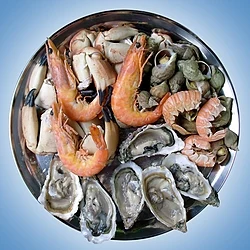
Seafood encompasses any form of sea life regarded as food by humans. While most commonly associated with fish and shellfish, this diverse category also includes edible sea plants and, historically, certain marine mammals. As a vital source of animal protein, seafood plays a critical role in global diets, particularly for populations in coastal regions.
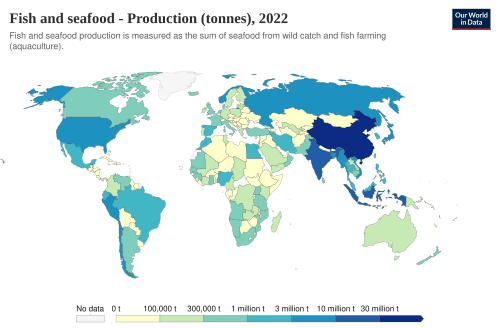
For those who exclude all meat from their diet except for seafood, the practice is known as pescetarianism. The industry is divided into two primary methods of procurement: fishing (the harvesting of wild seafood) and aquaculture (the cultivation and farming of aquatic organisms).
Key Facts
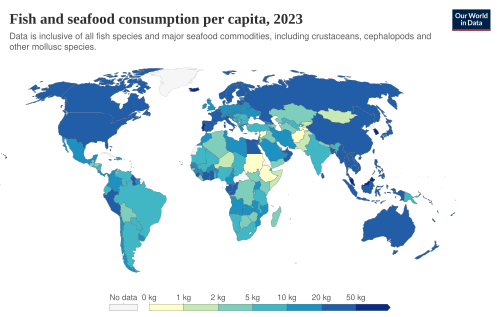
- Global seafood consumption has more than doubled since 1960, exceeding 20 kg per capita.
- Korea, Norway, and Portugal are among the world's top seafood consumers.
- Aquaculture and wild capture are the two primary methods of seafood production.
- Seafood is used not only for human consumption but also as animal feed, fertilizer, and in industrial products like fish oil and collagen.
- Mislabeling is a significant issue in the US market, with some estimates suggesting up to 86% for specific species.
Types of Seafood
Seafood is categorized into several broad groups based on biological characteristics. Fish remain the most produced category, followed by molluscs, crustaceans, and aquatic plants.
Fish and Shellfish
Fish are categorized by their habitat, including marine pelagic (open sea), marine demersal (bottom-dwelling), diadromous (migrating between salt and fresh water), and freshwater species. Shellfish are further divided into:
- Molluscs: Including bivalves (clams, oysters, mussels) and cephalopods (octopus, squid).
- Crustaceans: Including shrimp, crabs, and lobsters.
- Echinoderms: Including sea cucumbers and sea urchins.
Sea Vegetables and Other Life
Edible sea plants, such as seaweeds and microalgae, are widely consumed as sea vegetables, particularly in Asia. Additionally, while less common today, marine mammals like seals and cetaceans (whales and dolphins) have been eaten historically.

| Group | Subgroup Examples | Production (1,000 tonnes) |
|---|---|---|
| Fish | Pelagic, Demersal, Freshwater | 106,639 |
| Molluscs | Bivalves, Cephalopods | 20,797 |
| Aquatic Plants | Seaweed, Microphytes | 19,893 |
| Crustaceans | Shrimp, Crab, Lobster | 11,827 |
| Other Aquatic Animals | Echinoderms, Jellyfish | 1,409+ |
| Total | - | 168,447 |
Consumption and Market Trends
The demand for seafood has risen sharply over the last several decades. Consumption patterns vary wildly by geography, with Korea leading at 78.5 kg per head, followed by Norway (66.6 kg) and Portugal (61.5 kg).
Processing and Trade
In some markets, such as Hong Kong, there is a high preference for live fish, which are transported in expensive tanks to be killed immediately before cooking. The live food fish trade is a significant economic driver, with imports to Hong Kong estimated at over 15,000 tonnes in 2000, valued at approximately US$400 million.
Health Considerations
The FDA recommends moderate consumption of fish as part of a balanced diet to maximize health benefits while minimizing risks.

Health Hazards and Bioaccumulation
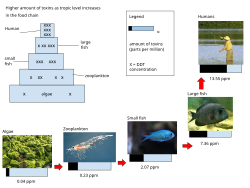
Certain seafood can pose risks due to bioaccumulation—the process where toxins build up in an organism over time. Apex predators, such as swordfish and marlin, can accumulate dangerous levels of methylmercury, microplastics, and polychlorinated biphenyls (PCBs).
Environmental disasters also impact safety. The 1950s Minamata disaster in Japan saw methylmercury from chemical factories enter the food chain, causing severe mercury poisoning known as Minamata disease. Similarly, nuclear disasters like Fukushima Daiichi and nuclear testing in the Marshall Islands have led to radionuclide contamination of local sea life.
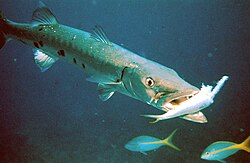
Additionally, some toxins are location-specific. For example, barracuda in Florida carry a high risk of ciguatera, whereas the same species in Belize presents a lower risk due to the lower prevalence of ciguatera-causing dinoflagellates.
Market Integrity and Sustainability
The seafood market is highly susceptible to fraud. In the United States, where a vast majority of the 1,700+ available species are imported, less than 1% are tested for fraud. Mislabeling rates range from 33% generally up to 86% for specific species. A common example is escolar, which is often mislabeled as tuna or albacore; unlike tuna, escolar can cause keriorrhea and severe cramping.
![Escolar is sometimes difficult to distinguish from tuna when cooked. Unlike tuna, escolar is associated with keriorrhea and severe cramping following consumption.[92] In many restaurants, most fish labeled as tuna, white tuna, or albacore are mislabeled escolar.[93][94]](/images/3e/b5/3eb556d2b3fe55bd0661d344f739a9e0a1dd08bcfb06489c2637f79e9810fdd6.jpg)
Sustainability remains a pressing concern. A 2004 FAO report estimated that approximately one-quarter of assessed fish stocks were overexploited, depleted, or recovering from depletion, highlighting the need for rebuilding resource populations.
Frequently Asked Questions
What is the difference between fishing and aquaculture?
Fishing refers to the harvesting of wild seafood from their natural habitats, while aquaculture is the controlled cultivation and farming of aquatic organisms.
Why is some seafood more toxic than others?
Toxicity often depends on the fish's position in the food chain (apex predators bioaccumulate more toxins) and its geographic origin, which determines exposure to specific pollutants or naturally occurring toxins like ciguatera.
What is the risk of seafood mislabeling?
Due to the high volume of imports and low testing rates, many species are misidentified. This can lead to economic fraud or health issues, such as when escolar is sold as tuna.
Which countries consume the most seafood?
Based on per capita data, Korea, Norway, and Portugal are among the highest consumers of seafood globally.
What are sea vegetables?
Sea vegetables are edible sea plants, including various types of seaweed and microalgae, which are particularly common in Asian cuisines.