Scramble for Africa: The Conquest and Colonization of a Continent
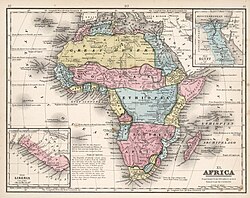
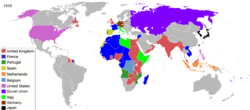
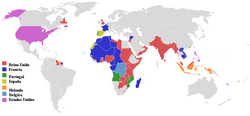
The Scramble for Africa was a period of rapid invasion, conquest, and colonization of the African continent by seven Western European powers. Driven by the Second Industrial Revolution and the era of "New Imperialism," this aggressive expansion occurred primarily during the late 19th and early 20th centuries. The contending powers—Belgium, France, Germany, Italy, Portugal, Spain, and the United Kingdom—transformed the continent from a region of diverse pre-colonial states into a patchwork of European dependencies.
Before this era, European influence was largely characterized by "informal imperialism," which relied on economic dominance and military influence rather than direct governance. However, by the end of the 19th century, this shifted toward direct rule, fundamentally altering the political and social landscape of Africa.
Key Facts
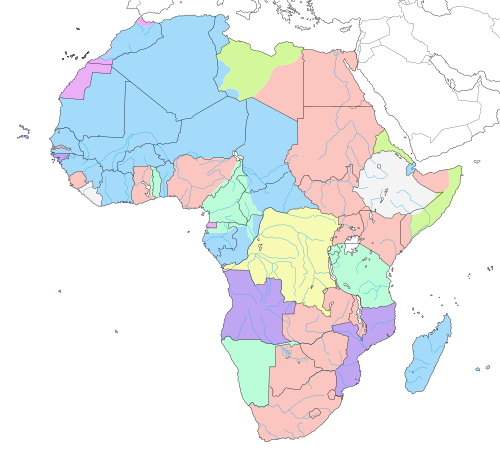
- The Berlin Conference (1884–1885) regulated European colonization and trade, serving as the symbolic starting point of the partition.
- Seven European powers participated: Belgium, France, Germany, Italy, Portugal, Spain, and the United Kingdom.
- Economic drivers included the need for raw materials and new markets resulting from the Second Industrial Revolution.
- Resistance occurred across the continent, including the Dervish State and the Herero and Nama peoples.
- Independent states were rare by 1914, with only Liberia and Ethiopia (Abyssinia) maintaining sovereignty.
The Drivers of Imperialism
Global Markets and Economic Interests
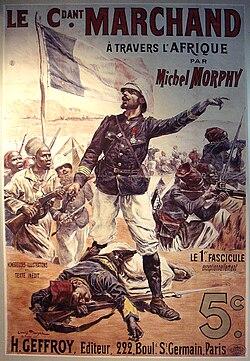
The Second Industrial Revolution created an urgent demand for raw materials and new consumer markets. European powers sought to secure exclusive access to African resources to fuel their industrial growth and maintain economic competitiveness.
Strategic Rivalry and World Policy
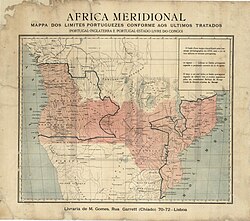
Political rivalries between European empires provided the primary impetus for colonization. Germany, under the policy of Weltpolitik (World Policy), sought to establish its place as a global power. Similarly, Italy pursued expansion to build national identity, and Portugal attempted to link its coastal holdings through the "Pink Map" plan.
The Mechanics of Colonization
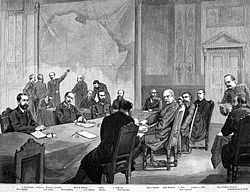
The Berlin Conference (1884–1885)
To avoid direct conflict between European nations, Otto von Bismarck convened the Berlin Conference. This meeting established the rules for the partition of Africa, ensuring that powers could claim territories through "effective occupation" rather than mere discovery.
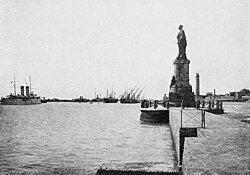
Major Colonial Administrations
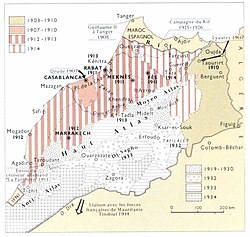
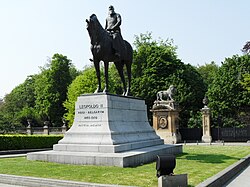
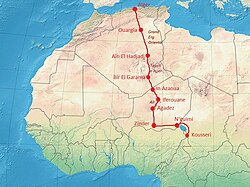
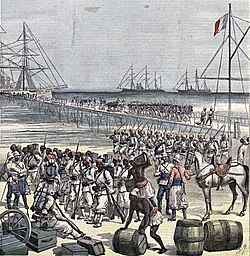
The colonization process varied by power. The United Kingdom focused heavily on strategic routes, such as the Suez Canal in Egypt, which provided a vital link to India. France expanded aggressively across West and North Africa, while King Leopold II of Belgium established the Congo Free State as his personal possession.
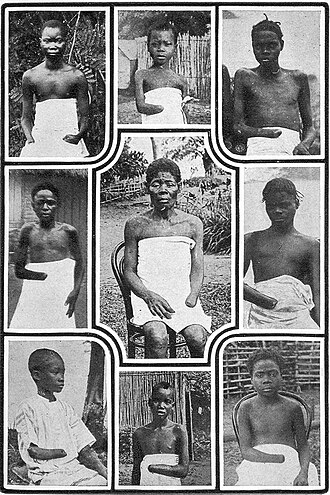
Atrocities and Human Cost
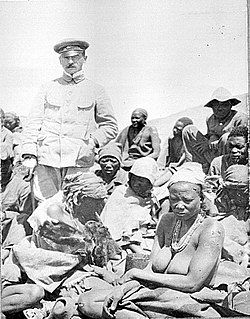
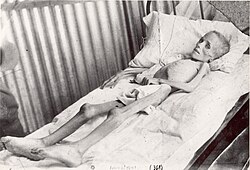
Colonization was often marked by extreme violence. In the Congo Free State (1885–1908), laborers who failed to meet rubber quotas suffered brutal punishments, including the amputation of hands. In German South-West Africa, the Herero and Nama genocide saw the use of concentration camps, such as Shark Island, to eliminate resistance.
Resistance and Independence
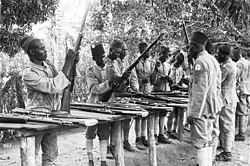
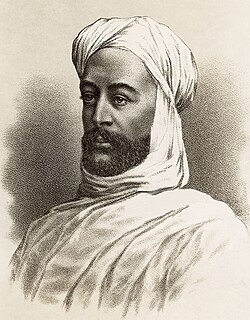
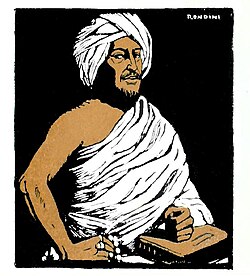
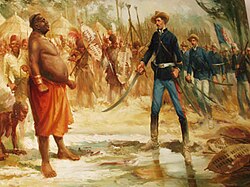
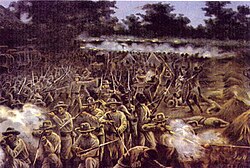
African peoples did not passively accept European rule. Resistance took many forms, from the Mahdist War in Sudan to the Dervish State, which successfully repulsed British forces multiple times between 1899 and 1920. Ethiopia remained a notable exception; after the Battle of Adwa in 1896, it secured its independence through the Treaty of Addis Ababa, though it was briefly occupied by Fascist Italy from 1936 to 1941.
Colonial Philosophy and Propaganda
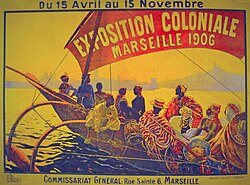
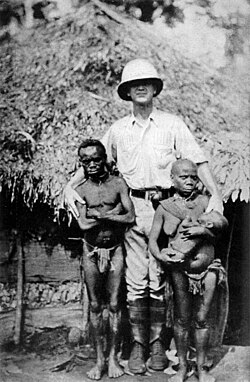
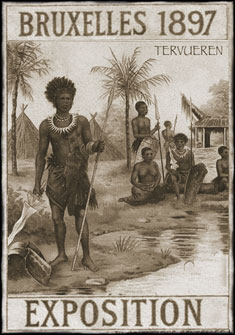
To justify the conquest, European powers developed a "colonial consciousness." This was promoted through colonial exhibitions—large-scale public events that displayed African people and cultures as "primitive." Some individuals, such as Ota Benga, were even displayed in human zoos to support eugenicist theories.
Summary of Colonial Holdings
The following table summarizes the primary territories held by the major European powers during the height of the Scramble.
| Colonizing Power | Key Territories/Regions | Notable Examples |
|---|---|---|
| United Kingdom | East, West, and Southern Africa | Egypt, Nigeria, Kenya, South Africa |
| France | North, West, and Central Africa | Algeria, Senegal, Ivory Coast, Madagascar |
| Belgium | Central Africa | Belgian Congo, Ruanda-Urundi |
| Germany | East, West, and South-West Africa | Tanzania, Cameroon, Namibia, Togo |
| Portugal | West and Southern Africa | Angola, Mozambique, Guinea-Bissau |
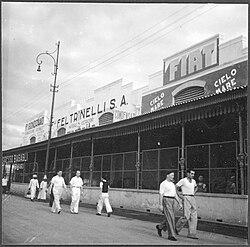
| Italy | North and East Africa | Libya, Eritrea, Somalia |
| Spain | North-West Africa | Spanish Sahara, Equatorial Guinea |
Frequently Asked Questions
What was the purpose of the Berlin Conference?
The Berlin Conference of 1884–1885 was organized to regulate European colonization and trade in Africa. Its primary goal was to prevent war between European powers by establishing a formal process for claiming territories.
Which African nations remained independent during the Scramble?
By 1914, only Liberia and Ethiopia (Abyssinia) remained independent. Ethiopia famously defeated Italian forces at the Battle of Adwa to maintain its sovereignty.
What was the "Pink Map"?
The Pink Map was a Portuguese strategic plan to claim a continuous belt of territory across southern Africa, linking its colonies of Angola and Mozambique.
How did the Second Industrial Revolution contribute to colonization?
The Second Industrial Revolution increased the demand for raw materials (such as rubber and minerals) and created a need for new markets to sell manufactured goods, driving European powers to seize African lands.
What were colonial exhibitions?
Colonial exhibitions were public events used as propaganda to justify imperialism. They often featured "human zoos" and displays of African artifacts to portray colonized peoples as inferior or primitive to European audiences.