Scottish Local Government Reform: The 1973 and 1994 Acts
The administrative landscape of Scotland underwent two seismic shifts in the late 20th century. Through the Local Government (Scotland) Act 1973 and the Local Government etc (Scotland) Act 1994, the nation transitioned from ancient counties and burghs to a structured two-tier system, and eventually to the unitary council areas used today.
Key Facts
- The 1973 Act replaced traditional counties and burghs with a two-tier system of regions and districts.
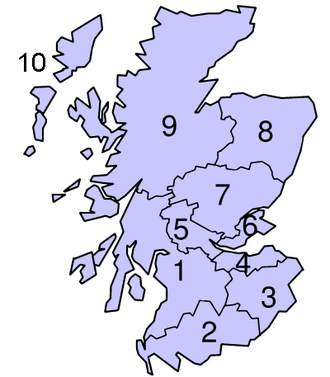
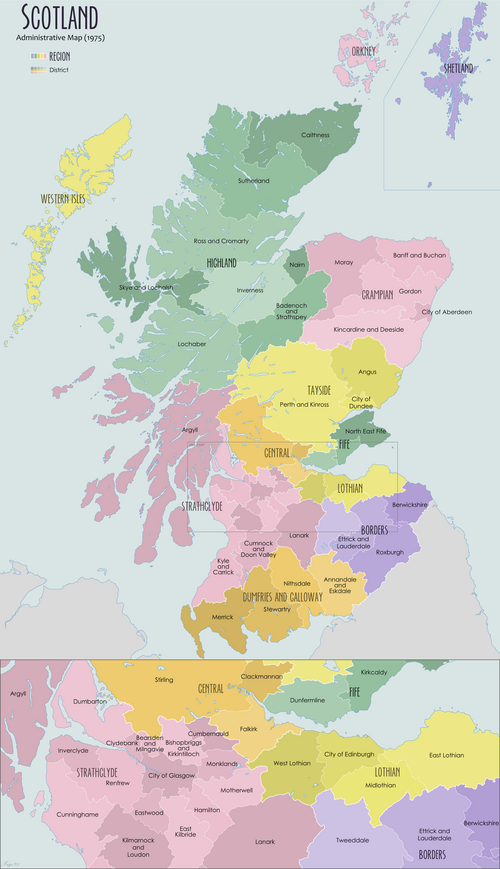
- Nine regions and three islands areas were established in 1975.
- Regional councils managed large-scale services like education, police, and fire services.
- District councils handled local matters such as housing, libraries, and planning.
- The 1994 Act abolished the two-tier system in 1996, creating 32 unitary council areas.
The Road to Reform: 1960s Political Debate
The drive to modernize Scottish local government began in the mid-1960s. In June 1963, the Scottish Office released a white paper, The Modernization of Local Government in Scotland, which proposed a drastic reduction in local authorities—slashing the number of county councils from 33 to between 10 and 15. This plan also suggested merging burghs (self-governing towns) with surrounding rural "landward" areas, requiring a minimum population of 40,000 per council.
However, this initial proposal faced strong opposition from the Scottish Labour Party and the Association of Large Burghs. When Labour took power in 1964, the plan was shelved in favor of a more comprehensive inquiry. In 1966, a royal commission led by Lord Wheatley was appointed to recommend a long-term administrative arrangement for the country.
From the Wheatley Report to Legislation
The Wheatley Commission delivered its report on September 25, 1969, suggesting a two-tier system consisting of 7 regions and 37 districts. The subsequent Conservative government refined these numbers in a 1971 white paper, increasing the count to 8 regions and 49 districts. They also designated Orkney and Shetland as "most-purpose" authorities, separating them from the Highland Region.
Further modifications occurred during the legislative process. The Western Isles were granted islands area status, and Fife was established as its own region rather than being split. By the time the Local Government (Scotland) Act 1973 was finalized, the structure consisted of nine regions and 53 districts. Elections were held on May 7, 1974, and the new authorities officially assumed power on May 16, 1975.
The Two-Tier Structure (1975–1996)
The 1973 Act established a clear division of labor between two levels of government to ensure efficiency and resource management.
Regional Councils
The top tier consisted of regional councils. These bodies were responsible for services that required significant funding or were more effectively managed over a broad geographic area. Key responsibilities included:
- Education
- Police and Fire services
- Transport
- Consumer protection
District Councils
Each region was subdivided into districts (ranging from 3 to 19 per region). While some districts—specifically Glasgow, Edinburgh, Dundee, and Aberdeen—held city status, this was a ceremonial distinction and did not grant extra legal powers. District councils managed local services, including:
- Local planning
- Housing
- Libraries
- Licensing
Islands Areas
Unlike the mainland, the islands areas (Orkney, Shetland, and the Western Isles) operated as unitary local government areas. This meant a single council exercised the powers of both a regional and a district council.
Regional and Islands Area Overview
| Region/Islands Area | Headquarters | Area (Hectares) | Population (1994) |
|---|---|---|---|
| Strathclyde (Region) | Glasgow | 1,350,283 | 2,286,800 |
| Highland (Region) | Inverness | 2,539,759 | 206,900 |
| Grampian (Region) | Aberdeen | 869,772 | 528,100 |
| Tayside (Region) | Dundee | 749,650 | 395,200 |
| Dumfries and Galloway (Region) | Dumfries | 639,561 | 147,900 |
| Borders (Region) | Newtown St Boswells | 471,253 | 105,300 |
| Lothian (Region) | Edinburgh | 171,595 | 750,600 |
| Central (Region) | Stirling | 263,455 | 272,900 |
| Fife (Region) | Glenrothes | 131,201 | 351,200 |
| Western Isles (Islands) | Stornoway | 289,798 | 29,600 |
| Shetland (Islands) | Lerwick | 143,268 | 22,522 |
| Orkney (Islands) | Kirkwall | 97,581 | 19,600 |
The Transition to Unitary Authorities
The two-tier system remained in place for over two decades. However, the Local Government etc (Scotland) Act 1994 sought to simplify administration once again. On April 1, 1996, the regions and districts were abolished and replaced by 29 new unitary local government areas.
Because the three existing islands councils (Orkney, Shetland, and the Western Isles) were already unitary in nature, they continued their operations. This resulted in the current structure of 32 council areas across Scotland.
Frequently Asked Questions
What was the main difference between the 1973 and 1994 Acts?
The 1973 Act created a two-tier system of regional and district councils, whereas the 1994 Act abolished that system in favor of single-tier unitary authorities.
Which services were managed by regional councils under the 1973 Act?
Regional councils were responsible for large-scale services including education, police, fire services, transport, and consumer protection.
Did city status provide extra powers to districts like Glasgow or Edinburgh?
No, city status was a designation that did not confer any additional legal or administrative powers beyond those of other district councils.
Why were the islands areas treated differently?
The islands areas (Orkney, Shetland, and the Western Isles) were designated as unitary authorities from the start because their geography and population made a two-tier system impractical.
Who led the inquiry that shaped the 1973 reforms?
The inquiry was led by a royal commission chaired by Lord Wheatley, which delivered its influential report in September 1969.