Scilla: The History, Taxonomy, and Botany of the Squills
Scilla, commonly known as the squills, is a genus of bulb-forming perennial herbaceous plants. These striking plants are members of the Asparagaceae family and the Scilloideae subfamily. Native to a wide range of environments—including woodlands, subalpine meadows, and seashores—they are primarily found throughout Europe, Africa, and the Middle East, with some species having naturalized in North America and Australasia.
Most Scilla species are celebrated for their vibrant blue flowers that bloom in early spring, though white, pink, and purple varieties also exist. While the majority are spring-blooming, a small number of species flower in autumn. Due to their aesthetic appeal, several species are highly valued as ornamental garden plants.
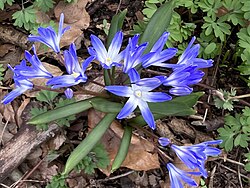
Key Facts
- Genus: Scilla L.
- Family: Asparagaceae (Subfamily Scilloideae).
- Species Count: Estimated between 30 and 80 species depending on taxonomic interpretation.
- Distribution: Native to Europe, Africa, and the Middle East.
- Characteristics: Perennial bulbs, typically producing blue spring flowers.
- Historical Use: Recognized for medicinal properties since classical antiquity.
Taxonomic History and Evolution
The study of Scilla dates back to classical antiquity. Greek writers such as Theophrastus (371–287 BC) and Dioscorides (40–90 AD), as well as the Roman writer Pliny (23–79 AD), described these plants. Theophrastus specifically noted Scilla hyacinthoides, S. autumnalis, and S. bifolia in his Historia plantarum, highlighting their medicinal value.
The formal botanical description of the genus was provided by Carl Linnaeus in 1753. Linnaeus initially listed eight species, placing them in the grouping Hexandria Monogynia (characterized by six stamens and one pistil). He renamed several plants previously classified as Hyacinthus, including Fuchs' Hyacinthus caeruleus mas minor, which became Scilla bifolia.

Over the centuries, the classification of Scilla has shifted significantly. In 1789, De Jussieu grouped them into a family called Asphodeli. By 1853, Lindley placed them within a broad order known as Liliaceae. However, the advent of molecular phylogenetic methods—specifically the Angiosperm Phylogeny Group (APG) system—led to a major realignment. Scilla was moved from the Liliaceae family to the Hyacinthaceae family, and since 2009, it has been classified as part of the subfamily Scilloideae within the Asparagaceae family.
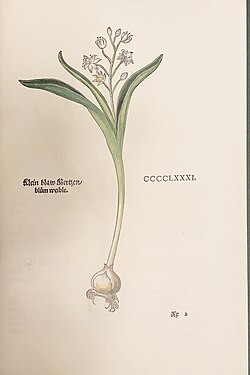
Genus Subdivision and Species Diversity
The exact number of species within the genus is a subject of ongoing botanical debate. Depending on the taxonomic authority, the genus is viewed in two primary ways:
- Scilla s.l. (sensu lato): A broader definition including approximately 80 species. World Flora Online listed 83 species as of May 2022.
- Scilla s.s. (sensu stricto): A narrower definition, often associated with Speta's 1998 scheme, which splits the genus into smaller groups (such as Othocallis), leaving about 30 species in the core genus.
Current proposals suggest dividing the genus into two main sections: Chionodoxa (incorporating taxa previously treated as a separate genus) and Scilla, which contains the remaining species.
Summary of Scilla Classification
| Rank | Classification |
|---|---|
| Kingdom | Plantae |
| Clade | Angiosperms (Monocots) |
| Order | Asparagales |
| Family | Asparagaceae |
| Subfamily | Scilloideae |
| Genus | Scilla L. |
Etymology and Distribution
The name Scilla and the common English term squill both originate from the Latin scilla and Greek skilla. This name has historically been applied to several similar taxa, including Drimia.
Geographically, Scilla is most prevalent in the Mediterranean region of Europe, South Africa, and Southwest Asia. Because of their hardiness and beauty, they have become widely naturalized in North America, Australia, and New Zealand.
Frequently Asked Questions
What are the most common colors of Scilla flowers?
While the most common color is blue, Scilla species can also produce flowers in white, pink, and purple.
When do Scilla plants typically bloom?
Most species bloom in early spring, although a few specific species are autumn-flowering.
How has the classification of Scilla changed over time?
Scilla was originally grouped with lilies (Liliaceae) and later with hyacinths (Hyacinthaceae). Modern molecular data has placed it in the family Asparagaceae, subfamily Scilloideae.
Are Scilla plants used for anything other than decoration?
Historically, Scilla was known in classical literature for its medicinal properties, though today they are primarily grown as ornamental garden plants.
What is the difference between Scilla s.l. and Scilla s.s.?
Scilla s.l. (sensu lato) refers to a broad definition of the genus containing up to 80 species, while Scilla s.s. (sensu stricto) refers to a narrower definition of about 30 species, splitting others into separate genera like Othocallis.