Yucca: The Resilient Genus of North American Landscapes
The genus Yucca comprises a diverse group of perennials, shrubs, and trees known for their striking architecture and resilience. Often associated with arid environments, these plants are members of the Asparagaceae family and the Agavoideae subfamily. While they are frequently confused with the root vegetable "yuca" (cassava), they are botanically distinct and play a critical role in the ecosystems they inhabit.
From the iconic silhouettes of the Joshua tree to the low-growing shrubs of the American Southwest, yuccas have adapted to some of the harshest climates on Earth. Their presence is not only a visual staple of the landscape but also a cornerstone of complex biological relationships.
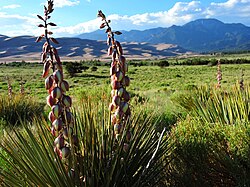
Key Facts
- Classification: Part of the order Asparagales and family Asparagaceae.
- Mutualism: Maintains a rare, ancient obligate relationship with yucca moths for pollination.
- Origin of Name: Derived from the Carib language via Spanish, though adopted by Carl Linnaeus against his own naming rules.
- Diversity: Includes various forms such as the Joshua tree (Yucca brevifolia) and the Mojave yucca (Yucca schidigera).
- Cultivation: Several species are hardy enough for outdoor growth in temperate climates.
Taxonomy and Nomenclature
The genus was first formally described and named by Carl Linnaeus in his 1753 publication, Species Plantarum. Interestingly, Linnaeus violated his own established rule that generic names should be derived from Greek or Latin. Instead, he adopted "Yucca," a word borrowed from the Carib language through the Spanish term juca. While Amerigo Vespucci originally used the term in 1497 to refer to cassava, it was first applied to the current genus in a German travel account in 1557.
Further scientific refinement occurred in 1873 when George Engelmann published the first comprehensive work on the genus. In 1908, Nathaniel Lord Britton and John Adolph Shafer designated Yucca aloifolia as the lectotype (the specimen used as the definitive example) for the genus.
The Extraordinary Bond: Yuccas and Yucca Moths
One of the most famous examples of mutualism—a biological interaction where both species benefit—exists between yuccas and yucca moths. Unlike most pollinators that visit flowers simply to gather food, female yucca moths exhibit behavior exclusively aimed at pollination.
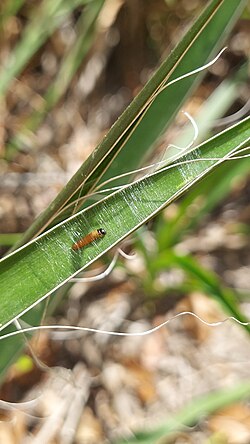
Using specialized tentacle-like mouthparts, the female moth gathers pollen and deliberately deposits it on the plant's reproductive organs. In exchange, the moth lays her eggs within the flower, providing her larvae with a secure food source. Molecular clock estimates suggest this ancient association began between 51.3 and 31.7 million years ago, with the moths becoming active pollinators approximately 35.6 million years ago (±9 million years).
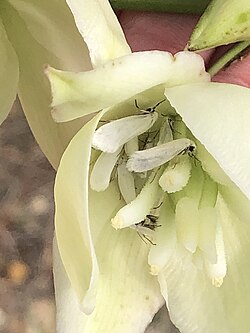
This relationship is so specialized that it is often compared to the bond between fig wasps and fig trees. However, not all species follow this rule; for example, Yucca aloifolia has been noted to opt out of this obligate pollination mutualism.
Practical Uses and Cultivation
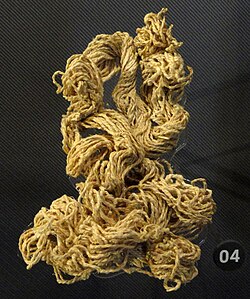
Yuccas have provided significant utility to humans throughout history. Their strong fibers have been used for cordage and weaving, with archaeological evidence showing spun yucca-fiber cordage used by the Kayenta Anasazi between 900 CE and 1100 CE.
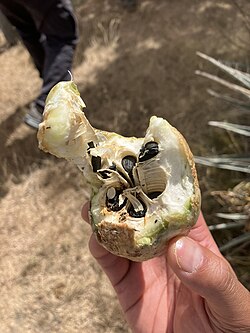
In terms of gastronomy, various parts of the plant are utilized. Harvested flowers are used in regions like Veracruz, Mexico, and the fruit of the banana yucca (Yucca baccata) is edible.
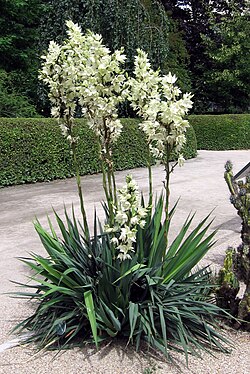
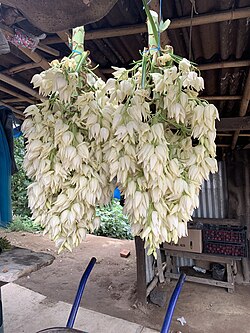
For gardeners, several species are suitable for temperate outdoor climates, including Yucca filamentosa, Yucca flaccida, and Yucca gloriosa. These plants are valued for their architectural form and low maintenance requirements.
Summary of Yucca Characteristics
| Feature | Details |
|---|---|
| Scientific Family | Asparagaceae (Subfamily Agavoideae) |
| Primary Pollinator | Yucca Moth (Prodoxidae) |
| Key Species | Y. brevifolia (Joshua tree), Y. elata (Soaptree yucca) |
| Traditional Uses | Fiber cordage, edible flowers, and fruits |
| Naming Origin | Carib language via Spanish |
Frequently Asked Questions
Is yucca the same as yuca?
No. Yucca refers to the genus of perennials and shrubs in the Asparagaceae family. Yuca (or cassava) is a root vegetable from a completely different botanical group.
How do yucca moths help the plant?
Female yucca moths use specialized mouthparts to collect pollen and intentionally place it on the plant's reproductive parts, ensuring the plant can produce seeds.
Can yuccas be grown in home gardens?
Yes, several species such as Yucca filamentosa and Yucca gloriosa are suitable for outdoor growth in temperate climates.
What are some traditional uses of the yucca plant?
Historically, yuccas have been used to create strong fiber cordage for weaving and as a source of food through their edible flowers and fruits.
How old is the relationship between the yucca and the yucca moth?
Molecular evidence suggests the association began between 51.3 and 31.7 million years ago, with active pollination starting around 35.6 million years ago.