Saxophone History, Evolution, and the Diverse Instrument Family
The saxophone is one of the most versatile and recognizable instruments in the modern musical landscape. A single-reed aerophone—an instrument where sound is produced by a vibrating reed—it bridges the gap between the agility of woodwinds and the power of brass. From its origins in 19th-century Belgium to its dominance in jazz and its sophisticated role in classical music, the saxophone has undergone a fascinating evolution in both design and application.
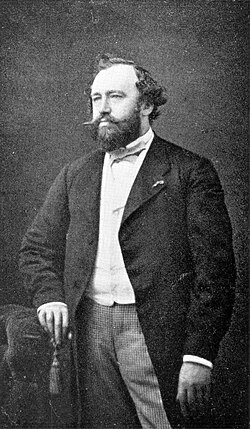
Invented by the Belgian instrument maker Adolphe Sax in the early 1840s and patented on June 28, 1846, the saxophone was designed to provide a consistent voice across various musical ensembles. Sax originally created two groups of seven instruments: one set pitched in C and F, and another in B♭ and E♭. While the C and F instruments remained niche, the B♭ and E♭ series became the global standard.
Key Facts

- Inventor: Adolphe Sax, patented in 1846.
- Classification: Single-reed woodwind (Hornbostel–Sachs 422.212-71).
- Primary Families: B♭ and E♭ series are the most common today.
- Range: Spans from the tiny soprillo to the massive subcontrabass.
- Modern Standard: The 1948 Selmer layout is the nearly universal key arrangement.
The Saxophone Family and Variations

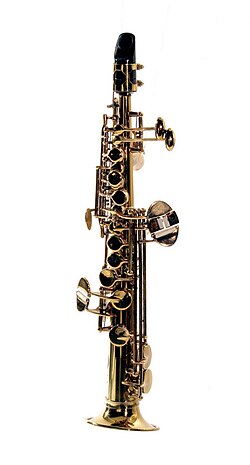
The saxophone family is extensive, offering a wide range of pitches to suit different musical needs. While the alto and tenor are the most common, the family extends to extreme ends of the sonic spectrum.
| B♭ Family | E♭ Family |
|---|---|
| Soprillo (Piccolo) | — |
| — | Sopranino |
| Soprano | — |
| — | Alto |
| Tenor | — |
| — | Baritone |
| Bass | — |
| — | Contrabass |
| Subcontrabass | — |
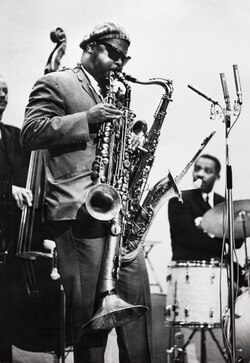
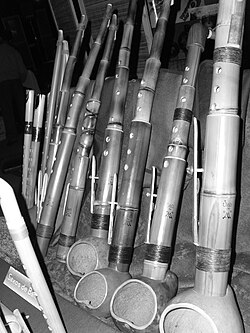
Beyond these standards, the early 20th century saw the rise of "parlor instruments" like the C soprano and C melody saxophones, which allowed amateur musicians to play from piano music without needing to transpose. Other unusual variants include the Tubax, the Aulochrome, and even bamboo saxophones crafted in Argentina.
Evolution of Design and Construction

Mouthpiece and Reed
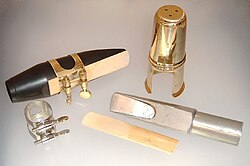
The heart of the saxophone's sound lies in the mouthpiece and reed. The reed is a thin piece of cane that vibrates against the mouthpiece to create sound. These components are held in place by a ligature and protected by a cap when not in use. Mouthpieces can be crafted from various materials, including metal or ebonite (hard rubber), though the dimensions of the chamber and facing are more critical to the sound than the material itself.
Mechanical Advancements
The physical layout of the saxophone evolved significantly between the 1930s and 1940s. C.G. Conn first introduced right-side bell keys on baritones, followed by King on altos and tenors. In 1936, Selmer revolutionized the left-hand table with their "Balanced Action" instruments. This culminated in the 1948 "Super Action" (or Super Balanced Action) model, which introduced offset left and right hand stack keys—a design that remains the industry standard today.
Historical Adoption and Musical Usage
Classical and Military Beginnings
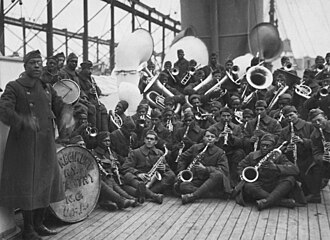
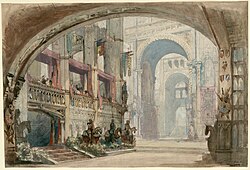
In its first few decades, the saxophone was primarily found in military bands and small classical ensembles. It was adopted by the French Garde Republicaine and used experimentally in orchestral scores, such as Gioachino Rossini's Robert Bruce (1846). However, it never became a permanent fixture in the standard orchestra.
The Rise of Jazz and Popular Music
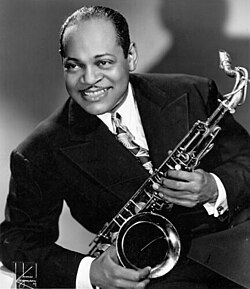
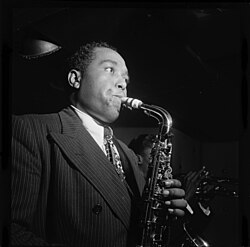
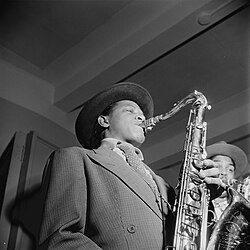
At the turn of the 20th century, the saxophone found a home in vaudeville and ragtime, which paved the way for its central role in dance orchestras and jazz. Influential stylists like Coleman Hawkins and the bebop pioneer Charlie Parker transformed the instrument into a powerhouse of improvisation and expression.
The Modern Classical Era
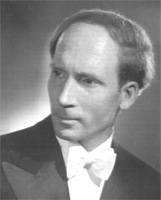
While jazz dominated the public eye, musicians like Marcel Mule and Sigurd Raschèr launched the modern era of classical saxophone in the late 1920s and 1930s. This led to a surge in formal repertoire, with concertos and sonatas composed by figures such as Alexander Glazunov, Paul Hindemith, and more recently, Philip Glass and John Adams.
Frequently Asked Questions
Who invented the saxophone?
The saxophone was invented by Adolphe Sax, a Belgian instrument maker, in the early 1840s and patented in 1846.
What is the difference between the B♭ and E♭ families?
These refer to the pitch of the instrument. The B♭ family includes the soprano, tenor, and bass saxophones, while the E♭ family includes the sopranino, alto, and baritone saxophones.
Why are some old saxophones called "High-Pitch" (HP)?
High-pitch saxophones were tuned sharper than the modern A = 440 Hz standard to make them more effective for outdoor use. They are now considered obsolete as they cannot be played with modern instruments.
Is the saxophone a brass or woodwind instrument?
Despite being made of brass, the saxophone is classified as a woodwind instrument because it uses a single reed to produce sound, similar to a clarinet.
What is the most common saxophone key layout today?
The layout introduced by Selmer in 1948, featuring offset left and right hand stack keys, is the nearly universal standard for modern saxophones.