Satmar Hasidism: The History and Evolution of a Global Dynasty
The Satmar dynasty represents one of the most influential and conservative movements within Orthodox Judaism. Founded on a philosophy of strict isolation and an uncompromising rejection of modernization, the sect evolved from a small group of followers in Transylvania to the largest Hasidic group in the world. Its journey is marked by survival through the Holocaust and a strategic rebirth in the United States.
The Origins in Transylvania
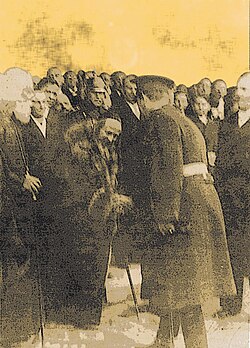
The roots of the movement trace back to the Sigeter Grand Rebbe, Chananya Yom Tov Lipa Teitelbaum, who passed away in 1904. While his eldest son, Chaim Tzvi Teitelbaum, succeeded him, a segment of the Sigeter Hasidim preferred the second son, Joel Teitelbaum. Seeking his own path, Joel settled in Szatmárnémeti (known in Yiddish as Satmar) on September 8, 1905, where he began attracting a dedicated following and eventually adopted the title "Rebbe of Satmar."
Joel Teitelbaum's influence grew steadily. In 1911, he became the chief rabbi of Ilosva. Following the 1921 Treaty of Trianon, which ceded northeastern Hungarian regions to Romania and Czechoslovakia, many Unterlander Jews (Orthodox Jews from the lower Danube region) turned to Joel for leadership. By 1925, he was appointed chief rabbi of Carei, and eventually, in 1934, he accepted the post of chief rabbi of Szatmárnémeti after a period of intense community strife.
Teitelbaum became a pillar of strict Orthodoxy, famously opposing both Zionism and Agudath Israel. His leadership was tested during the Holocaust; when the German Army occupied Hungary in March 1944, mass deportations began. While Teitelbaum initially hoped religiosity would protect his followers, he was eventually saved via a ransom that placed him on the Kastner train to Switzerland in December 1944. He later immigrated to Mandatory Palestine.
Establishing the Satmar Community in America
Following the death of his daughter in Jerusalem, Joel Teitelbaum moved to the United States, arriving in New York on September 26, 1946. He settled in Williamsburg, Brooklyn, where he sought to rebuild the sect destroyed during the Holocaust. The American legal separation of church and state provided a unique opportunity for Teitelbaum to establish an independent community free from the state regulations he had faced in Central Europe.
In April 1948, his followers founded "Congregation Yetev Lev." To ensure total independence, Teitelbaum refused financial aid from other Jewish groups, instead building a network of internal businesses to fund the community's social institutions. This strategy of self-reliance fueled rapid growth. By 1961, the Williamsburg community numbered 4,500 people, and by 1968, Satmar had become the largest Hasidic group in New York.
A central pillar of Teitelbaum's vision was linguistic isolation. He promoted Yiddish as the primary language for his followers, creating a dedicated education system and publishing houses. This effort was so successful that by 1961, children in the community often spoke Yiddish more fluently than their parents.
In 1974, the movement expanded further with the construction of Kiryas Joel in Monroe, New York, a dedicated housing project that achieved independent municipal status in 1977. Joel Teitelbaum passed away from a heart attack on August 19, 1979.
Succession and the Great Schism
Because Joel Teitelbaum had no surviving children, the community faced a leadership crisis. Despite objections from his widow, Alte Feiga, his nephew Moshe Teitelbaum was appointed Rebbe on August 8, 1980. This decision led to the formation of a small opposition group known as Bnei Yoel.
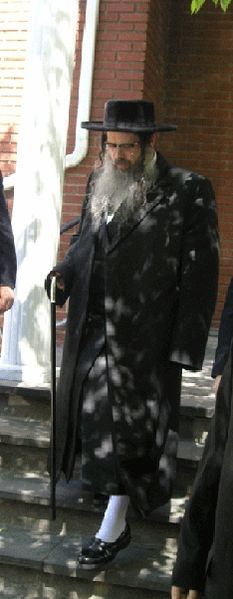
Tensions continued to rise within the dynasty. In 1984, Moshe appointed his eldest son, Aaron, as chief rabbi of Kiryas Joel. However, by 1999, Moshe's third son, Zalman, was appointed to a parallel post in Williamsburg. This created a geographic and political divide between the two brothers.
Following Moshe Teitelbaum's death in 2006, the sect split into two independent factions. Both Aaron and Zalman claimed succession based on their father's will, leading to prolonged legal battles over the assets of the Brooklyn congregation.
Key Facts
- Founder: Joel Teitelbaum, who established the Satmar community in Szatmárnémeti in 1905.
- Core Beliefs: Strict adherence to Orthodox Judaism, opposition to Zionism, and cultural isolation.
- Language: Strong emphasis on Yiddish to maintain community boundaries.
- Major Hubs: Williamsburg (Brooklyn, NY) and Kiryas Joel (Monroe, NY).
- Scale: Estimated between 50,000 and 120,000 members worldwide as of 2006.
- Financials: Controlled assets estimated at $1 billion in the U.S. by 2006.
| Period | Key Leader | Primary Location | Major Milestone |
|---|---|---|---|
| 1905–1944 | Joel Teitelbaum | Transylvania (Satmar) | Establishment of the Satmar Rebbe title |
| 1946–1979 | Joel Teitelbaum | Brooklyn, New York | Founding of Congregation Yetev Lev and Kiryas Joel |
| 1980–2006 | Moshe Teitelbaum | New York | Global expansion and internal leadership tensions |
| 2006–Present | Aaron & Zalman | Kiryas Joel / Williamsburg | Formal schism into two independent groups |
Frequently Asked Questions
Why did Joel Teitelbaum move to the United States?
After surviving the Holocaust and spending time in Mandatory Palestine, Teitelbaum moved to New York in 1946 to re-establish his sect. The U.S. provided a legal environment where the separation of religion and state allowed him to build an independent community without government interference.
What is the significance of Yiddish in the Satmar community?
Yiddish serves as a tool for isolation from the outside world. By making it the primary language of education and daily life, the movement preserves its cultural identity and limits the influence of modern secular society.
What is Kiryas Joel?
Kiryas Joel is a housing project and community established in 1974 in Monroe, New York. It was designed to provide a secluded environment for Satmar members and was granted independent municipal status in 1977.
What caused the split between Aaron and Zalman Teitelbaum?
The schism occurred after the death of their father, Moshe Teitelbaum, in 2006. Both brothers claimed to be the rightful successor according to their father's will, leading to a divide between the followers in Kiryas Joel (Aaron) and those in Williamsburg (Zalman).
How large is the Satmar movement?
Estimates vary; while some anthropologists estimated 50,000 members in 2004, other sources and sociologists estimated the population to be around 119,000 to 120,000 worldwide by 2006.