Sara Martin: The Legacy of the Famous Moanin' Mama
In the golden era of the 1920s, few voices captured the spirit of the classic blues—a style of early 20th-century popular music characterized by its emotional depth and structured form—quite like Sara Martin. Known to her audiences as "The Famous Moanin' Mama" and "The Colored Sophie Tucker," Martin was a powerhouse of the African-American vaudeville circuit, blending musical talent with a dramatic stage presence that captivated listeners across North America and the Caribbean.
Key Facts
- Born: June 18, 1884, in Louisville, Kentucky.
- Stage Names: "The Famous Moanin' Mama" and "The Colored Sophie Tucker."
- Major Label: Signed by Okeh Records in 1922.
- Notable Collaborators: Fats Waller, King Oliver, and Sylvester Weaver.
- Key Contribution: Possibly the first to record "'Taint Nobody's Bus'ness if I Do."
- Career Transition: Later performed gospel music and managed a nursing home.
Early Life and Rise to Fame
Born Sara Dunn to William T. Dunn and Mary Katherine "Katie" Pope in Louisville, Kentucky, Martin's journey into music began early. By 1915, she was already performing on the African-American vaudeville circuit, a variety show format popular at the time. Her personal life was marked by three marriages: first to Christopher Wooden, who passed away in 1901; then to Abe Burton; and finally to Hayes Buford Withers.
Martin's professional trajectory shifted gears in 1922 when she signed with Okeh Records. This partnership launched a prolific recording career, making her one of the most recorded artists of the classic blues era.
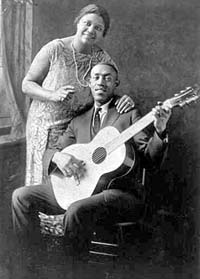
Artistry and Performance Style
On stage, Sara Martin was as much a visual spectacle as she was a musical one. She was renowned for her dramatic delivery and lavish costumes, often changing her attire two or three times during a single performance to keep the audience engaged.
Musical Collaborations and Influence
Throughout the 1920s, Martin collaborated with some of the most influential musicians of the age. She worked closely with piano legend Thomas "Fats" Waller, with whom she recorded "You Got Everything a Sweet Mama Needs but Me" and the iconic "'Taint Nobody's Bus'ness if I Do" in 1922.
Her versatility allowed her to work with diverse talents, including King Oliver and Sylvester Weaver. While some critics, such as Derrick Stewart-Baxter, found some of her recordings stilted, others, like historian Daphne Duval Harrison, praised her ability to use swinging, danceable rhythms and a rich, deep vocal quality in traditional blues tracks like "Mean Tight Mama" and "Death Sting Me."

Later Career and Final Years
By the late 1920s, Martin's fame extended beyond the United States. Her tours took her to major cities like New York, Detroit, and Pittsburgh, as well as international destinations including Cuba, Jamaica, and Puerto Rico. In 1929, she made a brief foray into cinema, appearing in the film Hello Bill alongside Bill "Bojangles" Robinson.
Her final major stage appearance occurred in 1930 in the Darktown Scandals Review. In 1932, she transitioned toward spiritual music, performing as a gospel singer with Thomas A. Dorsey. Eventually, she stepped away from the limelight to run a nursing home in her hometown of Louisville. Sara Martin passed away there in May 1955 following a stroke.
Sara Martin Career Summary
| Category | Details |
|---|---|
| Primary Genre | Classic Blues / Gospel |
| Recording Era | 1920s |
| Key Recordings | "'Taint Nobody's Bus'ness if I Do", "Death Sting Me Blues" |
| Film Appearance | Hello Bill (1929) |
| Recording Aliases | Margaret Johnson, Sally Roberts |
Frequently Asked Questions
What were Sara Martin's most famous nicknames?
She was widely known and billed as "The Famous Moanin' Mama" and "The Colored Sophie Tucker."
Which famous musicians did Sara Martin record with?
She collaborated with several jazz and blues legends, most notably Fats Waller, King Oliver, and Sylvester Weaver.
Did Sara Martin record under any other names?
Yes, in addition to her own name, she made several recordings under the pseudonyms Margaret Johnson and Sally Roberts.
What did Sara Martin do after her music career?
After performing gospel music in 1932, she left the music industry to operate a nursing home in Louisville, Kentucky.
What is her most significant recording contribution?
She is credited as possibly being the first artist to record the famous blues standard "'Taint Nobody's Bus'ness if I Do" in 1922.