Fats Waller: The Virtuoso of Stride Piano and Jazz Composition
Thomas Wright "Fats" Waller was a towering figure of the jazz age and swing era, renowned as a master pianist, organist, composer, and singer. He is best remembered for his innovations in the stride style—a rhythmic, energetic piano technique characterized by a leaping left hand—which left a lasting imprint on the evolution of jazz music. Throughout his career, Waller achieved immense critical and commercial success across the United States and Europe, blending technical brilliance with a charismatic performance style.
His enduring legacy is cemented by timeless compositions such as "Ain't Misbehavin'" and "Honeysuckle Rose," both of which have been inducted into the Grammy Hall of Fame. From the clubs of Harlem to the stages of Broadway, Waller's music captured the spirit of an era.

Key Facts
- Full Name: Thomas Wright Waller
- Active Years: 1918–1943
- Primary Style: Stride Piano
- Famous Works: "Ain't Misbehavin'" and "Honeysuckle Rose"
- Major Achievement: First Black composer to write a Broadway show for a white cast (Early to Bed).
- Death: December 15, 1943, at age 39.
Early Career and the Rise of a Recording Star
Waller's professional journey began in the early 1920s. In 1922, through his friend Clarence Williams, a music publisher in Tin Pan Alley, Waller became associated with Okeh Records. Although he missed his first scheduled session, he soon made his mark with recordings like "Muscle Shoals Blues" and "Birmingham Blues" in late 1922. By 1923, he was recording piano rolls for QRS, starting with "Got to Cool My Doggies Now."
The mid-to-late 1920s marked a period of prolific creativity. Waller collaborated with Williams on over 70 songs, including "Squeeze Me." In 1926, he began working with the Victor Talking Machine Company (later RCA Victor), recording his first solo pieces, "St. Louis Blues" and "Lenox Avenue Blues." By 1929, he had composed some of his most legendary hits, including "Black and Blue" and "I've Got a Feeling I'm Falling."
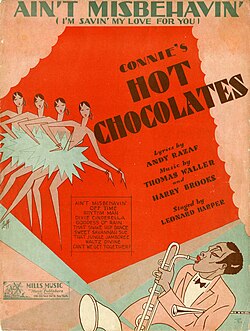
Despite his success, financial struggles plagued Waller. To avoid higher child support payments to his first wife, Edith, he sold the rights to twenty of his songs—including "Ain't Misbehavin'"—to Irving Mills for only $500, a fraction of their actual value. This meant he received only the musician's share of royalties for years to come.
Expanding into Radio, Theater, and Film
When the Great Depression caused record sales to plummet in the early 1930s, Waller pivoted to radio. Starting in December 1930 with CBS, he began showcasing his voice alongside his piano playing. His manager, Joe Davis, actively marketed him as a singer, leading to solo recordings like "I'm Crazy about My Baby."
Waller also ventured into musical theater. In 1928, he contributed heavily to the revue Keep Shufflin', which played on Broadway at the Eltinge 42nd Street Theatre. His later years saw a groundbreaking achievement in 1943 when his musical Early to Bed premiered; it was the first Broadway show written by a Black composer for a white cast.
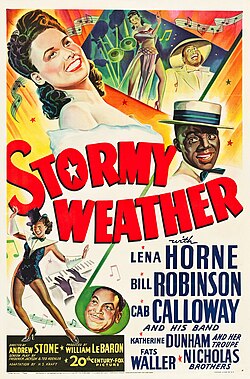
His cinematic presence included roles in films such as Hooray for Love (1935) and King of Burlesque (1936). One of his final film appearances was in Stormy Weather (1943), where he performed several of his hits.
Late Career and Classical Ambitions
In his final years, Waller sought to elevate the perception of jazz. Inspired by George Gershwin, he began studying the violin and incorporating classical themes into his work. In 1939, while visiting London, he composed the London Suite, an impressionist piece reflecting the city's atmosphere. In January 1942, he performed a concert at Carnegie Hall to encourage audiences to take jazz more seriously as an art form.
Personal Life and Passing
Waller married Anita Rutherford in 1926, and they had two sons, Maurice and Ronald. However, his later years were marred by declining health, attributed to heavy alcohol consumption and excessive weight. In October 1943, while performing at the Zanzibar Room in Hollywood, he contracted influenza. Despite medical advice to seek hospital care and stop drinking, he continued to work.
Fats Waller passed away from pneumonia on December 15, 1943, while traveling to New York on the Santa Fe Chief train. He died at Kansas City Union Station. His funeral at Abyssinian Baptist Church in Harlem was attended by over 4,200 people. In a poetic farewell, his ashes were scattered over Harlem from an airplane piloted by the "Black Ace."
Summary of Career Achievements
| Category | Key Milestone / Work | Year/Period |
|---|---|---|
| First Recordings | "Muscle Shoals Blues" & "Birmingham Blues" | 1922 |
| Major Compositions | "Ain't Misbehavin'" & "Honeysuckle Rose" | 1929 |
| Broadway Debut | Keep Shufflin' | 1928 |
| Classical Work | London Suite | 1939 |
| Historic Broadway Show | Early to Bed | 1943 |
Recognition and Awards
Waller's influence persisted long after his death. He was posthumously inducted into several prestigious institutions:
- Songwriters Hall of Fame: 1970
- Big Band and Jazz Hall of Fame: 1989
- Grammy Lifetime Achievement Award: 1993
- Nesuhi Ertegun Jazz Hall of Fame: 2005
Frequently Asked Questions
What is the "stride style" of piano?
Stride piano is a jazz style where the left hand "strides" or leaps between a bass note on the first and third beats and a chord on the second and third beats, creating a driving, rhythmic foundation for the melody played by the right hand.
Which of Fats Waller's songs are the most famous?
His most enduring and famous compositions are "Ain't Misbehavin'" and "Honeysuckle Rose," both of which are recognized in the Grammy Hall of Fame.
Why did Waller sell the rights to his songs for so little money?
Waller sold the rights to twenty of his songs to Irving Mills for $500 to avoid paying higher child support payments to his first wife, Edith, following their 1923 divorce.
What was Waller's contribution to Broadway?
Waller was a pioneer in musical theater, most notably becoming the first Black composer to write a Broadway show (Early to Bed) specifically for a white cast.
How did Fats Waller die?
Waller died of pneumonia on December 15, 1943, while on a train at Kansas City Union Station, following a period of declining health and a bout of influenza.