Santiago de Cuba: The Heroic Cultural Capital of the Southeast
Located in the southeastern region of the island, Santiago de Cuba is the second-largest city in Cuba and the capital of its namesake province. Situated approximately 870 km (540 mi) southeast of Havana, this vibrant city serves as a critical sea port connected to the Caribbean Sea. Known for its rebellious spirit and rich artistic heritage, the city is defined by its motto: "Rebelde ayer, hospitalaria hoy, heroica siempre" (Rebellious yesterday, hospitable today, always heroic).
The municipality spans 1,023.8 km² (395.3 sq mi) and encompasses several key communities, including El Cobre, Moncada, and Siboney. With a population of 507,167 as of 2022, it remains a central hub of Cuban demographics and economic activity.
![Santiago de Cuba in 1856 by Edouard Laplante and Leonardo Barañano. Firestone Library, Princeton University.[7]](/images/84/04/8404c0948d0e44d6c8e097ca152fdbbc088f18ead231e41bc21f16b90b617320.jpg)
Key Facts
- Founded: July 25, 1515, by Diego Velázquez de Cuéllar.
- Status: Second-largest city in Cuba and a major Caribbean port.
- UNESCO Sites: Home to the Castillo de San Pedro de la Roca and the Baconao Park Biosphere Reserve.
- Cultural Legacy: Birthplace of the Bacardí brand and the heart of son music.
- Revolutionary Significance: Site of the 1953 attack on the Moncada Barracks.
A Legacy of Conquest and Conflict
Santiago de Cuba was the seventh village established by Spanish conquistador Diego Velázquez de Cuéllar. Despite being destroyed by fire in 1516, it was quickly rebuilt and served as the capital of the Spanish colony of Cuba from 1522 until 1589. The city's strategic location made it a launchpad for early expeditions to Mexico and Florida.
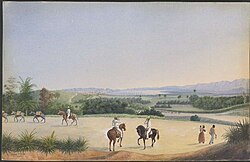
Throughout the colonial era, the city faced numerous threats, including plundering by French forces in 1553 and English raids in 1603 and 1662. In the early 19th century, the city's demographics shifted significantly when approximately 18,000 refugees from Saint-Domingue (modern-day Haiti) arrived in 1803 during the Haitian slave revolt. This influx of ethnic French whites, free people of color, and African freedmen added a unique layer to the city's existing Spanish and African cultural blend.
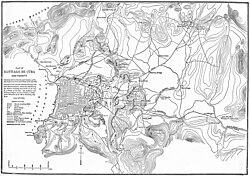
The Spanish-American War marked another turning point in 1898. Following the defeat of Spanish troops at San Juan Hill on July 1, the city was besieged by U.S. General William Rufus Shafter. The conflict concluded locally on July 3, after Admiral William T. Sampson destroyed the Spanish Atlantic fleet in the harbor.
The Cradle of the Cuban Revolution
Santiago de Cuba played a pivotal role in the 20th-century struggle for power. On July 26, 1953, Fidel Castro led a small group of rebels in an attack on the Moncada Barracks, an event that sparked the Cuban Revolution.
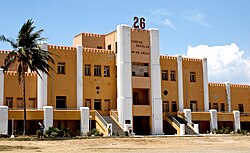
Following this, revolutionary hero Frank País organized a highly effective urban resistance. By coordinating clandestine cells and publishing newsletters to bypass government censorship, País created a vital alliance that eventually merged with Castro's 26 July Movement in 1955. The victory of the revolution was officially proclaimed from the balcony of Santiago's city hall on January 1, 1959.
Culture, Music, and Architecture
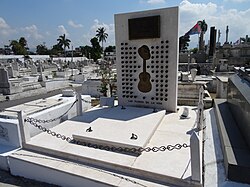
The city is a powerhouse of Cuban arts. It is the birthplace of the world-famous Bacardí rum brand, founded by Facundo Bacardí Masso in 1862. Musically, Santiago is renowned for son—the traditional genre from which salsa evolved. The city's sound is characterized by the trompeta china (a pentatonic trumpet) played during the July Carnival.
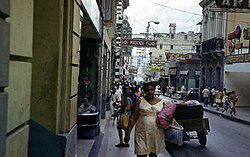
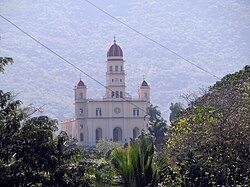
Notable musical figures associated with the city include Compay Segundo, Ibrahim Ferrer, and Eliades Ochoa. The city's spiritual life is equally diverse, with a strong presence of santería (an Afro-Cuban religion) and influences from Haitian vodún.
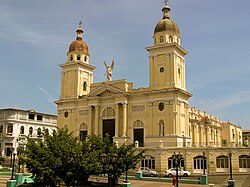
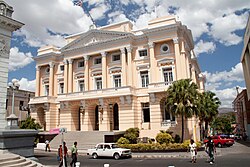
Architecturally, the city blends Baroque and neoclassical styles. Key landmarks include the first Spanish dwelling in the Americas, the first cathedral in Cuba, and the Cobre mine, the first copper mine opened in the Americas.
World Heritage and Geography
The Castillo de San Pedro de la Roca is a UNESCO World Heritage Site, recognized as the most complete example of Spanish-American military architecture based on Renaissance and Italian principles.
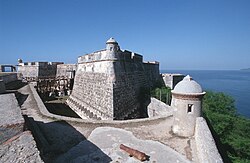
Geographically, the city is nestled at the foot of a bay and surrounded by the Sierra Maestra mountains. This terrain results in a city layout characterized by steep streets and descending avenues. The climate is classified as a tropical savanna, maintaining hot and humid conditions year-round.
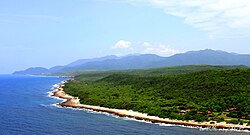
Beyond the urban center, the Baconao Park was designated as a UNESCO World Heritage Biosphere Reserve in 1987, highlighting the region's ecological importance.
City Overview and Infrastructure
| Category | Detail |
|---|---|
| Population (2022) | 507,167 |
| GDP (PPP, 2023) | $6.2 billion |
| Per Capita GDP | $14,000 |
| Elevation | 82 m (269 ft) |
| Main Airport | Antonio Maceo Airport |
| Primary University | University of Santiago de Cuba |
Transportation is managed through a combination of Metrobus (inner-city) and Omnibus Metropolitanos (metropolitan area). The city is also a major rail hub via the "General Senén Casas" station and is connected to Havana by the Carretera Central highway.
Frequently Asked Questions
Who founded Santiago de Cuba?
The city was founded on July 25, 1515, by the Spanish conquistador Diego Velázquez de Cuéllar.
What is the significance of the Moncada Barracks?
The Moncada Barracks was the site of an armed attack on July 26, 1953, led by Fidel Castro, which served as the starting point of the Cuban Revolution.
What musical style is Santiago de Cuba most famous for?
The city is most famous for son, a traditional music style that later became the foundation for salsa.
Which UNESCO World Heritage site is located in the city?
The Castillo de San Pedro de la Roca is a UNESCO World Heritage Site, praised for its Spanish-American military architecture.
What is the climate like in Santiago de Cuba?
It has a tropical savanna climate, which is generally hot and humid throughout the year with no extreme wet or dry periods.