Santiago Bernabéu Stadium: The Evolution of a Football Icon
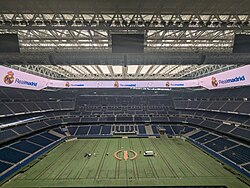
The Santiago Bernabéu is more than just a sports venue; it is a global symbol of footballing excellence located in the Chamartín district of Madrid, Spain. As the long-time home of Real Madrid, this architectural marvel has evolved from a mid-century coliseum into a state-of-the-art multipurpose arena. Following an extensive renovation completed in late 2024, the stadium now features a retractable roof and a seating capacity of 83,186, making it the second-largest football stadium in Spain.
Named after the legendary former player and club president Santiago Bernabéu, the venue has witnessed some of the most significant moments in sporting history, hosting everything from World Cup finals to NFL games and global concert tours.
Key Facts
- Location: Avenida de Concha Espina, Madrid, Spain.
- Current Capacity: 83,186 spectators.
- Surface: Mixto hybrid grass.
- Unique Feature: Fully retractable roof.
- Record Attendance: 129,690 (Real Madrid v. AC Milan, 1956).
- Major Tenants: Real Madrid and the Spain national football team (selected matches).
A History of Growth and Innovation
Origins and Early Construction
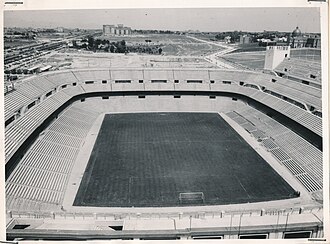
Construction of the stadium began in October 1944 and concluded in December 1947. The project was funded through a series of staggered bond issues, with the first issue raising 10 million pesetas. To facilitate construction, Real Madrid temporarily played home games at the Stadium Metropolitano during the 1946–47 season. When it officially opened on December 14, 1947, it was known as the Estadio Real Madrid Club de Fútbol, though fans affectionately called it Nuevo Chamartín.
Expansion and Modernization
The stadium underwent several critical expansions to meet the growing demand of its fanbase. In 1955, a major renovation increased the capacity to 125,000, establishing it as the largest stadium among the early European Cup participants. By 1972, the venue embraced technology with the installation of its first electronic scoreboard.
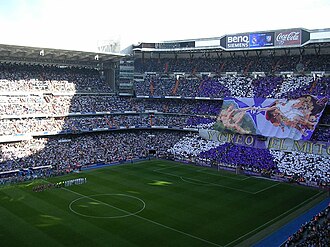
In the late 1990s, the stadium transitioned to an all-seating arrangement to comply with UEFA requirements, which reduced the capacity to 74,328. However, continuous upgrades in 2001 and 2011 ensured the venue remained an "Elite Stadium," eventually leading to its selection for the 2010 UEFA Champions League final.
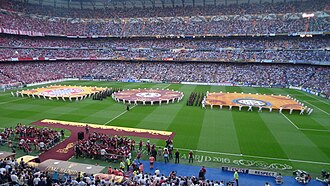
The 2019–2024 Transformation
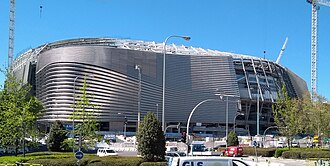
The most ambitious project in the stadium's history began in June 2019. This massive renovation, costing approximately €1.76 billion, focused on sustainability and versatility. The project introduced a retractable roof and a sophisticated facade, transforming the venue into a year-round destination for sports and entertainment.
A Global Stage for Major Events
The Bernabéu holds a unique place in sports history as the first European stadium to host both a UEFA Euro final (1964) and a FIFA World Cup final (1982). It is also the only stadium to have hosted finals for both the UEFA Champions League and the Copa Libertadores.
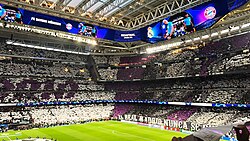
Champions League and International Success
The stadium has hosted four European Cup/UEFA Champions League finals (1957, 1969, 1980, and 2010). Notably, in the 1957 final, Real Madrid defeated Fiorentina 2–0 with goals from Alfredo Di Stéfano and Francisco Gento.
Beyond Football
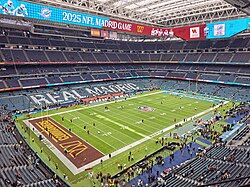
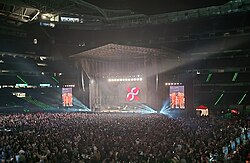
The venue's versatility extends to other sports and cultural events. In November 2025, it hosted its first NFL International Series game, where the Miami Dolphins defeated the Washington Commanders 16–13. Additionally, the stadium has welcomed Pope John Paul II, as well as musical icons like U2 and Julio Iglesias.
Stadium Specifications Summary
| Feature | Detail |
|---|---|
| Field Size | 105 m × 68 m |
| Executive Suites | 245 |
| Roof Type | Retractable |
| Recent Renovation Cost | €1.76 billion (2024) |
| Public Transit | Metro Line 10 (Santiago Bernabéu station) |
Frequently Asked Questions
Who is the stadium named after?
The stadium is named after Santiago Bernabéu, who served as both a player and the president of Real Madrid between 1895 and 1978.
What is the current seating capacity?
Following the renovations completed in 2024, the stadium has a seating capacity of 83,186.
Which major international finals has the Bernabéu hosted?
It has hosted the FIFA World Cup final (1982), the UEFA European Nations' Cup final (1964), four UEFA Champions League finals, and the Copa Libertadores final (2018).
Does the stadium host events other than football?
Yes, the Bernabéu hosts NFL games, concerts (such as U2 and Taylor Swift), religious gatherings, and is slated to host tennis training courts for the Mutua Madrid Open.
How do I get to the stadium via public transport?
The stadium is served by its own dedicated metro station on Line 10, as well as several bus routes including 14, 27, 40, 43, 120, 147, and 150.