Sand: Composition, Global Demand, and Environmental Impact
Sand is a granular material consisting of finely divided mineral particles. While often viewed as an infinite resource, sand is defined scientifically by its grain size—falling between the coarseness of gravel and the fineness of silt. Depending on the environment, sand can be a primary component of soil or a critical industrial raw material.
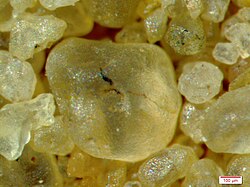
The composition of sand varies based on local geology and environmental conditions. In most inland continental and non-tropical coastal areas, the most common constituent is silica (silicon dioxide, SiO2), typically found as quartz. Quartz is highly resistant to weathering due to its hardness and chemical inertness.
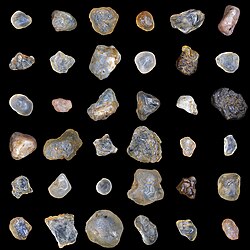
![Depiction of sands: glass, dune, quartz, volcanic, biogenic coral, pink coral,volcanic, garnet, olivine.Samples are from the Gobi Desert, Estonia, Hawaii and the mainland United States. (1×1 cm each)[1]](/images/22/63/2263da1a53af34d107182e072c1a6f1eed8c95fbdc96dfd232652367e05a269d.jpg)
Key Facts
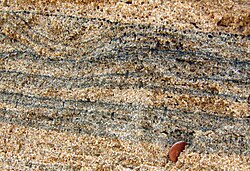
- Common Compositions: Primarily silica (quartz), calcium carbonate (aragonite), or occasionally calcium sulfate (gypsum).
- Size Definition: Generally defined as particles between 0.0625 mm and 2 mm in diameter.
- Construction Use: Approximately 50 billion tons of sand and gravel are used annually for construction.
- Non-Renewable: On human timescales, sand is a non-renewable resource.
- Desert vs. Marine: Desert sand is too smooth for concrete; marine sand is highly valued for construction.
The Science of Sand Composition
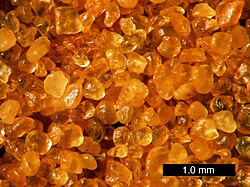
Mineral Varieties
Beyond silica, calcium carbonate is the second most prevalent sand type. An example is aragonite, produced over 500 million years by shellfish and coral, making it the dominant sand type in reef-heavy ecosystems like the Caribbean.
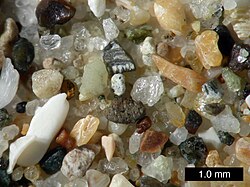
Less commonly, sand may consist of calcium sulfate, such as selenite or gypsum, which is characteristic of locations like the Salt Plains National Wildlife Refuge and White Sands National Park in the United States.
Defining Grain Size
The definition of sand varies by field. The Unified Soil Classification System (used in engineering) defines sand as particles between 0.074 and 4.75 millimeters. Geologists typically define the range from 0.0625 mm to 2 mm. Particles larger than this are classified as gravel, while those smaller are classified as silt.
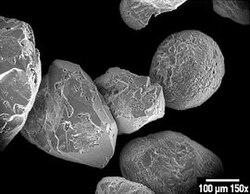
In the United States, sand is further categorized into five sub-categories: very fine, fine, medium, coarse, and very coarse. These are measured using the Krumbein phi scale, a logarithmic scale where size is calculated as Φ = -log2 D.
Sources and Formation
Desert Sand
Sand dunes form through wind deposition in arid conditions. In the Sahara Desert, the lack of water and vegetation allows wind to strip away organic matter and clay, leaving behind sand and rock. However, the wind polishes these grains, making them round and smooth.
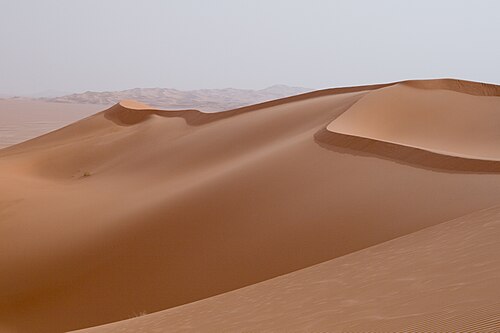
Because of this smoothness, desert sand cannot bond effectively in concrete and is unsuitable for construction.
Marine Sand
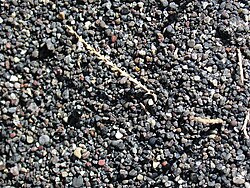
Ocean sand results from the erosion of marine rocks and sediments transported from land. Because these grains are typically rougher, marine sand is a highly valuable commodity for the construction industry. However, extensive mining in regions like Europe has caused significant damage to local fisheries and ecosystems.
Industrial and Practical Uses
Sand is integrated into a vast array of modern technologies and infrastructure. Its applications range from heavy industry to artistic expression.
- Construction: A primary component of concrete, mortar, and bricks. Cob, a traditional building material, can consist of up to 75% coarse sand.
- Manufacturing: Silica-rich sand is the essential raw material for glass and the production of silicon.
- Infrastructure: Used in beach nourishment to combat erosion, the creation of artificial islands, and as a proppant in hydraulic fracturing for natural gas.
- Safety and Maintenance: Applied to roads and railroads to increase traction during icy conditions or on rails.
- Filtration: Used in rapid sand filters for water treatment and historically in gas mask air filtration.
- Miscellaneous: Used in sandblasting for polishing, sandbags for flood protection, and as a base for aquaria.
Environmental Concerns and Global Demand
The global demand for sand has led to a critical shortage of construction-grade material. In 2017, global demand reached 9.55 billion tons. By 2022, the United Nations Environment Programme (UNEP) reported that 50 billion tons of sand and gravel are used annually.
This demand has fueled a US$70 billion global industry, leading to illegal sand theft and ecological crises. Dredging for marine sand can cause landslides, flooding, and fish depletion. Consequently, countries including Cambodia, Malaysia, Indonesia, and China have banned sand exports.
Case Study: Dubai
The scale of sand demand is evident in Dubai, UAE. To build its infrastructure and artificial islands, the city required over 835 million tonnes of sand. Because local supplies were insufficient, sand was imported from as far as Australia, costing over US$26 billion.
Hazards and Alternatives
Sand can present physical dangers. In areas of high pore water pressure, sand and salt water can create quicksand—a colloid hydrogel that behaves like a liquid, trapping creatures and leading to death by exposure. Additionally, deep recreational holes dug in beach sand can lead to fatal collapses.
To mitigate the depletion of natural sources, Manufactured Sand (M sand) is now produced by artificially crushing rock. M sand is more angular than river sand, providing different structural properties for cement and concrete.
| Sand Type | Primary Composition | Common Location | Construction Suitability |
|---|---|---|---|
| Silica Sand | Quartz (SiO2) | Inland/Non-tropical coasts | High (if angular) |
| Carbonate Sand | Aragonite | Tropical reefs/Caribbean | Low |
| Evaporite Sand | Gypsum/Selenite | White Sands NP, USA | Low |
| Desert Sand | Various (Wind-worn) | Sahara Desert | Low (too smooth) |
| Marine Sand | Mixed/Quartz | Ocean floors/Beaches | Very High |
Frequently Asked Questions
Why can't desert sand be used to make concrete?
Desert sand grains are rounded and smooth because they are weathered by the wind. For concrete to be strong, the grains need to be angular and rough so they can lock together and bond with the cement.
What is the difference between sand and silt?
The primary difference is particle size. Sand grains are larger (typically 0.0625 mm to 2 mm) and feel gritty between the fingers, whereas silt particles are smaller and feel like flour.
What are arenophiles and psammophiles?
Arenophiles are people who collect sand as a hobby, while psammophiles are organisms that naturally thrive in sandy environments.
Is sand a renewable resource?
On a human timescale, sand is considered non-renewable. While it is formed by natural erosion, the rate of consumption for construction far exceeds the rate at which nature produces usable sand.
What is manufactured sand (M sand)?
M sand is an artificial alternative to river sand, created by crushing rocks through mechanical processes. It is typically more angular than natural sand, which can be beneficial for certain construction applications.