San Miguel: A Key Hub in Greater Buenos Aires
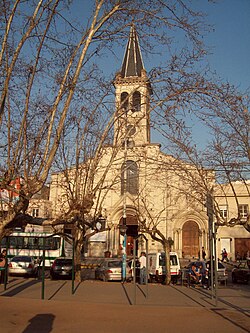
Located in the northwest region of Greater Buenos Aires, San Miguel is a vibrant city that serves as the county seat of the San Miguel Partido. Situated approximately 30 km from the City of Buenos Aires, this urban center has evolved from a quiet rural settlement into a bustling suburban community, integrating itself into the metropolitan fabric of Argentina's capital region since the early 2000s.
Key Facts
- Founded: May 18, 1864, by Adolfo Sourdeaux.
- Population: 157,532 (based on the 2001 census).
- Location: Northwest Greater Buenos Aires, Argentina.
- Elevation: 28 meters (92 feet).
- Key Infrastructure: Served by San Martin and Urquiza commuter railroad lines.
History and Evolution
The origins of San Miguel date back to 1864, when it was founded as San José del Pilar by Adolfo Sourdeaux, a French Argentine agronomist. At the time, the area was part of a vast estancia (a large landed estate) owned by General Ángel Pacheco. Shortly after its founding, the town was renamed San Miguel following the subdivision of the Pilar Partido.
The late 19th century brought significant growth to the region. In 1870, the Buenos Aires-Pacific Railway line was constructed through the town, facilitating trade and travel. Simultaneously, the first local schools were established as part of the national education program spearheaded by President Domingo Sarmiento.
Administratively, the city has seen several shifts. It became the county seat for the General Sarmiento Partido in 1889, and later became the seat for the San Miguel Partido in 1994 after further subdivision.
Urban Development and Economy
Over the decades, San Miguel has transitioned from a rural village to a suburban bedroom community. This rapid urbanization is characterized by the rise of high-rise buildings, which has altered the town's original village character and placed pressure on local infrastructure.
Today, the economy is primarily service-oriented, though it maintains a strong industrial presence, exemplified by the IPH steel cable facility.
The city is also a media hub; TeleRed, a cable television provider, broadcasts from San Miguel to much of Greater Buenos Aires. Its offerings include Señal Santa María, a Catholic channel providing family-friendly and religious programming, largely sourced from EWTN.
Education and Culture
San Miguel is recognized for its commitment to higher learning and spiritual education. It is home to the National University of General Sarmiento, a major academic institution in the region.
The city also hosts the parochial Colegio Máximo de San José. This institution is notably where Jorge Bergoglio, who would later become Pope Francis, earned his degree in philosophy.
Transportation and Connectivity
Connectivity is a hallmark of San Miguel's accessibility. The city center is traversed by numerous bus lines, ensuring efficient local transit. For those commuting to the capital, the San Martin and Urquiza commuter railroad lines provide several stations, offering a direct and easy link to the City of Buenos Aires.
| Attribute | Detail |
|---|---|
| Coordinates | 34°32′S 58°43′W |
| Population Density | 9,845/km² (25,500/sq mi) |
| CPA Base | B 1663 |
| Area Code | +54 11 |
| Province | Buenos Aires |
Frequently Asked Questions
When was San Miguel founded?
San Miguel was founded on May 18, 1864, originally under the name San José del Pilar.
What is the population of San Miguel?
According to the 2001 census conducted by INDEC, the total population was 157,532.
Which famous figure studied in San Miguel?
Jorge Bergoglio, the future Pope Francis, obtained his degree in philosophy from the Colegio Máximo de San José in San Miguel.
How can visitors travel to San Miguel from Buenos Aires?
The city is easily accessible via the San Martin and Urquiza commuter railroad lines, as well as various bus lines.
What are the primary economic drivers of the city?
While the economy is largely service-oriented, it is complemented by industrial facilities such as the IPH steel cable plant.