Salt Glands: How Marine Animals Excrete Excess Salt
For animals living in the ocean, drinking seawater presents a biological paradox: they need hydration to survive, but the high salt content of the ocean can be toxic to their internal systems. While mammals rely heavily on kidneys to filter waste, many marine vertebrates have evolved a specialized organ known as the salt gland. This organ allows them to maintain a precise salt balance, enabling survival in environments where fresh water is scarce or nonexistent.
Key Facts
- Function: Excretes excess salts from the blood to maintain osmotic balance.
- Occurrence: Found in elasmobranchs (sharks, rays, skates), seabirds, and some reptiles.
- Location: Varies by species; found in the rectum of sharks or the skull (eyes, nose, mouth) of birds and reptiles.
- Mechanism: Uses active transport via sodium-potassium pumps to move salt into secretory tubules.
- Efficiency: In some species, like penguins, the gland produces a brine five times saltier than their internal fluids.
The Anatomy and Mechanism of Salt Glands
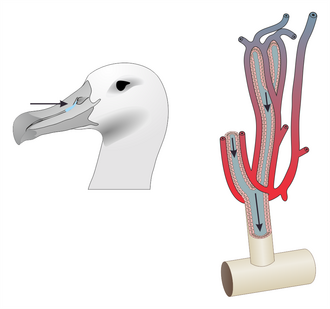
A salt gland is a lobed organ composed of numerous secretory tubules that radiate outward from a central excretory canal. These tubules are lined with a single layer of epithelial cells. The size and length of these glands vary depending on how much salt a specific species typically ingests.
The primary purpose of these glands is osmoregulation—the process of maintaining a constant osmotic pressure in the fluids of an organism by controlling the concentration of salts. To achieve this, the gland utilizes active transport. A sodium-potassium pump located on the basolateral membrane moves salt from the bloodstream into the gland, where it is then expelled as a highly concentrated, hypertonic solution.
Salt Glands in Birds
Avian salt glands are highly sophisticated systems. Activation begins when increased osmolarity (salt concentration) in the blood is detected by the hypothalamus. This triggers a parasympathetic nerve signal that causes vasodilation and the release of hormones, specifically acetylcholine and vasoactive intestinal peptide.
At the cellular level, acetylcholine binds to receptors on the basolateral membrane, triggering the release of calcium. This opens potassium channels on the basolateral membrane and chloride channels on the apical membrane. A Na-K-Cl cotransporter moves ions into the epithelial cells, while sodium-potassium ATPase channels remove excess sodium. This creates an electrical gradient that allows sodium to pass through tight junctions into the gland with very little water, resulting in a concentrated brine.
Mitochondria-rich cells support this process, increasing in number when the bird is exposed to higher salt concentrations.
The Supraorbital Gland in Penguins
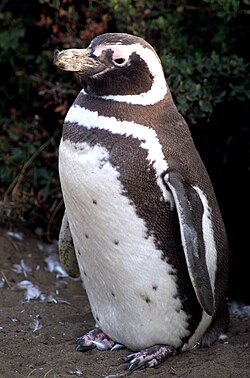
Penguins possess a specific type of lateral nasal gland called the supraorbital gland, located just above the eye socket (the orbit). Because penguins ingest saltwater while eating prey, this gland is essential for their survival. It filters salt from a capillary bed in the head and excretes it as a brine through the bill.
This excretion often looks like a runny nose or is expelled through sneezing. Interestingly, if a penguin is in captivity and lacks access to saltwater, the supraorbital gland becomes dormant without affecting the animal's health.
Other Avian Examples
The European herring gull also possesses supraorbital glands, allowing it to drink seawater without becoming ill, though it will still choose fresh water if available. Other birds, such as albatrosses and petrels, rely on similar mechanisms to survive long periods at sea.
Salt Glands in Reptiles and Fish
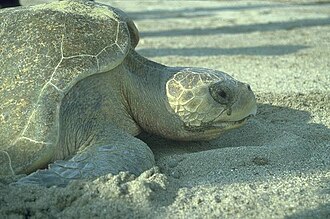
Reptiles, such as sea turtles and marine iguanas, utilize salt glands because their kidneys are significantly less efficient than those of mammals. Furthermore, unlike amphibians, the skin of reptiles and birds is impermeable to salt, meaning they cannot simply absorb or release it through their skin.
In the subclass Elasmobranchii (which includes sharks, rays, and skates), salt glands are located in the rectum. The presence of these glands in both fish and birds/reptiles is an example of convergent evolution, where different lineages evolve similar traits independently to solve the same environmental challenge.
Summary of Salt Gland Characteristics
| Animal Group | Example Species | Gland Location | Excretion Method |
|---|---|---|---|
| Elasmobranchs | Sharks, Rays | Rectum | Rectal excretion |
| Marine Birds | Penguins, Gulls | Supraorbital (above eyes) | Through the bill (sneezing/dripping) |
| Marine Reptiles | Sea Turtles, Iguanas | Skull (eyes, nose, mouth) | Tear ducts or nasal passages |
Frequently Asked Questions
Do salt glands convert saltwater into freshwater?
No. Salt glands do not convert saltwater into freshwater; instead, they filter excess salt out of the bloodstream and excrete it as a highly concentrated brine, allowing the animal to retain the water.
Why do sea turtles look like they are crying on land?
Sea turtles excrete excess salts through their tear ducts. When they are out of the water, this salt excretion is highly visible, giving the appearance that the turtle is crying.
How do penguins get salt in their systems if they don't drink much water?
Penguins ingest significant amounts of saltwater while consuming their prey, which necessitates the use of the supraorbital gland to remove the excess salt.
Are human sweat glands related to salt glands?
Some theories suggest that mammalian sweat glands and tear ducts may be evolutionarily related to salt glands, but most phylogeneticists disagree with this association.
What happens to the salt gland if the animal is no longer in a saltwater environment?
In some species, such as penguins, the gland will lie dormant if there is no saltwater to process. This dormancy does not negatively impact the animal's overall health.