Salon: A History of Digital Journalism and Business Evolution
Founded in the aftermath of the 1994 San Francisco newspaper strike, Salon emerged as a pioneering venture into the potential of the World Wide Web. Created by David Talbot, the former arts and features editor of the San Francisco Examiner, the site launched in November 1995 under the domains salon1999.com and salonmag.com. From its inception, the publication was noted for its distinct Northern California perspective, which Talbot described as a "Left Coast, Weird Coast style" derived from the eclectic nature of San Francisco.
The early success of the platform was recognized quickly, with Time magazine naming it one of the Best Web Sites of 1996. As the digital landscape evolved, Salon expanded its reach and infrastructure, eventually transitioning to its current URL, salon.com.
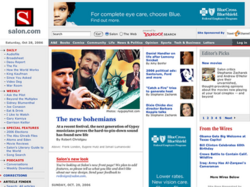
Key Facts
- Founded: November 1995 by David Talbot.
- IPO: Launched on the NASDAQ on June 22, 1999.
- Peak Reach: Reported over two million users in October 1999.
- Major Acquisitions: Purchased the virtual community The WELL in 1999 (later sold back to members in 2012).
- Current Ownership: Sold in 2019 to Salon.com, LLC, owned by Chris Richmond and Drew Schoentrup.
Growth and Financial Turbulence
The turn of the millennium brought both expansion and significant financial challenges. In April 1999, Salon acquired The WELL, a prominent virtual community. Following its IPO in June 1999, the site saw a surge in popularity, reaching over two million users by October of that year.
To diversify revenue, Salon introduced Salon Premium on April 25, 2001. This pay-to-view subscription service attracted 130,000 subscribers, which temporarily prevented the discontinuation of services. However, the company struggled with sustainability; by November 2002, it reported losses of $80 million. By February 2003, the financial situation became critical, leading the company to appeal for donations to cover rent.
Leadership changes followed in October 2003 when CEO and president Michael O'Donnell departed. At the time of his exit, Salon had accrued $83.6 million in total losses, and its stock had fallen to 5¢ on the OTC Bulletin Board. David Talbot resumed the role of CEO, while CFO Elizabeth "Betsy" Hambrecht became president.
Evolution of Content and Community
Throughout the 2000s and 2010s, Salon experimented with various community-driven features and content partnerships:
- Open Salon: Launched in July 2008 as a curated blog network and social content site. It received a National Magazine Award nomination in 2009 before closing in March 2015.
- Table Talk: An online chat board that operated until its closure on June 10, 2011.
- Mondoweiss: Salon began featuring content from this source on July 16, 2012.
Business Models and Operational Shifts
Salon's operational history is marked by a transition through several monetization strategies. For years, the company relied on cash injections from board Chairman John Warnock and William Hambrecht. For example, in the nine months ending December 31, 2012, these contributions totaled $3.4 million, exceeding the period's revenue of $2.7 million.
The company faced severe liquidity issues in late 2016 and early 2017, resulting in an eviction from its New York offices due to $90,000 in unpaid rent. A $1 million investment from Spear Point Capital in February 2017 provided a temporary lifeline, granting the firm a 29% equity stake. Ultimately, Salon Media Group sold the site for $5 million to Salon.com, LLC on August 30, 2019.
Revenue Model Timeline
Salon transitioned through various ways of delivering content and generating income:
- Free Content: Initially offered roughly 15 new articles daily, funded entirely by in-page advertisements.
- Salon Premium: A model where 20% of content was exclusive to subscribers, who also received ad-free viewing and free magazines.
- Hybrid Model: Introduced a "day pass" system where users could access content by viewing a 15-second full-screen advertisement.
- Salon Core: A 2011 rebranding of the subscription service following a decline in Premium members from 100,000 to 10,000.
- Cryptocurrency Beta: In 2018, a program was launched allowing users to opt out of ads in exchange for cryptocurrency mining.
| Period/Year | Key Event/Model | Financial/Operational Detail |
|---|---|---|
| 1995 | Launch | Founded by David Talbot in San Francisco |
| 1999 | IPO | Listed on NASDAQ; acquired The WELL |
| 2001 | Salon Premium | 130,000 initial subscribers |
| 2003 | Leadership Change | $83.6 million in total accrued losses |
| 2019 | Acquisition | Sold for $5 million to Salon.com, LLC |
Frequently Asked Questions
Who founded Salon and why?
Salon was founded by David Talbot, a former arts and features editor for the San Francisco Examiner, who wanted to explore the potential of the Web following the 1994 San Francisco newspaper strike.
What was the result of Salon's IPO?
Salon went public on the NASDAQ on June 22, 1999. While it saw high user growth—exceeding two million users by October 1999—the company later struggled with significant financial losses.
What was Open Salon?
Open Salon was a curated blog network and social content site launched in July 2008. It was nominated for a National Magazine Award in 2009 and operated until March 2015.
How did Salon attempt to monetize its content over time?
Salon moved from a purely ad-supported free model to a subscription-based model (Salon Premium and later Salon Core), a hybrid model involving ad-funded "day passes," and a 2018 beta program involving cryptocurrency mining.
Who currently owns Salon?
Salon is owned by Salon.com, LLC, which is held by Chris Richmond and Drew Schoentrup, after purchasing the site from Salon Media Group for $5 million in August 2019.