The Evolution of Salon: A History of Progressive Digital Journalism
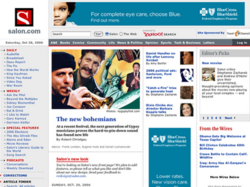
Since its inception in the mid-1990s, Salon has stood as a prominent voice in American digital media. Known for its politically progressive and liberal perspective, the website has navigated decades of technological shifts, economic challenges, and evolving editorial landscapes. From its roots in the San Francisco media scene to its current status as a major online news and opinion outlet, Salon's journey reflects the broader history of the internet itself.

Key Facts
- Founded: November 1995 (originally as salon1999.com).
- Core Focus: U.S. politics, culture, and current events.
- Political Stance: Politically progressive and liberal.
- Ownership: Currently owned by Salon.com, LLC (Chris Richmond and Drew Schoentrup).
- Key Milestone: Named one of Time magazine's "Best Web Sites of 1996."
Foundations and Early Years
Salon was born out of the 1994 San Francisco newspaper strike. Founded by David Talbot, along with Gary Kamiya, Andrew Ross, Mignon Khargie, Scott Rosenberg, and Laura Miller, the site sought to explore the untapped potential of the World Wide Web. In its early years, the publication carried a distinct "Left Coast" flavor, heavily influenced by its Northern California origins.
The site saw rapid growth in the late 1990s. In April 1999, Salon purchased The WELL, a pioneering virtual community, and transitioned to its current URL, salon.com. That same year, the company went public on the NASDAQ stock exchange. By October 1999, Nielsen/NetRatings reported that Salon had surpassed two million users.
Financial Challenges and Resilience
Despite its popularity, Salon faced significant financial hurdles. In 2001, it introduced Salon Premium, a subscription service that successfully signed up 130,000 members. However, by 2003, the company reported accumulated losses of over $80 million and struggled to meet basic operational costs. During this period, David Talbot stepped in as Chief Executive to stabilize the organization.
Evolution of Content and Business Models
As digital media matured, Salon experimented with various ways to engage readers and generate revenue. One notable attempt was Open Salon, a social content site and curated blog network launched in 2008. While it earned a 2009 National Magazine Award nomination for its interactive features, the initiative was eventually closed in March 2015.
The site's revenue models have shifted several times to adapt to the changing economy:
- Free Content: Supported by in-page advertisements.
- Subscription Models: Including Salon Premium and the later rebranded Salon Core, which offered ad-free viewing and exclusive content.
- Hybrid Model: A system allowing readers to access content by viewing a 15-second full-screen advertisement to earn a "day pass."
- Cryptocurrency Experiment: In 2018, Salon launched a beta program where users could opt out of advertising by allowing the site to mine Monero (a type of cryptocurrency) using their browser's resources.
Summary of Salon's Operational History
| Period/Event | Key Development | Outcome/Status |
|---|---|---|
| 1995 | Launch of salon1999.com | Established progressive digital presence |
| 1999 | NASDAQ IPO & The WELL purchase | Rapid user growth and public listing |
| 2001 | Salon Premium launch | Reached 130,000 subscribers |
| 2008 | Open Salon launch | Interactive social network (closed 2015) |
| 2019 | Acquisition by Salon.com, LLC | Transition to private ownership |
Editorial History and Controversies
Throughout its history, Salon has faced scrutiny regarding its editorial decisions. The publication has had to manage several high-profile retractions and controversies, ranging from scientific accuracy to political reporting.
Notable Editorial Incidents
- Vaccine Reporting: In 2005, the site published an article by Robert F. Kennedy Jr. regarding vaccines and autism. Following criticism, the article was retracted in 2011.
- Otto Warmbier: In 2016, an article regarding the detained American student was criticized for its tone; the piece was removed following his death.
- Political Headlines: In 2021, a headline regarding Florida Governor Ron DeSantis was found to be misleading. The site later corrected the headline to meet editorial standards.
Frequently Asked Questions
Who currently leads Salon?
As of September 2024, the leadership team includes Joseph Neese as Editor in Chief, Erin Keane as Chief Content Officer, and Amanda Wolfe as General Manager.
How does Salon make money?
Salon utilizes several revenue streams, primarily through in-page advertisements on free content, a hybrid model involving video advertisements for "day passes," and paid subscriptions through Salon Premium.
What happened to Open Salon?
Open Salon was a social content and blog network launched in 2008. After six years of hosting a community of writers, Salon announced its closure in March 2015.
Is Salon a public or private company?
While Salon was once a public company listed on the NASDAQ, it was sold in August 2019 to the privately held Salon.com, LLC, owned by Chris Richmond and Drew Schoentrup.
What is the political leaning of Salon?
Salon is characterized as a politically progressive and liberal news and opinion website.