Paywalls: How Digital Content Restrictions Shape Modern Journalism
A paywall is a digital barrier that restricts access to online content, requiring a purchase or a paid subscription to view the material. While most commonly associated with news organizations, paywalls are also prevalent in academic publishing, where research papers are often accessible only through subscribing academic libraries.
The rise of paywalls began in earnest during the mid-2010s. This shift was a response to a sharp decline in paid print readership and a drop in advertising revenue, exacerbated by the widespread use of ad blockers. To survive, publishers turned to direct user payments to stabilize their financial foundations.
Beyond simple access, some publishers use paywalls strategically to boost print circulation. For instance, The Boston Globe and The New York Times have offered bundles where a Sunday print edition is included with online access at a lower price than a digital-only subscription. This approach increases both digital revenue and print circulation, which in turn attracts more print advertising revenue.
Key Facts
- Purpose: Designed to recover lost print and advertising revenue through direct subscriptions.
- Academic Use: Research papers are frequently paywalled, requiring institutional subscriptions for access.
- Strategic Bundling: Some outlets offer print and digital bundles to maximize total circulation and ad revenue.
- Public Service Exceptions: During the 2020 COVID-19 pandemic, many outlets removed paywalls for health-related stories to combat misinformation.
- Bypass Tools: Browser extensions like "Bypass Paywalls Clean" have been targeted for removal by platforms like Mozilla, GitHub, and GitLab.
The Evolution of Digital Access
The implementation of paywalls has been a subject of intense industry debate. In 2010, The Times (London) followed the lead of The Wall Street Journal by implementing a "hard" paywall. This move was controversial because The Times is a general news site; critics argued that users would simply find free information elsewhere. Ultimately, the move saw mixed results, recruiting 105,000 paying visitors.
In contrast, The Guardian famously resisted paywalls, citing a belief in an open internet. They instead experimented with alternative revenue streams, such as an open API (Application Programming Interface), which allows other software to interact with their content.
Many publications have oscillated between different models. Because online news is a relatively young medium, constant experimentation is often necessary to balance revenue needs with reader satisfaction.
Types of Paywalls
Hard Paywalls
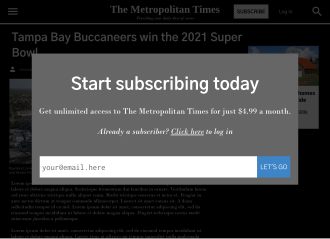
A hard paywall completely blocks access to content for non-subscribers. This model is typically most effective for publishers who provide unique added value, target a specific niche audience, or already dominate their specific market.
Soft Paywalls
Soft paywalls, often referred to as metered paywalls, allow users to access a limited number of articles for free before requiring a subscription. This encourages casual readers to sample the content before committing to a payment.

Other Models
- Combination Paywalls: A hybrid approach mixing hard and soft elements.
- Cookie Paywalls: Using browser cookies to track the number of free articles viewed.
Industry Challenges and Legalities
The tension between publishers and readers has led to the creation of paywall-bypassing tools. However, these tools often face legal and platform-based hurdles. In November 2018, Mozilla removed the "Bypass Paywalls" extension from the Firefox add-on store for violating terms of service. Similar removals occurred for "Bypass Paywalls Clean" on Firefox in 2023, and on GitLab and GitHub in 2024.
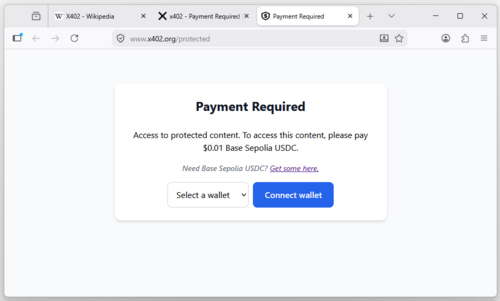
From a technical standpoint, when a server denies access due to a lack of payment, it may return a specific error code.
Abandoned Initiatives
Not all paywall experiments succeeded. The New York Times launched "TimesSelect" in 2005, charging $49.95 annually for archive access. While it earned $10 million by 2007, growth was slow compared to online advertising. Consequently, the paywall for post-1980 archives was dropped, though pre-1980 PDF articles remain restricted.
Other organizations that have abandoned or shifted their paywall initiatives include The Atlantic, Johnston Press, Ogden Newspapers, and Quartz.
Summary of Paywall Models
| Model Type | Access Level | Primary Target | Key Advantage |
|---|---|---|---|
| Hard Paywall | No free access | Niche/Dominant Markets | Maximum revenue per user |
| Soft/Metered | Limited free articles | General Audience | Higher user acquisition |
| Bundled | Digital + Print | Traditional Readers | Boosts print circulation/ads |
| Open/API | Free for personal use | Global Public | Maximum reach and influence |
Frequently Asked Questions
Why do news websites use paywalls?
Websites use paywalls to generate revenue to replace the decline in print subscriptions and the loss of advertising income caused by ad blockers.
What is the difference between a hard and soft paywall?
A hard paywall requires payment for all content immediately, while a soft (or metered) paywall allows a specific number of free articles before requiring a subscription.
Are there legal risks to bypassing paywalls?
Yes, bypassing paywalls can violate a website's terms of service, and tools designed for this purpose are frequently removed from software hosting services and browser stores for violating policies.
Do all news sites use paywalls?
No. Some organizations, such as The Guardian, maintain an open-access model based on the belief in an open internet, seeking alternative revenue streams instead.
How did the COVID-19 pandemic affect paywalls?
Many news outlets temporarily removed paywalls for pandemic-related stories as a public service to ensure accurate information was available to everyone and to combat misinformation.