Saladillo River: A Vital Waterway of Santa Fe, Argentina
The Saladillo River (known in Spanish as Arroyo Saladillo or Río Saladillo) is a significant waterway located in the Santa Fe province of Argentina. While it is a tributary of the massive Paraná River, it plays a disproportionately large role in the regional economy and the political geography of the Greater Rosario area.
The river serves as a natural political boundary, separating the city of Rosario from the town of Villa Gobernador Gálvez. Along with the Ludueña Stream to the north, the Saladillo is one of the two primary affluents—streams that flow into a larger river—of the Paraná in this specific region.
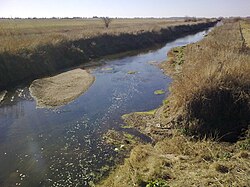
Key Facts
- Location: Santa Fe Province, Argentina.
- Drainage Basin: Approximately 3,205 square kilometres (1,237 sq mi).
- Mouth: Discharges into the Paraná River at the port of Villa Gobernador Gálvez.
- Political Role: Forms the border between Rosario and Villa Gobernador Gálvez.
- Primary Uses: Agricultural irrigation and urban drainage.
Hydrology and Geography
There is often a linguistic misunderstanding regarding the term arroyo. In English, an arroyo typically refers to a dry creek or an intermittent stream. However, in Spanish, the term simply means "stream" or "brook." The Saladillo is far from a dry creek; it is a sizable river with a vast drainage basin covering 3,205 square kilometres.
The river's importance is highlighted by its demographic and economic impact. Its lower reaches flow through densely populated urban centers, including Rosario, which has a population exceeding one million residents. The mouth of the river is strategically important, hosting the port of Villa Gobernador Gálvez.
Infrastructure and Management
To manage the flow of water and support the region's heavy agricultural demands, much of the Saladillo and its main tributaries have been canalized (straightened and deepened) or channelized. Because of the high volume of sediment produced by soil erosion, the river requires periodic dredging to remain functional.
| Feature | Detail |
|---|---|
| Spanish Names | Arroyo Saladillo / Río Saladillo |
| Primary Tributary Of | Paraná River |
| Basin Area | 3,205 km² |
| Bordering Cities | Rosario and Villa Gobernador Gálvez |
| Key Infrastructure | Port of Villa Gobernador Gálvez |
Environmental Challenges
The Saladillo River faces significant ecological pressures due to its dual role as an agricultural and urban resource. The riparian zone—the interface between land and a river—is frequently subject to flooding, which can impact nearby settlements.
Water quality is degraded by two primary sources:
- Agricultural Runoff: The use of fertilizers and pesticides in the surrounding farmland introduces chemical pollutants into the water.
- Urban Waste: In its lower course, the river acts as an urban stream, absorbing industrial waste and domestic sewage from the surrounding metropolitan areas.
Frequently Asked Questions
Is the Saladillo River a dry stream?
No. Although called an "arroyo" in Spanish, it is a permanent, sizable river with a drainage basin of 3,205 square kilometres, unlike the English definition of an arroyo as an intermittent stream.
Which cities does the Saladillo River separate?
The river serves as the political border between the city of Rosario and the town of Villa Gobernador Gálvez in the province of Santa Fe.
Where does the Saladillo River empty?
It discharges into the Paraná River, with its mouth located at the port of Villa Gobernador Gálvez.
What causes the pollution in the Saladillo River?
Pollution stems from agricultural runoff containing pesticides and fertilizers, as well as industrial and domestic waste discharged into the river's lower urban course.
Why is dredging necessary for the river?
Dredging is required to remove sediments caused by erosion, ensuring the river can continue to support the region's massive agricultural needs.