Saifi Village: Beirut's Upscale Urban Sanctuary
Nestled at the southeastern edge of Centre Ville in Beirut, Lebanon, Saifi Village stands as a testament to urban rebirth. Once a site of devastation, this upscale residential and commercial neighborhood has been transformed into a sophisticated enclave known for its unique architecture, luxury retail, and vibrant culinary scene.
The neighborhood is strategically bounded by Rue Charles Debbas to the south, Rue George Haddad to the east, Rue Gouraud to the north, and Rue Ariss & Kanaani to the west. Historically, its location is significant as it marks the beginning of the former Green Line, which served as the primary frontline during the Lebanese Civil War.
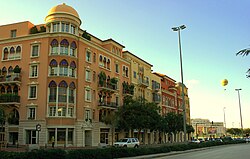
The Architecture and Urban Design
Following the total destruction of the area during the Lebanese Civil War, the private company Solidere undertook a comprehensive reconstruction project. The neighborhood was designed using New Urbanism—an urban design movement that promotes walkable blocks and a diverse mix of housing and shops to create a more sustainable community.
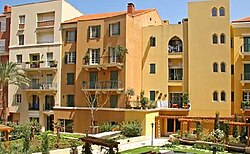
The master plan was initially developed by French architect François Spoerry, with contributions from renowned Lebanese architects such as Nabil Gholam. The resulting aesthetic is a vernacular style that evokes the charm of French colonial buildings, characterized by cobblestone streets, elegant townhouses, and boutique apartment buildings.
Lifestyle, Luxury, and Culture
Saifi Village is a premier destination for high-end shopping and art. The commercial landscape ranges from global luxury car dealerships, such as Ferrari, to intimate galleries and boutiques featuring emerging Lebanese designers, including Nada Debs, Bokja Design, and the Vick Vanlian Gallery.
Beyond commerce, the village is designed for leisure. Lush gardens filled with seasonal flowers, shrubs, and trees provide a natural escape, while wooden benches, fountains, and children's playgrounds make it a popular spot for family gatherings. However, the area is characterized by a heavy presence of private security, a common feature in Solidere-managed developments like Zaytounay Bay, which serves as a deterrent for lower-income visitors.
A Commercial Revival
As of 2023, Saifi Village has experienced a significant commercial resurgence. The area has become a culinary hotspot with the opening of numerous upper-end restaurants, bars, and coffee shops. Notable establishments include ROFF, Dupain, Maryool, Paname, Meat The Fish, Backburner, Malibou, Base Coffee, Vicoli, Julienne aux Vieux Quartier, BUCO, and Villa Clara.
Key Facts
- Location: Southeastern periphery of Centre Ville, Beirut, Lebanon.
- Design Style: New Urbanist approach with French colonial influences.
- Key Architects: François Spoerry and Nabil Gholam.
- Developer: Solidere.
- Notable Features: Cobblestone streets, luxury boutiques, and high-end dining.
- Historical Context: Located at the start of the former Green Line.
Demographics and Community
The demographic profile of Saifi Village reflects a predominantly Christian population. Based on 2014 registered voter data, the religious composition of the neighborhood is as follows:
| Religion | Percentage |
|---|---|
| Christian | 92.52% |
| Sunni Islam | 3.87% |
| Shia Islam | 1.49% |
| Others | 2.12% |
Within the Christian community, the distribution is diverse, with Maronite Catholics making up 30.10%, Greek Catholics 25.46%, Greek Orthodox 17.79%, Armenian Orthodox 5.61%, and Armenian Catholics 5.46% of the voters.
Frequently Asked Questions
What is the architectural style of Saifi Village?
Saifi Village is designed in a New Urbanist style that utilizes a vernacular approach to evoke the feeling of French colonial architecture, featuring cobblestone streets and traditional townhouses.
Who was responsible for rebuilding Saifi Village?
The neighborhood was rebuilt by the private company Solidere, with initial planning by French architect François Spoerry and contributions from Lebanese architects like Nabil Gholam.
What can visitors find in the shops of Saifi Village?
The area offers a mix of high-end luxury, including Ferrari dealerships, and contemporary Lebanese design from artists such as Nada Debs and Vick Vanlian.
Is Saifi Village a family-friendly area?
Yes, the village includes gardens, fountains, wooden benches, and children's playgrounds specifically designed for family gatherings and a park-like experience.
What is the significance of the Green Line in relation to Saifi Village?
Saifi Village is located at the beginning of the former Green Line, which served as the main frontline dividing Beirut during the Lebanese Civil War.