Sacred Trees of Sikhism: Spiritual Landmarks and Botanical Legacies
Across the landscape of Punjab and beyond, nature and spirituality are deeply intertwined within the Sikh tradition. Certain trees, often species of Ziziphus jujuba (jujube) or Azadirachta indica (neem), serve as living monuments to the lives and miracles of the Sikh Gurus. These botanical landmarks are not merely biological entities but are revered as sites of healing, meditation, and historical witness.
The Sacred Trees of the Golden Temple Complex
The Golden Temple complex in Amritsar is home to several significant trees, most notably the jujube trees, which hold deep spiritual meaning for pilgrims.
Dukh Bhanjani Ber
The Dukh Bhanjani Ber, meaning "the tree which removes sorrows," is located on the eastern side of the parikarma. According to Sikh belief, Guru Ram Das named the tree after a miracle in which the leper husband of Bibi Rajani was cured after bathing in a small body of water nearby. This ancient water source was later expanded to form the basis of the temple's current sarovar (sacred pool). Today, the tree is a site for petitionary prayers, particularly for those seeking cures for infertility or untreatable diseases.
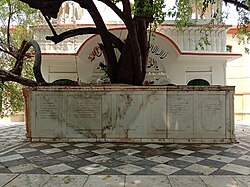
Ber Baba Budha Sahib
Believed to be the oldest ber tree in India, the Ber Baba Budha Sahib dates back to approximately 1573. This over 440-year-old tree is associated with Baba Budha, a prominent religious figure in early Sikhism.
Lachhi Ber
The Lachhi Ber is another notable jujube tree within the complex, remembered in historical accounts involving Bhai Sukha and Bhai Mehtab Singh during their confrontation with Massa Ranghar.
Regional Sacred Trees and Their Legends
Beyond Amritsar, various Gurdwaras preserve trees associated with the travels and teachings of the Gurus.
Guru Nanak and the Ber Trees
At Gurdwara Ber Sahib in Sultanpur Lodhi, a Ziziphus jujuba tree marks the spot where Guru Nanak is believed to have revealed the Mul Mantar (the root mantra). This tree is distinguished by its abundance of fruit and lack of spines. Similarly, at Gurdwara Babe-Di-Ber Sahib in Sialkot, Pakistan, a ber tree marks the site where Guru Nanak is said to have rested during his travels from Talwandi.
Guru Gobind Singh and Guru Hargobind
In Siloani, Ludhiana, a beri tree is linked to Guru Gobind Singh, who reportedly tied his horse there while disguised in Islamic attire during his travels after the Battle of Chamkaur. In Mehraj, Punjab, the Beri Sahib (Ziziphus mauritiana) is associated with Guru Hargobind, who is believed to have tied his horse there during the Battle of Gurusar in 1631. Additionally, the 350-year-old Garna Sahib (Carissa) tree in Bodal is where Guru Hargobind is said to have rested during a hunting trip.
The Miraculous Nim Sahib
Located in Akar, Patiala, the 300-year-old Nim Sahib (neem tree) is tied to Guru Tegh Bahadur. Legend states that the Guru touched one branch, rendering its leaves tasteless, while the rest of the tree remained bitter. This is seen as a physical manifestation of the Guru Granth Sahib's message that the company of the Guru removes bitterness from one's life.
Botanical Rarities and Lost Landmarks
Some sacred trees are noted for their unusual growth patterns or their tragic loss over time.
Phalahi Sahib and Pipli Sahib
The Phalahi Sahib (Acacia modesta) in Lakhisar is a botanical rarity. It is believed to have grown from a datun (teeth-cleaning twig) left by Guru Gobind Singh in 1706. The tree features trunks that grow parallel to the ground, exceeding forty feet in length. In Amritsar, the Pipli Sahib (Ficus religiosa) is where Guru Arjan welcomed adherents from Afghanistan and northwestern Punjab; it is uniquely characterized by golden-yellow leaves on its upper branches.
The Lost Imli Tree of Akal Takht
Historically, a large Imli (tamarind) tree stood before the Akal Takht. It was a site of historical significance, once used to punish Maharaja Ranjit Singh for religious transgressions. The original tree was lost during Operation Blue Star in 1984. After a failed attempt to plant a domesticated strain in 2000, a wild-variety sapling has been planted to restore the site's spirit.
Key Facts
- Oldest Tree: Ber Baba Budha Sahib is likely the oldest ber tree in India, dating to circa 1573.
- Healing Site: Dukh Bhanjani Ber is specifically sought after for prayers regarding severe diseases and infertility.
- Botanical Oddity: Phalahi Sahib in Lakhisar features trunks growing parallel to the earth.
- Symbolism: The Nim Sahib tree in Akar symbolizes the removal of bitterness through spiritual company.
- Species Diversity: Sacred sites include Ziziphus (ber), Azadirachta (neem), Ficus (peepal), and Acacia (phalahi).
| Tree Name | Location | Associated Figure | Significance |
|---|---|---|---|
| Dukh Bhanjani Ber | Golden Temple, Amritsar | Guru Ram Das | Healing and removal of sorrows |
| Ber Baba Budha | Golden Temple, Amritsar | Baba Budha | Ancient botanical heritage |
| Ber Sahib | Sultanpur Lodhi | Guru Nanak | Revelation of Mul Mantar |
| Nim Sahib | Akar, Patiala | Guru Tegh Bahadur | Symbol of spiritual sweetness |
| Phalahi Sahib | Lakhisar, Bathinda | Guru Gobind Singh | Botanical rarity (horizontal growth) |
Frequently Asked Questions
What does "Dukh Bhanjani" mean?
Dukh Bhanjani translates to "the tree which removes sorrows." It is revered for its association with healing and the removal of ailments.
Which is the oldest ber tree in India?
The Ber Baba Budha Sahib, located in the Golden Temple complex in Amritsar, is considered perhaps the oldest, dating back to approximately 1573.
What is unique about the Phalahi Sahib tree?
The Phalahi Sahib is a botanical rarity because two of its trunks grow parallel to the ground and have exceeded forty feet in length.
What happened to the Imli tree at the Akal Takht?
The original tamarind tree was lost during Operation Blue Star in 1984. Efforts to replant the site are ongoing, with a wild-variety sapling currently planted.
Why is the Nim Sahib tree in Akar considered miraculous?
It is believed that Guru Tegh Bahadur touched one branch, making its leaves tasteless, while the rest of the tree remained bitter, symbolizing the transformative power of the Guru's company.