S-Class Destroyers: Operational History and Global Service
The S-class destroyers were a series of warships designed for the Royal Navy during the First World War. While many were completed as the conflict drew to a close, these vessels played a diverse role in global maritime security, spanning two world wars and several regional conflicts. Though often overshadowed by the more capable V/W-class, the S-class provided essential support across the British Empire's vast naval stations.
Key Facts
- Total Completed: 67 vessels.
- Primary Roles: Fleet destroyers, convoy escorts, and minelayers.
- Global Deployment: Served in the Atlantic, Mediterranean, China Station, and with Dominion navies in Australia and Canada.
- WWII Contribution: Participated in the Dunkirk evacuation, transporting over 12,000 troops.
- Design Critique: Early commanders criticized the 18-inch torpedoes as ineffective compared to the 21-inch tubes of the W-class.
First World War and Early Deployment
The first S-class vessel, Simoom, joined the Grand Fleet in April 1918. The design faced initial skepticism from high-ranking officials, including Admiral David Beatty, who believed the ships were better suited for the Dover or Harwich patrols rather than the Grand Fleet due to their smaller torpedo armament.
By the November 1918 armistice, 27 vessels were in commission, distributed among the 5th (Mudros), 10th (Harwich), 12th, and 14th (Grand Fleet) Destroyer Flotillas.
Interwar Service (1919–1932)
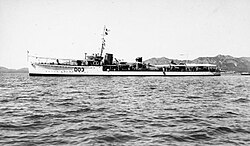
Following the war, the Royal Navy reorganized into the Atlantic, Home (later Reserve), and Mediterranean Fleets. The S-class destroyers were primarily allocated to the 6th Flotilla in the Mediterranean and the 7th Flotilla as a reserve at Rosyth.
The Russian Civil War
Between 1919 and 1920, S-class ships were active in the Baltic and southern Russia. A division under Commander A. B. Cunningham assisted in the Latvian War of Independence, while others supported White Russian forces under Generals Denikin and Wrangel. Notable operations included the defense of the Perekop line and the evacuation of troops from Odessa, Novorossisk, and the Crimea.
Irish Civil War and Treaty Ports
After the establishment of the Irish Free State in 1922, the Royal Navy maintained bases at Berehaven, Queenstown/Cobh, and Lough Swilly. Vessels such as Seawolf, Scythe, and Sesame operated as independent commands. Scythe notably experienced machine gun fire while moored at Spike Island in March 1924.
Global Reach: Mediterranean, Atlantic, and China
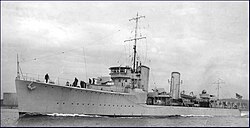
In the 1920s, the S-class continued to shift roles. By 1930, the 8th Destroyer Flotilla was deployed to the China Station to address tensions regarding British concessions in Shanghai. By 1933, however, the majority of the class had been decommissioned or relegated to tender duties as newer ships entered service.
Service in Dominion Navies
The British Admiralty shared S-class technology with its allies:
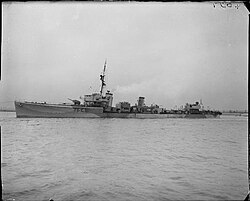
- Royal Australian Navy (RAN): Five ships (Stalwart, Success, Swordsman, Tasmania, and Tattoo) were presented in 1919. They primarily operated near Sydney and New Guinea before being scrapped in 1937.
- Royal Canadian Navy (RCN): Torbay and Toreador (renamed Champlain and Vancouver) were loaned in 1927 for sea training on the east and west coasts.
Second World War Service
Despite many being scrapped due to the London Naval Treaty of 1930, eleven S-class vessels survived to serve in World War II. These were split between European and Far East theaters.
European Waters and Convoy Escorts
Ships like Sabre, Scimitar, and Shikari played a critical role in the Dunkirk evacuation of May 1940. Later, they were refitted as escort vessels, replacing torpedo tubes with anti-aircraft (AA) guns and depth charge throwers to combat German U-boats. Scimitar notably participated in the destruction of U-651 in June 1941.
The Far East Theater
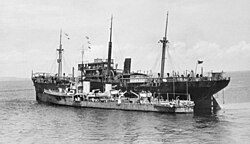
Five vessels were deployed as local defense destroyers in the Far East. Scout, Tenedos, and Stronghold were converted into minelayers. The campaign was brutal; Thracian was scuttled during the defense of Hong Kong, while Thanet and Stronghold were sunk by Japanese forces in 1942.
Summary of S-Class Operational History
| Period | Primary Location | Key Role | Notable Event |
|---|---|---|---|
| 1918 | North Sea / Dover | Fleet Destroyer | Joining the Grand Fleet |
| 1919–1920 | Baltic / Black Sea | Intervention Force | Russian Civil War support |
| 1920s | Irish Treaty Ports | Naval Presence | Irish Civil War monitoring |
| 1930–1931 | China Station | Imperial Policing | Shanghai Defence Force |
| 1939–1945 | Atlantic / Far East | Escort / Minelaying | Dunkirk Evacuation |
Frequently Asked Questions
Why were the S-class destroyers criticized by Admiral Beatty?
Admiral Beatty and other commanders disapproved of the design primarily because of the 18-inch torpedoes, which were considered useless compared to the 21-inch torpedo tubes found on the W-class ships.
How were the S-class ships modified for World War II escort duty?
They were refitted by removing most guns and torpedo tubes to make room for quadruple 0.5-inch (later 20 mm) anti-aircraft guns, a 12-pounder AA gun, and expanded depth charge capacities (40–70 charges).
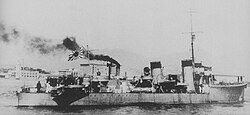
What happened to the HMS Thracian after it was scuttled?
The Thracian was salved by the Japanese and commissioned as IJN Patrol Boat No. 101. It served as a coastal escort and radar training vessel before being returned to the Royal Navy in 1945.
Which S-class ships served in the Royal Australian Navy?
The Stalwart, Success, Swordsman, Tasmania, and Tattoo were presented to the RAN in 1919, accompanied by the leader Anzac.
What was the impact of the London Naval Treaty on the S-class?
The treaty limited total destroyer tonnage, leading the Royal Navy to scrap the less capable S-class in favor of the V/W-class. This resulted in dozens of S-class ships being sold for scrap between 1931 and 1938.