Rutgers University: A Legacy of Research and Academic Excellence
Founded in 1766, Rutgers, The State University of New Jersey stands as one of the oldest and most prestigious institutions of higher learning in the United States. From its origins as a private college to its current status as a premier public land-grant research university, Rutgers has evolved into a massive academic system dedicated to innovation, diversity, and public service.
The university is guided by its Latin motto, Sol iustitiae et occidentem illustra, which translates to "Sun of righteousness, shine also upon the West." This spirit of enlightenment is reflected in its expansive campuses and its commitment to producing world-class scholars and leaders.
![The university's coat of arms, featuring four quarters, a reference to the shields of the House of Orange-Nassau (for William III of Orange and England, New Jersey, Queen Charlotte of Mecklenburg-Strelitz, and Henry Rutgers[23]](/images/3d/83/3d83d80eeda921d2422fa5a600fb497cb7623e67eb049f15e2f2d8dde56f9f29.webp)
Key Facts
- Established: November 10, 1766.
- Type: Public land-grant research university.
- Total Students: 68,942 (including 49,359 undergraduates and 19,583 postgraduates).
- Endowment: $2.35 billion as of 2025.
- Main Campuses: New Brunswick, Newark, and Camden.
- Athletic Identity: Known as the Scarlet Knights, competing in the Big Ten Conference.
- Accreditation: Middle States Commission on Higher Education (MSCHE).
Historical Evolution
The institution has undergone several name changes that mirror its growth and changing mission. It began as Queen's College (1766–1825), later becoming Rutgers College (1825–1924), and finally Rutgers University in 1924. While historically affiliated with the Dutch Reformed Church, the university is now nonsectarian.
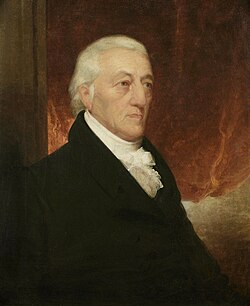
The university's identity is deeply tied to its benefactors and heritage. Colonel Henry Rutgers, an early benefactor, serves as the namesake of the institution.
The Dutch heritage of the university is prominently commemorated on the New Brunswick campus, where a bronze statue of William the Silent stands at the western end of Voorhees Mall.
![On the western end of Voorhees Mall is a bronze statue of William the Silent, commemorating the university's Dutch heritage.[33]](/images/fe/22/fe2217944744db342c33871a797527d02bd20840d5d6db7f17ece696d406a930.jpg)
Campus Structure and Organization
Rutgers operates as a multi-campus system, allowing it to serve diverse populations across New Jersey. The primary divisions include:
- Rutgers–New Brunswick: The largest hub, featuring the College Avenue campus and the Douglass campus (founded in 1918 as an all-women's college, now co-ed).
- Rutgers–Newark: Home to the prestigious Rutgers Law School.
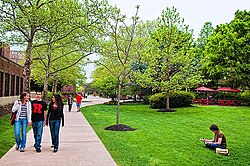
- Rutgers–Camden: A regional center featuring a distinct quad walk and the Alumni House.
- Rutgers Health: A specialized division focusing on medical and health sciences.
- Rutgers-Online: Providing flexible digital education.
Notable Landmarks and Facilities
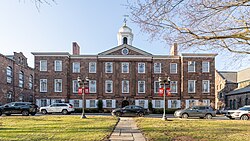
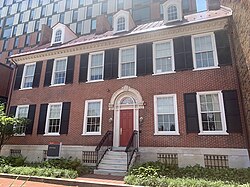
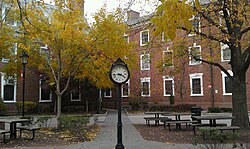
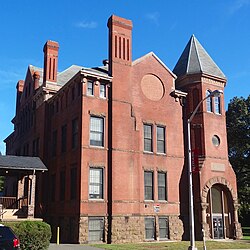
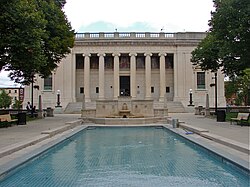
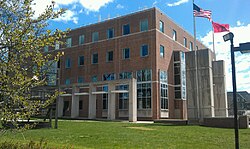
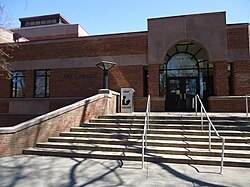
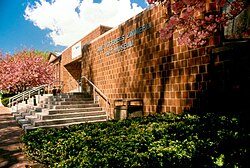
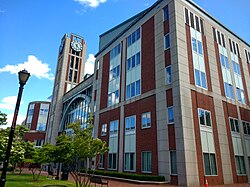
The university boasts a rich architectural landscape. Old Queens remains the oldest building in New Brunswick, while the Archibald S. Alexander Library serves as the primary research hub for the New Brunswick campus. The Jane Voorhees Zimmerli Art Museum and the Digital Studies Center further enhance the university's cultural and technological offerings.
Academic Excellence and Research
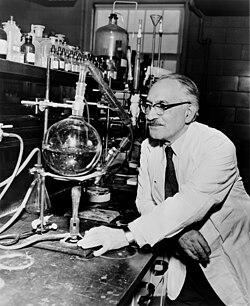
As a member of the Association of American Universities (AAU), Rutgers is recognized for its high-impact research. One of its most distinguished achievements was the work of Prof. Selman A. Waksman, who won the Nobel Prize in Medicine for developing 22 antibiotics, including Streptomycin.
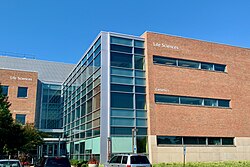
The university's research extends into agriculture and genetics, evidenced by its work in greenhouses and the Life Sciences and Genetics Building.

Admissions and Student Demographics
Rutgers attracts a diverse student body. In the 2021 entering class, the admit rate was 68.2%, with a yield rate of 24.2%. The student population is ethnically diverse, with White students making up 31%, Asians 26%, Hispanics 18%, and Black students 10%.
The university also maintains a commitment to economic diversity, with 28% of students coming from low-income backgrounds.
Student Life and Athletics
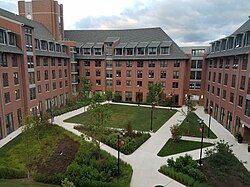
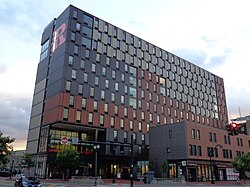
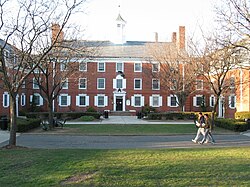
Life at Rutgers is defined by a vibrant mix of residential living and spirited traditions. From the historic Demarest Hall to modern housing like 330 Cooper in Camden, students have a variety of living options.
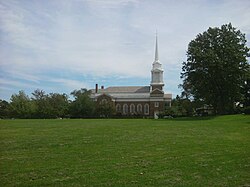
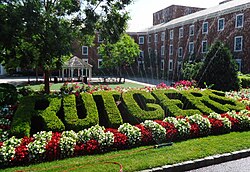
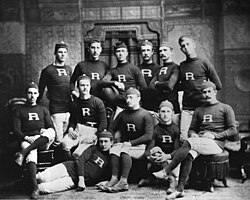
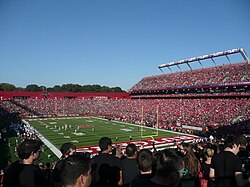
Athletics are a cornerstone of the Rutgers experience. The Scarlet Knights compete in the NCAA Division I FBS and the Big Ten Conference. The university's athletic history is long, with football teams dating back to 1882, and today's games are hosted at the massive SHI Stadium.

Notable Alumni and Faculty
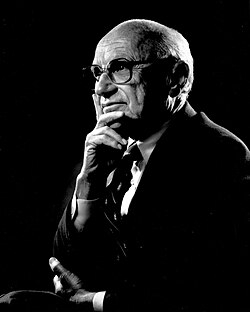
Rutgers has been the training ground for some of the most influential figures in economics, law, and the arts. Notable alumni include Nobel laureate Milton Friedman and actor James Gandolfini. The university's Law School has also been home to distinguished figures such as U.S. Supreme Court Justice Ruth Bader Ginsburg, who served as a professor there from 1963 to 1972, and Senator Elizabeth Warren.



University Overview Summary
| Category | Details |
|---|---|
| President | William F. Tate IV |
| Total Enrollment | 68,942 students |
| Staffing | 4,314 Academic / 6,757 Administrative |
| Campus Size | 6,088 acres |
| Global Ranking (ARWU) | 101–150 |
| National Ranking (U.S. News) | 40 |
Frequently Asked Questions
What are the main campuses of Rutgers University?
Rutgers operates several campuses, with the primary divisions being Rutgers–New Brunswick, Rutgers–Newark, and Rutgers–Camden, alongside specialized divisions like Rutgers Health and Rutgers-Online.
What is the mascot of Rutgers University?
The official mascot is Sir Henry, the Scarlet Knight.
Is Rutgers a public or private university?
While it began as a private college in 1766, it is now a public land-grant research university.
What is the significance of the Douglass campus?
Founded in 1918 as an all-women's college, the Douglass campus now houses co-ed dormitories while maintaining its historical identity as a landmark of women's education.
Which athletic conference does Rutgers belong to?
Rutgers competes in the Big Ten Conference for its NCAA Division I FBS athletics.