Royal Naval Air Service: The Pioneers of British Naval Aviation
The Royal Naval Air Service (RNAS) served as the specialized air arm of the British Royal Navy during the early 20th century. Operating formally from July 1, 1914, to April 1, 1918, the RNAS played a critical role in evolving maritime warfare before merging with the Royal Flying Corps to create the Royal Air Force (RAF)—the world's second independent air force. Its legacy continues today through the Fleet Air Arm.
Key Facts
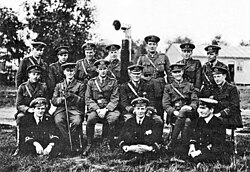
- Operational Period: July 1, 1914, to April 1, 1918.
- Final Strength: At the time of the RAF merger, it boasted 55,066 personnel and 2,949 aircraft.
- Primary Roles: Maritime reconnaissance, strategic bombing, fighter combat, and early carrier operations.
- Unique Asset: Operated the UK's first mechanized armoured land force.
- Successor: Merged into the RAF, with naval aviation later returning to the Admiralty as the Fleet Air Arm.
Origins and Early Development
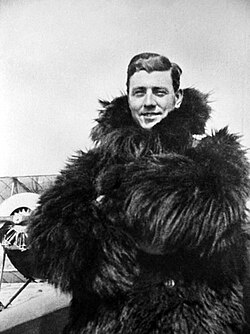
The seeds of the RNAS were sown in 1908 when Captain Reginald Bacon proposed the construction of a rigid airship based on the German Zeppelin. This project, approved in 1909, led to the appointment of Captain Murray Sueter as the first Royal Navy officer assigned to a naval air project. Sueter eventually became the Director of the Admiralty's Air Department in 1912, overseeing all matters related to the Naval Air Service.
Initially, naval aviation was integrated into the Royal Flying Corps (RFC) as the Naval Wing under Commander C. R. Samson. Training was centralized at the Central Flying School in Upavon, while the Naval Wing conducted specialized experimentation at Eastchurch. By 1913, the Navy began establishing dedicated infrastructure, including a seaplane base on the Isle of Grain and an airship base at Kingsnorth.
The RNAS in the First World War
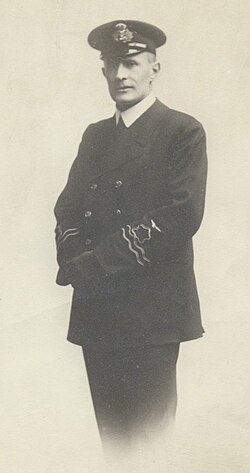
At the outbreak of World War I in August 1914, the RNAS possessed 93 aircraft, six airships, and 727 personnel. As the conflict escalated, the service expanded rapidly, maintaining twelve airship stations along the British coast to protect the shoreline.
While its primary mission involved seaplanes and carrier-borne aircraft, the RNAS also deployed elite fighter squadrons to the Western Front. Due to exclusive contracts with the Sopwith firm, the RNAS often acquired advanced aircraft—such as the Sopwith Pup, Triplane, and Camel—months before the Army's RFC.
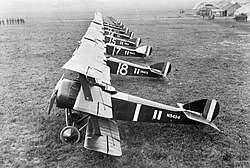
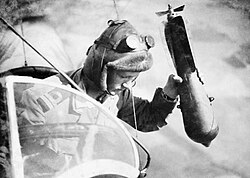
The service also ventured into speculative strategic bombing, utilizing both aircraft and airships to disrupt enemy production. However, inter-service rivalry occasionally hampered procurement, forcing the transfer of Sopwith 1½ Strutters from RNAS bombing forces to RFC squadrons on the front lines.
The Naval Armoured Car Division
In a unique departure from aviation, the Admiralty established the Naval Airmans Armoured Car Force in September 1914. This was the UK's first mechanized armoured land force, designed to support Marine Battalions in France and Flanders. Using a fleet of Rolls Royce, Clement-Talbot, and Wolsey vehicles, the force evolved into the Royal Naval Armoured Car Division (RNACD).
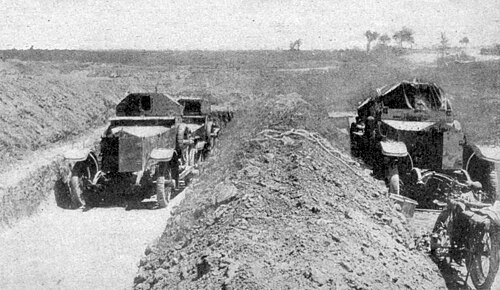
The RNACD expanded to 20 active squadrons, including specialized units for motorcycles and armoured lorries. An expeditionary force was even dispatched to Russia, the Caucasus, and Galicia between 1915 and 1918 before being transferred to Royal Marines control.
Notable Personnel and Legacy
The RNAS attracted a diverse array of pioneers, aces, and intellectuals. Among the most distinguished were Raymond Collishaw, the top RNAS ace with 60 victories, and Barnes Wallis, the engineer who designed the R9 and R80 airships and later the famous "bouncing bomb." Other notable figures included aviation pioneer John Alcock and the entertainer Ivor Novello.
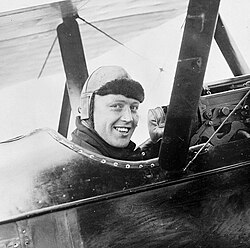
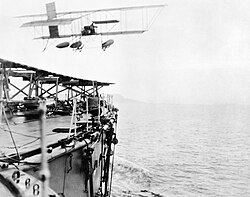
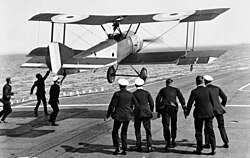
The service also pushed the boundaries of aircraft carrier operations. However, these early attempts were perilous; for instance, Squadron Commander E. H. Dunning was killed in August 1917 during an attempt to land a Sopwith Pup on the flying-off deck of HMS Furious.
Summary of RNAS Evolution
| Period | Organization | Key Characteristic |
|---|---|---|
| 1912–1914 | RFC Naval Wing | Initial formation and joint training with the Army. |
| 1914–1918 | Royal Naval Air Service | Independent naval air arm during WWI. |
| 1918–1937 | Royal Air Force (RAF) | Merger of RNAS and RFC into a single air force. |
| 1937–1952 | Naval Air Branch | Return of carrier-borne aircraft to Admiralty control. |
| 1952–Present | Fleet Air Arm | Modern designation of the Royal Navy's air arm. |
Frequently Asked Questions
When was the Royal Naval Air Service formed?
The RNAS was formally created on July 1, 1914, although its foundations were laid through the RFC's Naval Wing starting in 1912.
Why did the RNAS merge with the Royal Flying Corps?
The RNAS merged with the RFC on April 1, 1918, to form the Royal Air Force (RAF), creating a unified, independent air force for the United Kingdom.
What was the RNAS Armoured Car Division?
It was the UK's first mechanized armoured land force, established by the Admiralty to provide mobile support to Marine Battalions fighting in France, Flanders, and later Russia.
Who was the most successful ace of the RNAS?
Raymond Collishaw was the top RNAS ace, credited with 60 aerial victories.
What happened to RNAS squadrons after the merger?
Most RNAS squadrons became part of the RAF by adding '200' to their original RNAS squadron number (e.g., Squadron 1 became Squadron 201).