Royal Cyphers: The History and Symbolism of Monarchical Monograms
In the world of modern heraldry, a royal cypher serves as a distinct visual signature for a reigning sovereign. Essentially a monogram or monogram-like device, it typically combines the initials of the monarch's name and title. These elements are often interwoven and topped with a crown to signify authority. When such a device is used by an emperor or empress, it is specifically referred to as an imperial cypher.
These symbols are far more than decorative; they are markers of statehood and personal reign. You will find them impressed upon state documents, displayed on government buildings, and utilized by various governmental departments. Because they are often integrated into the architecture of structures built during a specific ruler's tenure, they serve as historical timestamps of a nation's leadership.
Key Facts
- Composition: Usually consists of the monarch's initials and a title abbreviation (e.g., 'R' for Rex or Regina).
- Purpose: Identifies an individual sovereign, distinguishing their specific reign from the general royal coat of arms.
- Regional Variations: In the UK and Commonwealth, the Tudor Crown or St Edward's Crown is common, while Scotland uses the Crown of Scotland.
- Global Use: Beyond the UK, cyphers are used by surviving European monarchies, Thailand, and Malaysia.
- Design Authority: In the UK, the College of Arms or the Court of the Lord Lyon typically designs these symbols.
The Evolution of Cyphers in Commonwealth Realms
The tradition of royal cyphers in the Commonwealth realms began in the United Kingdom, with public use dating back to the early Tudor period. Initially, the cypher was simply the sovereign's initial. Following the reign of Henry VIII, the letter 'R' was added, representing the Latin terms Rex (King) or Regina (Queen). Later, when Queen Victoria became Empress of India in 1877, the letter 'I' for Imperatrix (Empress) was added to her monogram.
Unlike the royal coat of arms, which is often shared by successive monarchs, the cypher is unique to the individual. This makes it an essential tool for identifying landmarks commissioned by a specific ruler, such as the gatehouse of St James's Palace featuring the initials of Henry VIII.
While the 15 Commonwealth realms are separate monarchies with their own royal standards and seals, the sovereign uses the same cypher across all these countries. There is a technical distinction between the personal cypher (the sovereign's own monogram) and the public initials used for general identification of the reign. The former is often described as the royal cypher interlaced and reversed.
In Canada, the reigning monarch's cypher is sometimes encircled by a garland of maple leaves, symbolizing both the sovereign and Canada's full sovereignty. Similarly, in Australia, these cyphers appear on certain military uniforms.
Modern Examples: Charles III and Elizabeth II
King Charles III
Unveiled on September 26, 2022, the cypher of King Charles III is currently replacing that of his mother. Selected by the King from designs by the College of Arms, it features an intertwined 'C' and 'R' (Rex) with 'III' to denote his place in the succession, surmounted by a Tudor Crown. For his role as the monarch of Scotland, the design utilizes the Crown of Scotland.
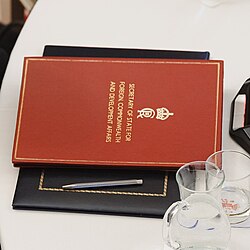
Queen Elizabeth II
The cypher for Elizabeth II was E II R (Elizabeth II Regina), typically topped with a stylized St Edward's Crown. This symbol was a critical part of the preparations for her 1953 coronation, appearing on Royal Household uniforms and various state articles.

Interestingly, the use of the cypher led to the "Pillar Box War" in Scotland. Because there had never been an "Elizabeth I" of Scotland, some E II R post boxes were vandalized. Consequently, since 1953, new post boxes in Scotland have featured only the Crown of Scotland without the initials. This tradition continues with King Charles III, whose cypher will also be absent from Scottish post boxes.
Global Perspectives on Royal Monograms
The practice of using royal cyphers extends far beyond the British Commonwealth. In the Ottoman Empire, sultans used a calligraphic signature known as a tughra, though Sultan Abdulhamid II notably used a Latin alphabet monogram (AH).
Across Europe's other surviving kingdoms, cyphers remain standard. For example, King Carl XVI Gustaf of Sweden uses overlapping 'C' and 'G' letters with the Roman numeral XVI.
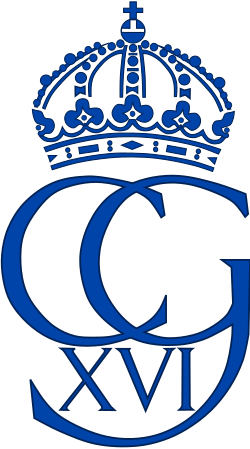
Other international examples include:
- Belgium: King Philippe uses intertwined 'P' and 'F' to represent his name in French, German, and Dutch.
- Thailand: King Maha Vajiralongkorn uses Thai script initials (ว.ป.ร.) equivalent to "Vajiralongkorn Rex".
- Malaysia: In the state of Johor, the Temenggong dynasty uses the initials 'S.I.', with a tradition of naming heirs with names starting with 'I'.
- Netherlands: King Willem-Alexander and Queen Máxima share a joint cypher of entwined 'W' and 'M'.
| Monarch/Entity | Key Elements | Distinctive Feature |
|---|---|---|
| Charles III | C, R, III | Tudor Crown (UK) / Crown of Scotland |
| Elizabeth II | E, II, R | St Edward's Crown |
| Carl XVI Gustaf | C, G, XVI | Overlapping letters |
| Philippe of Belgium | P, F | Multilingual representation |
| Maha Vajiralongkorn | ว.ป.ร. | Thai script |
Frequently Asked Questions
What is the difference between a royal cypher and a coat of arms?
A royal coat of arms is often a general symbol used by successive monarchs of a dynasty. In contrast, a royal cypher is specific to an individual sovereign, allowing people to identify exactly which monarch reigned during the creation of a document or building.
Why are there different crowns on the cyphers?
The crown used depends on the region and the specific heraldic tradition. For example, while the Tudor Crown is common in the UK, the Crown of Scotland is used specifically for Scottish contexts to respect national identity.
What does the 'R' stand for in a British royal cypher?
The 'R' stands for the Latin words Rex (meaning King) or Regina (meaning Queen).
Do all members of the royal family have cyphers?
Yes, other members of the royal family can have cyphers. These are typically designed by the College of Arms or the Court of the Lord Lyon and must be approved by the reigning monarch.
Why don't Scottish post boxes have the E II R or Charles III cyphers?
This is due to historical objections regarding the numbering of monarchs in Scotland. Because there was no Elizabeth I of Scotland, the E II R cypher was seen as inaccurate, leading to a policy of using only the Crown of Scotland on post boxes.