Route 92: The History of New Jersey's Unbuilt Freeway
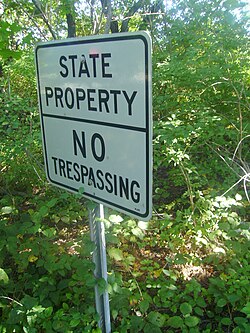
For over half a century, the concept of Route 92 existed as a solution to regional traffic congestion in New Jersey. Planned as a limited-access freeway, it was intended to bridge the gap between major arteries like U.S. Route 1 and the New Jersey Turnpike. Despite decades of planning, shifting alignments, and millions of dollars in proposed funding, the road was never built. Its legacy survives today through a smaller bypass and the remnants of right-of-way preserved in the landscape.
The story of Route 92 is one of evolving engineering goals and fierce community opposition. From its origins as a legislative designation in the 1930s to its final cancellation in 2006, the project reflects the tension between mid-century highway expansion and modern environmental preservation.
Key Facts
- Proposed Length: 6.7 miles (10.8 km) in its final 1994 iteration.
- Primary Goal: To connect U.S. Route 1 in South Brunswick to the New Jersey Turnpike (Exit 8A) in Monroe Township.
- Outcome: Officially terminated on December 1, 2006.
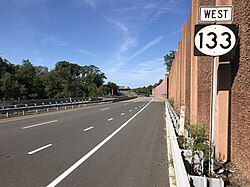
- Legacy Project: A truncated version of the original plan became Route 133, the Hightstown Bypass.
- Funding Shift: Most of the $400 million budget was eventually diverted to widen the New Jersey Turnpike in southern New Jersey.
The Evolution of the Princeton–Hightstown Alignment
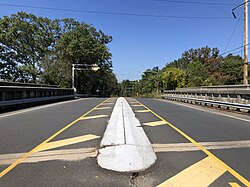
The roots of Route 92 trace back to 1938, when the New Jersey State Legislature designated State Highway Route 31-A. This early project saw the construction of a 104-foot bridge over the Pennsylvania Railroad to replace an at-grade crossing on Washington Road.
During the 1953 state highway renumbering, the proposal became Route 92. By the late 1950s, it was envisioned as the Princeton–Hightstown Bypass. This ambitious freeway would have connected the Somerset Freeway (an unbuilt section of Interstate 95) in Skillman to Route 33 in East Windsor.
Throughout the 1960s and 70s, the project faced significant pushback from residents of Princeton and Plainsboro, who feared the destruction of wetlands and open spaces. When the Somerset Freeway was canceled in 1982, the state attempted to use the remaining $228 million in funding to keep Route 92 alive. However, opposition remained strong, leading the Department of Transportation to drop the section west of U.S. Route 1 in 1987.
The Birth of Route 133
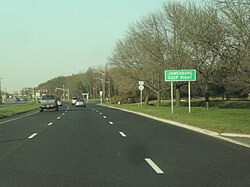
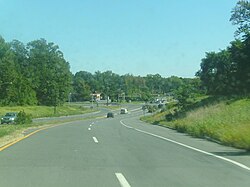
By 1994, the plan was scaled back significantly to a 3.8-mile bypass of Hightstown. This project was the first awarded under New Jersey's modified Design-build program (a delivery method where design and construction are combined to save time). Renamed Route 133, it opened on November 30, 1999, after delays caused by Hurricane Floyd.
The Turnpike Extension Proposal
In 1988, planners attempted a new approach by shifting the alignment further north. This version of Route 92 was designed to run from U.S. Route 206 near Rocky Hill to Interchange 8A of the New Jersey Turnpike. In 1992, the project was transferred to the New Jersey Turnpike Authority due to rising costs.
The 1994 plan proposed a 6.7-mile limited-access highway starting at a trumpet interchange with U.S. Route 1 in South Brunswick. The route would have crossed the Northeast Corridor Line and Devil's Brook, passing near a municipal landfill in Sondek Park before meeting U.S. Route 130 via a cloverleaf interchange.
This alignment faced its own set of hurdles. Environmentalists and the Environmental Protection Agency (EPA) opposed the project twice in the 1990s, citing the destruction of 33 acres of marshland. Although the state offered to create 57 new acres of wetlands to compensate, the federal government remained unconvinced.
Final Cancellation and Funding Diversion
By the early 2000s, the project was mired in environmental impact studies mandated by the U.S. Army Corps of Engineers. While some locals suggested that upgrading County Route 522 would suffice, the Turnpike Authority argued that Route 522 could not handle projected 2015 traffic volumes.
The end came in 2005 when the Turnpike Authority decided to prioritize the widening of the main New Jersey Turnpike between Exits 6 and 8A to accommodate traffic from the Pennsylvania Turnpike. All but $6.5 million of the project's $400 million budget was reassigned. On December 1, 2006, the plans for the Route 92 spur were officially terminated.
Route 92 Project Summary
| Feature | Princeton-Hightstown Bypass | Turnpike Extension (Post-1994) |
|---|---|---|
| Western Terminus | Somerset Freeway (I-95) in Skillman | U.S. Route 1 in South Brunswick |
| Eastern Terminus | Route 33 in East Windsor | NJ Turnpike Exit 8A in Monroe |
| Primary Agency | NJ Department of Transportation | NJ Turnpike Authority |
| Status | Truncated to become Route 133 | Cancelled (2006) |
| Main Obstacle | Community opposition in Princeton | Wetland destruction & funding shifts |
Frequently Asked Questions
Why was Route 92 never built?
The project failed due to a combination of strong community opposition, environmental concerns regarding the destruction of wetlands, and the eventual diversion of funds to widen the main New Jersey Turnpike.
What happened to the funding for Route 92?
Out of a projected $400 million budget, nearly all of the funds were reassigned in November 2005 to widen the New Jersey Turnpike in the southern and central portions of the state.
Is any part of Route 92 open to the public today?
While Route 92 itself was never built, a truncated version of the original Princeton-Hightstown Bypass was constructed and opened in 1999 as Route 133.
Which environmental agencies opposed the project?
The Environmental Protection Agency (EPA) opposed the project twice during the 1990s, and the U.S. Army Corps of Engineers required extensive environmental impact studies before construction could be considered.
Where would the final proposed alignment have started and ended?
The final 1994 proposal would have begun at a trumpet interchange with U.S. Route 1 in South Brunswick and ended at Interchange 8A of the New Jersey Turnpike in Monroe Township.