Rosario: The History and Evolution of Argentina's Industrial Hub
Situated along the banks of the Paraná River, approximately 300 km upstream from Buenos Aires, Rosario stands as a vital port and a powerhouse of industry, commerce, and culture. As the largest city in the province of Santa Fe and the third most populated urban center in Argentina, Rosario has evolved from a collection of humble settlements into a modern metropolis. It is most famously recognized as the "Cradle of the Argentine Flag," the site where General Manuel Belgrano first raised the national colors.
Key Facts
- Location: On the Paraná River, Santa Fe Province, Argentina.
- Historical Significance: Site of the first raising of the Argentine flag on February 27, 1812.
- Economic Role: A major international port and former primary export outlet for the nation.
- Demographics: A historically immigrant-heavy population, particularly from Italy (Liguria region).
- Current Status: The fastest-growing city in Argentina, though currently facing security and deficit challenges.
Origins and Early Settlements
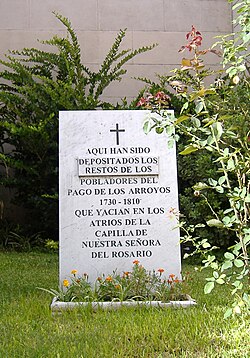
Rosario's roots date back to the early 17th century, when the region was known as Pago de los Arroyos ("land of the streams"). This name referred to the various small rivers, such as the Ludueña and Saladillo streams, that flow into the Paraná. The area was originally inhabited by Calchaquí tribes living in reducciones (Franciscan missions), which were eventually destroyed by tribes from the Chaco region.
The transition to permanent settlement began in 1689 when Captain Luis Romero de Pineda established an estancia (farmland) via royal decree. By 1719, the Jesuits added to the area's development with the Estancia San Miguel. Early governance was decentralized, with authority residing in Santa Fe or Buenos Aires until 1751, when Santiago de Montenegro—who had built a mill and a chapel—was appointed mayor.
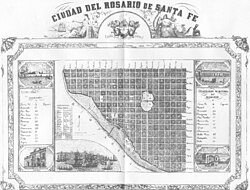
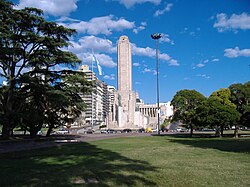
A pivotal moment in the city's identity occurred on February 27, 1812, when General Manuel Belgrano raised the Argentine flag on the shores of the Paraná. This event is commemorated today by the National Flag Memorial.
The Rise to City Status
Following the civil wars after 1820, Rosario remained a small village and a transit stop. In 1832, Charles Darwin visited the settlement, describing it as a "large town" of roughly 2,000 residents. However, growth was stunted in 1841 when Governor Juan Manuel de Rosas banned non-Argentine vessels from navigating the Paraná and Paraguay rivers, effectively shutting the port to foreign trade.
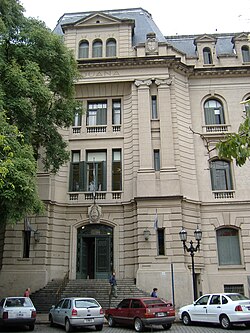
The city's trajectory changed in 1852. After locals supported Justo José de Urquiza in the Battle of Caseros, Urquiza requested that Rosario be granted city status. On August 5, 1852, the request was formalized, citing the town's strategic position for international trade.
With the river opened to free trade, Rosario's economy surged. By 1880, it had become Argentina's primary export outlet. By 1887, the population reached 50,000, with 40% being European immigrants. This influx of new ideas fostered a politically progressive atmosphere, contrasting with the more conservative nature of Santa Fe.
The Quest for the Capital
During the late 19th century, a movement led by Ovidio Lagos—founder of the newspaper La Capital—pushed for Rosario to become the national capital. Although the city was declared the federal capital on three separate occasions, the Executive Branch vetoed the law each time, under the administrations of Bartolomé Mitre and Domingo Faustino Sarmiento.
20th Century Growth and Social Unrest
The early 1900s saw explosive demographic growth. By 1926, the population hit 407,000, nearly half of whom were foreign-born, predominantly Italians from the Liguria region. This rapid expansion led to poor living conditions and the rise of anarchist movements and labor strikes.
In 1946, the city earned the nickname "Capital of Peronism" after 58% of residents voted for Juan Perón. This era brought nationalized industries and improved labor laws. However, the subsequent fall of Perón in 1955 led to periods of dictatorial rule.
In 1969, the city experienced the Rosariazo, a massive uprising of students and workers against President Juan Carlos Onganía's dictatorship. The protests, triggered by police brutality and labor repression, saw up to 100,000 people in the streets before being violently suppressed by the Army.
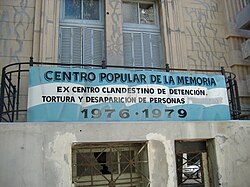
During the National Reorganization Process (starting in 1976), the military junta utilized the 1978 Football World Cup matches hosted in Rosario as a distraction to mask widespread human rights abuses and "disappearances." Democracy finally returned in 1983, marked by a massive rally for the Radical Civic Union.
Economic Crisis and Urban Challenges
The late 20th century brought severe instability. Hyperinflation exceeding 3,000% in 1989 led to widespread looting and riots, resulting in 14 deaths and the eventual resignation of President Raúl Alfonsín.
The 1990s under Carlos Menem saw macroeconomic stabilization but industrial decline. Cheap imports dismantled the local industrial sector, and by 1995, unemployment in Rosario reached 21.1%—the highest in the country. This economic shift led to the proliferation of villas miseria (shanty towns). A 1996 study by the Municipal Bank Foundation identified 91 such settlements housing 115,000 people, or 10% of the metropolitan population.
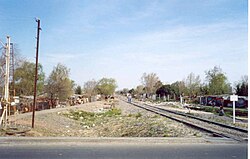
The crisis peaked in December 2001 with further looting and police repression, which claimed eight lives, including social activist Pocho Lepratti.
Modern Recovery and Current State
Since the 2001 collapse, Rosario has emerged as the fastest-growing city in Argentina. A boom in soybean exports has driven investment and consumer spending, leading to the development of large shopping malls like Alto Rosario and El Portal.
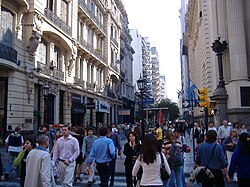
According to the 2001 census, the city has approximately 910,000 inhabitants, with the Greater Rosario area exceeding 1.1 million. While real estate prices have spiked since 2005, triggering suburban growth in the north-west, the city faces modern struggles. Under Mayor Pablo Javkin, the administration is currently grappling with a deficit crisis and severe security issues, leading to the city being colloquially referred to as "NarcoCity" due to drug trafficking challenges.
| Period | Key Status/Event | Primary Driver |
|---|---|---|
| 17th - 18th Century | Pago de los Arroyos | Estancias and Franciscan missions |
| 1812 | Cradle of the Flag | General Manuel Belgrano |
| 1852 | Declared a City | Strategic trade and support for Urquiza |
| Late 19th Century | Export Hub | European immigration and free trade |
| 1969 | The Rosariazo | Anti-dictatorship protests |
| 1990s - 2001 | Economic Decline | Industrial dismantling and hyperinflation |
| Present Day | Rapid Growth / Security Crisis | Agricultural boom vs. drug trafficking |
Frequently Asked Questions
Why is Rosario called the "Cradle of the Argentine Flag"?
It earned this name because General Manuel Belgrano first raised the newly created Argentine flag on the shores of the Paraná River in Rosario on February 27, 1812.
What was the "Rosariazo"?
The Rosariazo refers to the massive student and worker uprisings in May and September 1969 against the dictatorship of President Juan Carlos Onganía, characterized by large-scale protests and violent military repression.
How did immigration shape the city's identity?
In the late 19th and early 20th centuries, a huge influx of European immigrants—particularly from the Liguria region of Italy—brought progressive political ideas that distinguished Rosario from the more conservative provincial capital, Santa Fe.
What caused the economic decline in the 1990s?
The decline was driven by the dismantling of the local industrial sector due to competition from cheap imports (facilitated by a low fixed exchange rate) and stagnating agricultural exports.
What is the current population of the Rosario metropolitan area?
Based on the 2001 census, the city of Rosario has about 910,000 inhabitants, while the Greater Rosario metropolitan area totals more than 1.1 million people.