Romanticism in Literature: Themes, Pioneers, and National Movements
Romanticism was a profound literary and artistic movement that emerged as a reaction against the rationalism of the Enlightenment and the formal constraints of the Restoration. Rather than prioritizing logic and order, Romantic writers championed sensibility—an emphasis on emotional responsiveness—and a deep reverence for the natural world. The movement often explored the isolation of the artist, the innocence of women and children, and a fascination with the supernatural and human psychology.
While it eventually gave way to Realism, Romanticism left an indelible mark on global culture, shifting the focus of art from the objective to the subjective. From the misty highlands of Scotland to the revolutionary theaters of Paris, it redefined how humanity viewed history, nature, and the self.
Key Facts
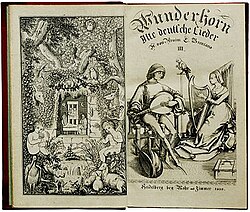
- Core Themes: Emphasis on nature, emotion, the supernatural, and the isolation of the individual.
- Precursors: The Gothic novel and the 16th-century lyrics of Isabella di Morra.
- Key Figures: Lord Byron, Walter Scott, Victor Hugo, and Adam Mickiewicz.
- Literary Innovations: The creation of the historical novel and the concept of the "Byronic hero."
- Timeline: Preceded by the Enlightenment and succeeded by Realism, peaking in the late 18th and early 19th centuries.
The Roots of Romanticism
![El escritor José de Espronceda, portrait by Antonio María Esquivel (c. 1845) (Museo del Prado, Madrid)[34]](/images/93/5a/935a589e6112d209e66e593c635ee6053b5637408f0954908892b8a97d5123a4.jpg)
The seeds of Romanticism were sown long before the movement reached its peak. Some scholars point to the 16th-century poet Isabella di Morra, whose themes of loneliness and isolation prefigured the Romantic spirit. In England, the mid-18th century saw the influence of Joseph and Thomas Warton, with Joseph arguing that imagination and invention were the most vital qualities of a poet.
The movement was further fueled by the Gothic novel, starting with Horace Walpole's The Castle of Otranto (1764), which introduced a taste for horror, threat, and exotic settings. Simultaneously, Laurence Sterne's Tristram Shandy offered a whimsical, anti-rational approach to the sentimental novel.
Another pivotal influence was James Macpherson, who published the Ossian cycle in 1762. Although later revealed to be his own work rather than ancient translations, these poems inspired giants like Goethe and Walter Scott by evoking a primal, natural beauty.
Romanticism in Great Britain and Scotland
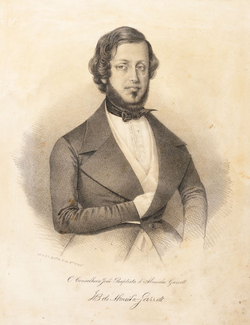
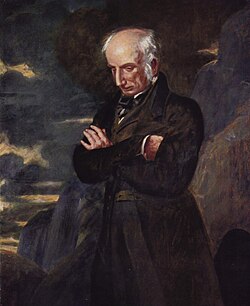
In England, the Romantic Age was launched in 1798 with the joint publication of Lyrical Ballads by William Wordsworth and Samuel Taylor Coleridge.
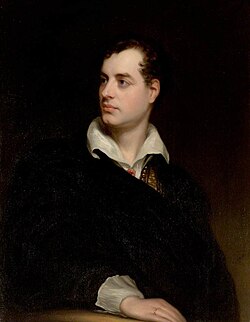
While some poets focused on the internal landscape, Lord Byron and Walter Scott achieved international fame by exploiting the drama of historical and exotic settings. Byron created the Byronic hero—a moody, alienated, and rebellious figure—most notably in Childe Harold's Pilgrimage (1812–1818).
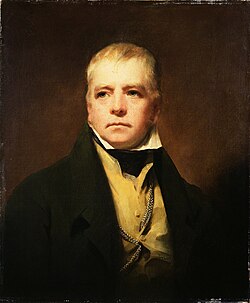
Walter Scott is credited with effectively inventing the historical novel. Starting with Waverley (1814), Scott blended meticulous research with narrative drama, popularizing Scottish cultural identity across Europe.
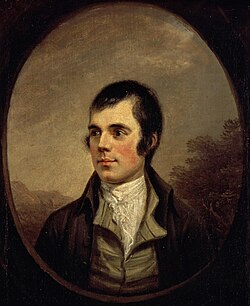
In Scotland, the movement was deeply tied to national identity. Robert Burns, the national poet, and James Macpherson helped establish a distinct Scottish literary voice that resonated globally.
Though Jane Austen wrote during this peak period, her work remained more conservative, focusing on decorum and social rules. In contrast, the later novels of the Brontë sisters, such as Jane Eyre and Wuthering Heights (1847), brought Gothic themes and Romantic intensity back to the forefront of English prose.
The French Romantic Movement
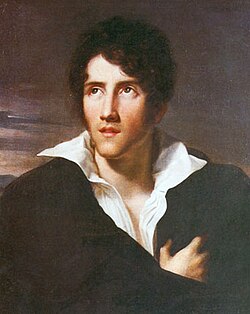
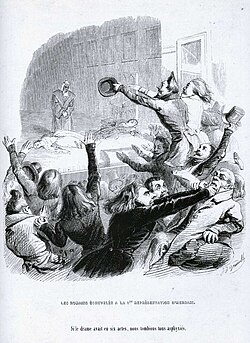
Romanticism arrived later in France, where it was initially tied to the Parisian theater. François-René de Chateaubriand was an early pioneer, whose novella René (1802) anticipated the alienated hero. By the 1830s, the movement became a battleground of artistic philosophy, epitomized by the "battle of Hernani"—the riotous performances of Victor Hugo's historical drama.
Victor Hugo's preface to Cromwell served as a manifesto, declaring that "there are no rules, or models." Hugo and Alexandre Dumas (author of The Three Musketeers) dominated the era with historical adventures. Meanwhile, Stendhal provided a bridge toward Realism through his penetrating psychological insights in The Red and the Black (1830).
Nationalism and Romanticism in Poland
In Poland, Romanticism was inextricably linked to the struggle for national survival. Beginning with Adam Mickiewicz's poems in 1822, the movement focused on Polish history and the traditions of the szlachta (nobility).
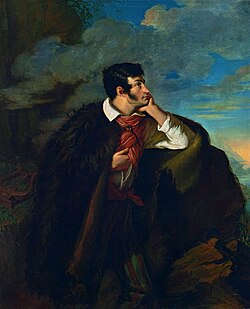
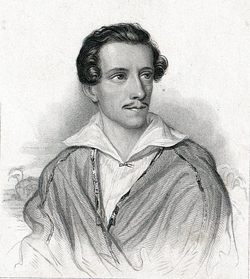
Because Poland had lost its statehood, much of its Romantic literature was developed during the "Great Emigration," written by intellectuals living in exile in France, Germany, and Great Britain. Figures like Juliusz Słowacki and Zygmunt Krasiński used their work to foster Polish nationalism and messianism.
Summary of Regional Romanticism
| Region | Primary Focus | Key Figures | Defining Characteristic |
|---|---|---|---|
| Great Britain | Nature, Individualism, History | Byron, Scott, Wordsworth | Development of the historical novel and Byronic hero. |
| France | Theater, Rebellion, Psychology | Hugo, Dumas, Stendhal | Rejection of neoclassical rules ("no models"). |
| Poland | Nationalism, History, Exile | Mickiewicz, Słowacki | Strong link to national identity and statehood loss. |
| Scotland | Folklore, National Identity | Burns, Macpherson | Influence of the Ossian cycle and pastoral poetry. |
Frequently Asked Questions
What is the "Byronic hero"?
The Byronic hero is a character type popularized by Lord Byron, characterized as a moody, isolated, and sophisticated individual who often rejects social norms and struggles with a troubled past.
How did the Gothic novel influence Romanticism?
The Gothic novel, starting with works like The Castle of Otranto, introduced elements of horror, mystery, and exotic, picturesque settings that became central to the Romantic fascination with the supernatural and the sublime.
Why was Polish Romanticism different from other European movements?
Unlike other movements, Polish Romanticism was deeply tied to the loss of national statehood and the desire for independence, leading much of its literature to be produced by exiled writers focusing on nationalism.
Who is considered the father of the historical novel?
Walter Scott is widely regarded as the inventor of the historical novel, beginning with his 1814 work Waverley, which combined historical research with fictional narrative.
What was the "battle of Hernani"?
The "battle of Hernani" refers to the riotous and polarized reactions of the Parisian public during the 1830 performances of Victor Hugo's play, symbolizing the clash between traditional neoclassical styles and the new Romantic movement.